How to Read Water Color for Fish Location
You've just arrived at a promising looking spot, maybe a beautiful flat in the backcountry or a serene canal, but the water looks… different. Is it too clear? Too muddy? That moment of uncertainty, wondering if you're wasting precious fishing time in the wrong conditions, is something every angler knows. Don't worry, friend, you're not alone. This guide will help you decode one of nature's most subtle yet powerful clues – water color – to dramatically improve your chances of finding fish in Florida's diverse aquatic environments.
The Basics of Water Color: Why It Matters to Fish (and You!)
Water color isn't just a pretty backdrop; it's a dynamic indicator of what's happening beneath the surface, directly impacting fish behavior, feeding patterns, and where they choose to hang out. Ignoring this vital sign is like trying to drive with your eyes closed – you might get somewhere, but it'll be by pure luck!
Understanding the Factors Influencing Water Color
Think of Florida's waters as a living, breathing ecosystem, constantly changing. Everything from the weather to the bottom composition plays a role in how the water looks. Rainfall can bring in sediment, strong winds can stir up the bottom, and even the type of vegetation nearby can stain the water. These factors influence light penetration, which in turn affects what fish can see, and what they're willing to eat. For instance, sight-feeding predators like snook or redfish thrive in clearer water, while those that rely more on scent or vibration might prefer murkier conditions.
Consider a typical summer afternoon in Florida. A heavy thunderstorm rolls through, dumping a tremendous amount of rain. All that freshwater runoff carries tannins from decaying leaves and organic matter, as well as silt from disturbed banks, changing a crystal-clear flat into a stained, brownish mess in a matter of hours. This isn't just cosmetic; it significantly alters visibility for both you and the fish, meaning your previous game plan might need a serious overhaul. A keen eye and understanding of these influences will give you a significant edge.
How Water Visibility Impacts Fish Behavior
Fish are constantly making decisions based on their environment, and visibility is a huge one. In very clear water, fish tend to be more skittish and aware of predators (including you!). They might hug structure tighter, feed more cautiously, or only come out to feed under low light conditions like dawn, dusk, or night. Your approach needs to be stealthy, your casts longer, and your tackle lighter to avoid spooking them. Florida Inshore Fishing Techniques often highlight the importance of quiet approaches in clear, shallow waters.
Conversely, in turbid or stained water, fish often feel a bit bolder because their own visibility is limited, as is that of their predators. They might venture out from cover more readily, relying on sound, vibration, and scent to find food. This can be a great opportunity for anglers using noisier lures or live bait that emits strong odors. However, it also means your lure choice needs to be effective in low visibility, maybe something with more vibration or a contrasting silhouette.
Deciphering the Palette: What Specific Water Colors Tell You
Florida offers an incredible spectrum of water colors, each with its own story to tell. Learning to read these nuances is like gaining a secret language for finding fish.
Clear to Aqua Blue Water
This is the stuff of postcards – crystal clear, often found in the Florida Keys, parts of the Gulf Coast, and offshore. Inshore, it typically means shallow flats with sandy or grassy bottoms.
- What it means: High visibility. Fish here, like bonefish or permit, are often sight feeders and incredibly wary. They can see you coming a mile away. Baitfish also have nowhere to hide, making these areas prime hunting grounds for predators.
- Fish you might find: Snook, redfish, spotted seatrout, bonefish, permit, tarpon inshore; mahi-mahi, sailfish, tuna offshore.
- Your approach: Think stealth! Long casts, light fluorocarbon leaders, natural baits or realistic lures. Polarized sunglasses (you can find excellent pairs on Amazon) are absolutely essential for spotting fish before they spot you. If you're wading, shuffle your feet to avoid creating a wake. When boating, use a push pole or trolling motor to move silently.
Green or Light Green Water
This is a very common color in Florida's bays, estuaries, and nearshore Gulf waters. It suggests a healthy, productive ecosystem with good plankton or algal growth, which forms the base of the food chain.
- What it means: Good light penetration, but enough color to offer fish some comfort and camouflage. Often associated with good grass beds, oyster bars, and other productive habitats.
- Fish you might find: Redfish, snook, seatrout, flounder, mangrove snapper, sheepshead.
- Your approach: This is often ideal fishing water. Fish are generally less skittish than in super-clear water but still rely heavily on sight. Try a mix of natural baits and artificial lures that mimic local forage. Pay attention to structure and current edges, as these are natural ambush points in these conditions. Best Live Bait for Florida Inshore Fishing will be very effective here.
Tea-Stained or Tannic Water
Often described as looking like iced tea, this color is prevalent in rivers, creeks, and some lakes, especially those draining cypress swamps or pine forests, like parts of the St. Johns River system.
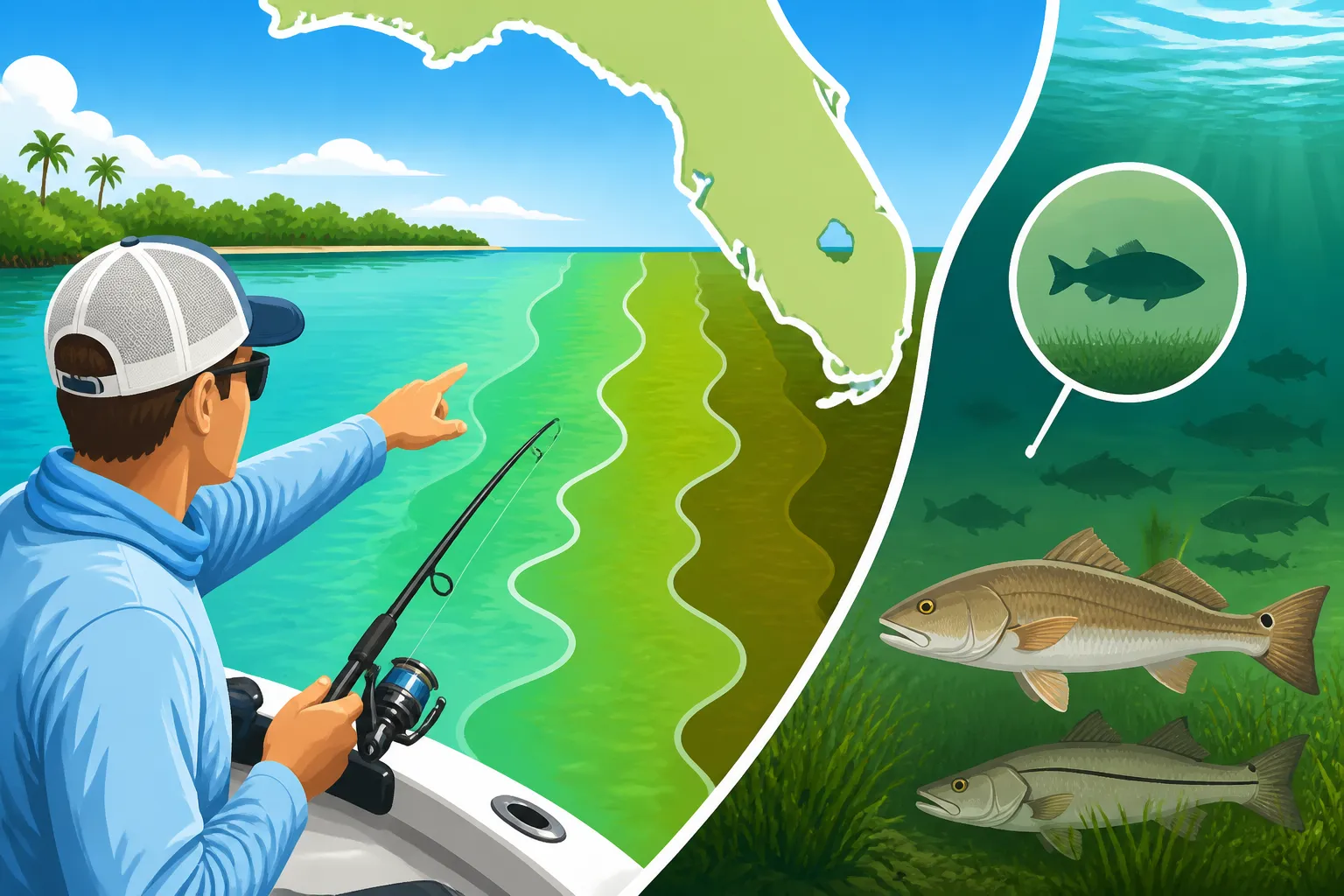
- What it means: The brownish tint comes from tannins released by decaying vegetation. Visibility is reduced, but it's typically very healthy water, often slightly acidic, which many freshwater species love. In saltwater, it often means freshwater runoff from creeks and rivers, creating a distinct "color line" that can hold fish.
- Fish you might find: Largemouth bass, crappie, bluegill, catfish in freshwater; snook, redfish, tarpon, and even speckled trout at the saltwater edges of these systems.
- Your approach: Fish in tannic water rely more on vibration and scent. Darker lures, like black and blue, or those with strong thumping actions, can be very effective. Live bait is also a top choice. Look for those "color lines" where the tannic water meets clearer saltier water; these are often feeding zones for predatory fish. For freshwater, focus on submerged structure like logs and grass.
Murky or Muddy Water
This can range from light brown to opaque chocolate milk. It's often caused by heavy rainfall, strong winds churning up shallow bottoms, dredging, or prop wash from boats.
- What it means: Very low visibility. Fish will struggle to see, and so will you. This can be challenging. However, sometimes a slight murk can be good, offering cover for ambush predators, or it might be a temporary condition after a rain, pushing baitfish into clearer pockets.
- Fish you might find: Catfish, bullhead, black drum, redfish (especially on scent), snook, and even largemouth bass might tolerate it if it's not too extreme.
- Your approach: This is where scent and vibration are paramount. Think noisy topwater lures, scented soft plastics (many available on Amazon), or strong-smelling cut bait. Slow down your retrieve and work areas thoroughly. Avoid areas that are completely choked with mud; look for any slight improvements in clarity, even if it's just a few feet. It's often better to seek out "cleaner" muddy water, not completely churned-up conditions.
Reddish-Brown or "Red Tide" Water
While not a direct "fish location" indicator in a good way, this is a water color you absolutely need to recognize in Florida.
- What it means: Often indicative of harmful algal blooms, commonly known as red tide. This is generally very bad news for fishing, causing fish kills and unsafe conditions. The water might have a reddish or brownish tint, and you might notice a distinct smell or respiratory irritation.
- Fish you might find: You likely won't find many healthy fish, or if you do, they may be stressed or dying.
- Your approach: Stay informed! Check local marine advisories before heading out. If you encounter these conditions, it's best to move to another area or postpone your trip. How Red Tide Affects Where You Can Fish is a crucial read for understanding these dangerous conditions.
Beyond Color: Combining Clues for Ultimate Fish Location
Water color is a fantastic piece of the puzzle, but it’s rarely the only piece. The most successful anglers are those who can synthesize all the information the environment provides.
Tides, Currents, and Water Clarity
The interplay between tides, currents, and water color is absolutely critical in Florida's coastal environments. An incoming tide often brings in cleaner, cooler, and more oxygenated water, which can invigorate fish and bait. This "new" water can also improve visibility in areas that were murky on the outgoing tide. Conversely, an outgoing tide might pull dirty water out of a creek, creating a muddy plume, but it also carries baitfish out, concentrating predators at bottlenecks. Understanding these dynamics is paramount. How to Read a Tide Chart for Fishing is an invaluable skill here.
For example, on a clear incoming tide over a grassy flat, snook might be actively cruising the edges, using their keen eyesight to ambush passing bait. But if that same flat gets churned up by strong winds and a ripping outgoing current, the snook might retreat to deeper, calmer, and slightly clearer pockets of water, relying more on sound or scent from passing crabs. Always observe how the current affects the clarity in different parts of your fishing spot.
The Role of Structure and Bottom Composition
Water color often goes hand-in-hand with the bottom composition and available structure. In clear water, a light sandy bottom might reveal subtle depressions or grass patches where fish could be holding. In stained or murky water, you might not see the structure, but you know it's there based on your knowledge of the area or charts (many detailed fishing charts can be purchased through Amazon). Fish relate to structure for cover, ambush points, and food sources, regardless of water clarity.
Consider a deep oyster bar in a green-water estuary. Even if the water isn't perfectly clear, the oysters are filtering it, and the structure provides habitat for baitfish and crabs. Redfish and black drum will absolutely be there, rooting around, even if they can't see perfectly. Conversely, in a gin-clear flat, a single piece of dark bottom or a shadow from a mangrove branch becomes a crucial hiding spot for a weary snook or redfish. Learn what lies beneath, and how fish use it in varying water colors.
Observing Baitfish and Predator Activity
No matter the water color, if you see baitfish, you're usually in a good spot. Baitfish schools are like neon signs for predatory fish. In clear water, you might visually spot schools of pilchards or mullet. In stained water, you might see subtle ripples on the surface, or hear the tell-tale "pop" of a snook blowing up on a school you can't quite make out.
Keep an eye out for birds diving, especially terns and pelicans, which are often indicators of baitfish being pushed to the surface by predators. A quick glance at the water color will then inform your lure choice and presentation. For instance, if you see birds diving into somewhat murky water, you know the predators are relying less on sight and more on the chaotic vibrations and flashes of the bait, so a noisier, more erratic lure might be the ticket.
Tools and Tips for Better Water Color Interpretation
Being able to effectively read water color often comes down to observation and having the right gear.
Essential Gear for Visual Observation
A good pair of polarized sunglasses is perhaps the single most important tool for reading water color, especially in Florida. They cut glare, allowing you to see into the water, discern subtle color changes, and even spot fish. Whether you're trying to pick out a dark snook from a tannic shoreline or spot a white sandy patch in green water, polarized lenses are a game-changer. You can find a huge variety of quality polarized sunglasses on Amazon, from budget-friendly options to high-end brands.
Beyond sunglasses, a quality fish finder can reveal bottom composition, which often correlates with water color and clarity. It can show you if you're over mud, sand, rock, or grass, even if the surface water is murky. A good fishing hat, too, helps block ambient light and glare, further enhancing your vision into the water. Don't forget a waterproof phone case (also widely available on Amazon) to snap photos of interesting water colors or record observations for future trips.
Learning from Experience and Local Knowledge
There's no substitute for time on the water. Every trip is a learning opportunity. Pay attention to the water color when you catch fish, and when you don't. Notice how it changes with the tide, after rain, or on windy days. Keep a mental (or even written) log. Over time, you'll develop an intuition for what different shades mean in your favorite fishing spots.
Don't be afraid to talk to local bait shop owners, guides, or other anglers. They often have invaluable insights into local water conditions and patterns. They've seen it all, from the impact of a cold snap How Cold Fronts Affect Winter Fishing in Florida to seasonal shifts in clarity. Learning from their experiences, combined with your own observations, will make you a much more effective angler. Remember, fishing is a journey of continuous learning, and mastering water color is a huge step on that path!
| Water Color | Typical Cause | Visibility | Fish Behavior | Recommended Approach |
|---|---|---|---|---|
| Clear/Aqua Blue | Sandy bottom, offshore currents, low sediment runoff | High | Wary, sight-feeding, easily spooked | Stealthy, long casts, natural baits, light tackle, polarized sunglasses |
| Green/Light Green | Healthy plankton, algal blooms, productive estuaries | Medium | Active, less skittish, still sight-feeding | Varied baits/lures, focus on structure, look for current breaks |
| Tea-Stained/Tannic | Decaying vegetation, cypress swamps, river runoff | Low-Medium | Relies on vibration/scent, ambush predator behavior | Noisy lures, scented baits, dark colors, focus on color lines |
| Murky/Muddy | Heavy rain runoff, strong winds, dredging | Very Low | Bolder, relies on scent/vibration, can be sluggish | Strong scent, heavy vibration, slow presentation, avoid extreme mud |
Disclaimer
This article is for general informational purposes only and does not constitute professional advice. Laws, prices and regulations vary by location and change over time. Consult a qualified professional for guidance on your specific situation.