Lake Okeechobee Fishing Guide
Trying to navigate the vast, legendary waters of Lake Okeechobee for your next fishing adventure can feel like staring at an endless puzzle. This enormous lake, often called Florida's inland sea, offers incredible angling opportunities, but knowing where to start, what to use, and when to go can be truly daunting. This comprehensive guide will demystify fishing the "Big O," equipping you with the knowledge to confidently target its diverse fish species and experience the magic of this iconic Florida fishery.
Discovering the Unique Allure of Lake Okeechobee
Lake Okeechobee, affectionately known as the "Big O," isn't just a lake; it's a colossal freshwater ecosystem that draws anglers from around the globe. Its sheer size, covering approximately 730 square miles, is enough to impress anyone. But beyond its impressive acreage, it's the rich tapestry of habitats—from sprawling hydrilla beds and dense cattail lines to open water and intricate canal systems—that creates a haven for fish and, consequently, a dream destination for anglers. Many people dream of catching a trophy largemouth bass, and the Big O consistently delivers.
A Natural Wonder and Angling Hotspot
Imagine casting your line into a place where the sun rises over a seemingly endless expanse of water, reflecting the vibrant hues of a Florida morning. Lake Okeechobee provides this breathtaking backdrop almost daily. This natural wonder is not only a crucial part of Florida's hydrology, serving as a vital water source and flood control basin, but it's also a world-renowned sportfishing destination. Its shallow bowl-like structure, with an average depth of around 9 feet, means that fish habitats are easily accessible, making it productive for various fishing styles. However, this shallow nature also means it's highly susceptible to wind, which can make navigating and fishing challenging on blustery days.
Why the "Big O" Stands Apart
What truly sets Lake Okeechobee apart from other bodies of water, even many of the Best Freshwater Fishing Lakes in Florida, is its incredible biodiversity and the consistent production of trophy-sized fish. It's not just the quantity but the quality of the fish that anglers seek. The lake's nutrient-rich waters support a robust forage base, allowing its predatory fish to grow large and healthy. For decades, it has been synonymous with giant largemouth bass, but it also boasts thriving populations of crappie, bluegill, catfish, and even some unique species like Mayan Cichlids in its interconnected canals. Its designation as a "trophy bass" destination is well-earned, attracting serious anglers aiming for personal bests.
Understanding Lake Okeechobee's Diverse Ecosystem
To fish Lake Okeechobee successfully, you need to appreciate its unique environmental makeup. It's not a homogeneous body of water; rather, it's a mosaic of different zones, each with its own characteristics and preferred fishing techniques. The dynamic interplay of water levels, vegetation, and structure dictates where fish will be and how they will behave.
The Influence of Water Levels and Flow
Water levels on Lake Okeechobee are carefully managed, but they fluctuate naturally and with seasonal rainfall, significantly impacting fishing conditions. High water levels often push fish further into dense vegetation, making them harder to access but also providing them with more cover. Conversely, lower water levels can concentrate fish in specific areas, such as canal mouths, deeper pockets, or the edges of remaining grass lines, making them easier to pinpoint. The inflow from the Kissimmee River to the north and the outflow through various locks and canals to the east and west also create currents and pathways that fish utilize, particularly during spawning periods or when seeking cooler or warmer water. Understanding these water movements, and checking the Current Water Level at Lake Okeechobee before your trip, is critical to adapting your strategy.
Key Habitats: Vegetation, Open Water, and Structure
Lake Okeechobee offers a rich variety of habitats, each attracting different species and requiring specific approaches.
- Vegetation: This is perhaps the most iconic feature of the Big O. Vast expanses of native aquatic vegetation, including hydrilla, peppergrass, cattails, bulrushes (reeds), and lily pads, provide crucial cover, ambush points, and spawning grounds for bass, crappie, and other species. Fishing the "inside grass lines" (the edges closest to the shore or main lake) or punching through dense mats requires specialized heavy tackle.
- Open Water: While less common for targeting bass, the large open expanses, particularly in the center of the lake, can hold schooling baitfish and attract predatory species. This is often where you'll find speckled perch (crappie) suspended, especially during cooler months, or schools of schooling bass feeding on shad.
- Structure: Beyond vegetation, the lake features man-made and natural structures. Submerged shell beds, old creek channels, dikes (like the Herbert Hoover Dike), and various navigation channels and locks (such as the Port Mayaca Lock, Moore Haven Lock, and Clewiston Lock) provide current breaks and depth changes that attract fish. Knowing how to interpret your electronics to find these subtle structural changes can unlock secret fishing spots, especially if you know How to Use a Fish Finder for Inshore Fishing effectively.
This diverse ecosystem means that whether you prefer flipping heavy jigs into thick cover, casting topwater lures over sparse grass, or trolling jigs in open water, Lake Okeechobee has a fishing scenario for you.
Key Fish Species to Target in Lake Okeechobee
When you head out on Lake Okeechobee, you're entering a world teeming with popular sportfish. While the largemouth bass is undeniably the star, there are several other species that provide fantastic angling opportunities and make for excellent table fare.
Largemouth Bass: The Undisputed King
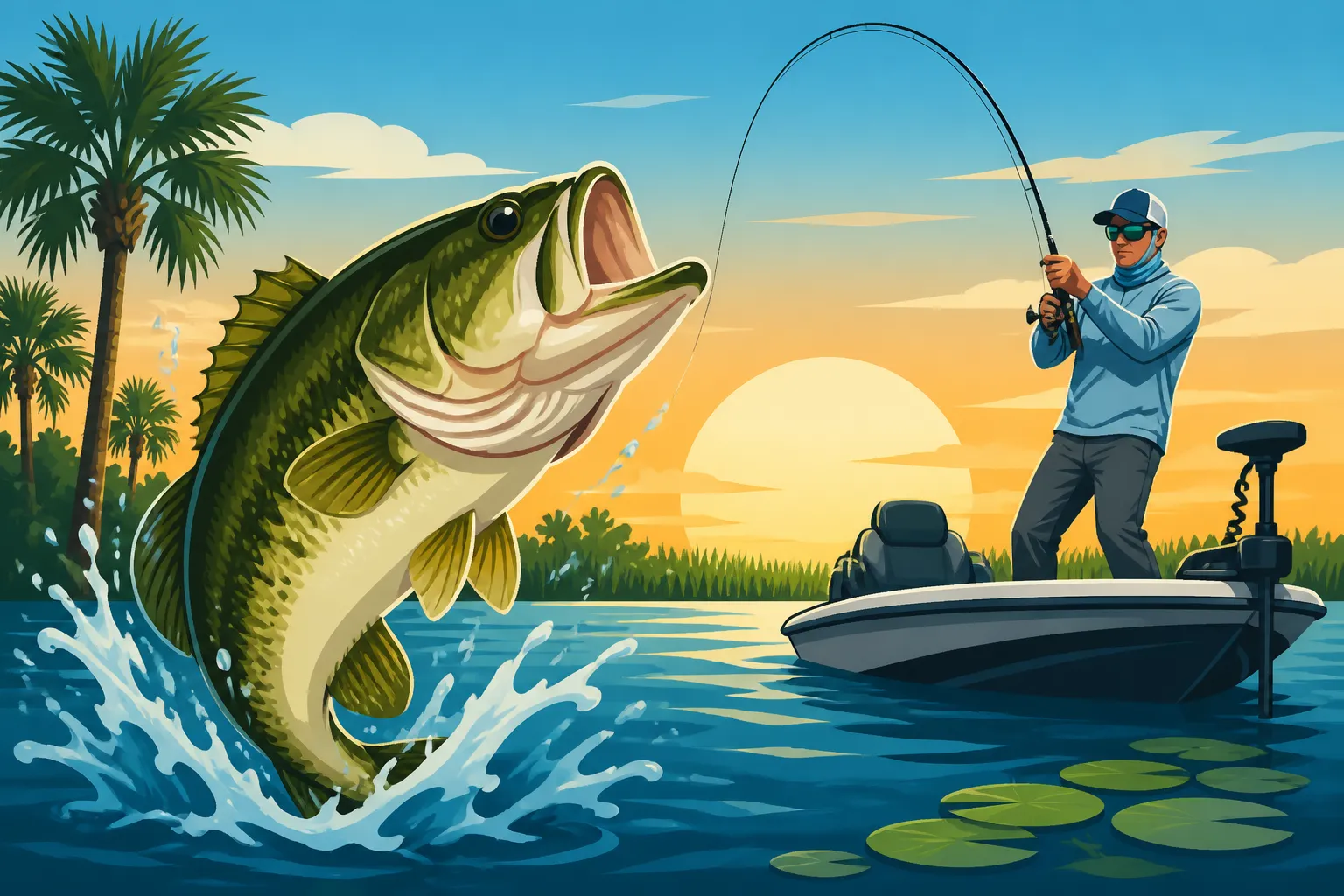
The largemouth bass ( Micropterus salmoides ) reigns supreme in Lake Okeechobee. Anglers flock from around the globe for the chance to hook into a trophy-sized "bucketmouth." The lake's abundant forage, including shad, shiners, and various panfish, allows bass to grow to impressive sizes, with double-digit catches being a common occurrence. The Florida Largemouth Bass Fishing Guide offers more in-depth strategies for these magnificent fish.
You'll find largemouth bass in various habitats across the lake, but they have a particular fondness for dense vegetation. They ambush prey from the cover of hydrilla, cattails, lily pads, and bulrushes. During cooler months, they might move to slightly deeper edges or canal systems, while in warmer weather, they'll often be buried deep in the thickest mats to find cooler water and oxygen. Understanding their seasonal movements and preferred ambush points is key to consistent success. Many anglers even refer to specific sections of the lake by their prime bass fishing potential, such as the areas around Clewiston, Roland Martin Marina, or Okee-Tantie.
Crappie: Speckled Perch Delights
While bass get all the headlines, crappie, locally known as speckled perch or "specks," are another incredibly popular target on Lake Okeechobee, especially during the cooler months from fall through spring. The lake boasts both black crappie (Pomoxis nigromaculatus) and white crappie (Pomoxis annularis), with black crappie being more common. These panfish are known for their delicious white meat and can be caught in large numbers, making for a fantastic day on the water and a tasty meal. Consult the Florida Crappie Fishing Guide for more details.
Crappie tend to school up in open water areas, often suspending over deeper spots or near submerged structures and shell beds. They also congregate around the edges of vegetation or in the mouths of canals, particularly during their spawning season when they move into shallower, vegetated areas. Anglers targeting crappie often use light tackle, small jigs, or live minnows, and it's not uncommon to fill a cooler when you find an active school. The areas around the Indian Prairie Canal and the J&S Canal are historically productive for crappie.
Other Notable Catches: Panfish and Catfish
Beyond bass and crappie, Lake Okeechobee offers a plethora of other species that are fun to catch and can fill a cooler.
- Bluegill and Redear Sunfish (Bream): These feisty panfish are abundant throughout the lake's shallower, vegetated areas. They're a fantastic target for families and beginners, as they readily bite on small baits like crickets, worms, or tiny artificial jigs. They provide a lot of action and are excellent for eating.
- Catfish (Channel, Blue, and White): The "Big O" is home to healthy populations of channel catfish, blue catfish, and white catfish. These bottom dwellers can grow quite large and put up a strong fight. They are often targeted with stink baits, cut bait, or live worms, particularly in deeper channels, canals, or along the bottom of the open lake. Night fishing for catfish can be especially productive.
Best Fishing Techniques for Lake Okeechobee
Mastering a few key techniques will significantly boost your success rate on Lake Okeechobee. The vastness and varied habitats demand versatility, so don't be afraid to switch things up until you find what the fish are biting on.
Largemouth Bass Strategies
Lake Okeechobee bass fishing is often about targeting dense cover, but versatility is key.
- Flipping and Pitching Heavy Cover: This is perhaps the most iconic technique for the Big O. Bass love to hide deep within thick hydrilla mats, cattails, and bulrushes. Using heavy fluorocarbon line (20-65 lb test), a stout rod, and powerful baitcasting reel, anglers "flip" or "pitch" Texas-rigged soft plastics (creature baits, worms) or jigs with heavy tungsten weights (often 1-1.5 oz or more) into small openings in the vegetation. The goal is to punch through the mat and present the bait directly to the bass hiding underneath. This is a close-quarters combat technique, requiring quick reflexes and brute strength to extract a fish from the vegetation.
- Topwater Fishing: There's nothing quite like a blow-up on a topwater lure. Early mornings, late evenings, or overcast days are prime for this exciting technique. Frogs, toads, buzzbaits, and prop baits worked over lily pads, sparse hydrilla, or along grass lines can elicit explosive strikes from aggressive bass. The key is to let the fish take the bait fully before setting the hook.
- Lipless Crankbaits and Chatterbaits: When bass are feeding actively in slightly more open areas, such as the edges of grass lines or over submerged shell beds, lipless crankbaits (like a Rat-L-Trap) or bladed jigs (like a Chatterbait) can be incredibly effective. These lures allow you to cover a lot of water quickly and mimic fleeing baitfish, triggering reaction strikes.
- Wild Shiner Fishing: For trophy bass, many anglers swear by wild shiners. This technique is often done with a float (or "bobber") and a large wild shiner hooked through the lips or back, allowing it to swim naturally near heavy cover or along grass lines. This is a patient angler's game, but the reward can be a true giant. You'll often find guides specializing in this method.
Crappie Fishing Tactics
Crappie fishing on Okeechobee is generally a lighter tackle affair, focusing on finesse and finding schools.
- Trolling Jigs and Minnows: This is a popular and highly effective method, especially in open water areas or along canal edges. Anglers use multiple rods, often equipped with spider rigs, to troll small jigs (1/16 to 1/8 oz) tipped with a minnow or crappie nibbler, or simply a jig alone, at various depths until a productive depth is found. The slow, steady movement covers ground and entices bites from schooling fish.
- Drifting and Vertical Jigging: In areas with known crappie concentrations, or when fish are holding tight to structure, drifting with the wind or current while vertical jigging can be productive. Small spoons, hair jigs, or minnows suspended under a bobber are lowered directly into the strike zone. Electronics are crucial here to pinpoint schools.
- Shoreline and Docks: During the cooler months when crappie move shallow to spawn, they can be targeted near shoreline vegetation, submerged brush, or around docks and pilings. Small artificial lures or live minnows pitched into these areas can yield good results.
Panfish and Catfish Approaches
For panfish and catfish, simplicity often reigns supreme.
- Panfishing: For bluegill and shellcrackers, light spinning gear with small hooks (size 6-10), a bobber, and natural baits like crickets, red worms, or grass shrimp are unbeatable. Target lily pads, shallow grass, and shaded areas. Tiny jigs or fly fishing can also be incredibly fun and effective for these species.
- Catfishing: For catfish, a basic bottom rig with a weight and a circle hook (size 2/0 to 5/0, depending on target size) baited with cut bait (shad or mullet), chicken liver, or store-bought stink baits works wonders. Fish these rigs in deeper holes, channels, or where current creates natural depressions, especially after dark.
Seasonal Fishing Strategies on Lake Okeechobee
Lake Okeechobee is a year-round fishery, but the prime time for certain species definitely changes with the seasons. Understanding the Florida Fishing Seasons Explained and the Best Time of Year to Fish in Florida can make a huge difference in your success.
Winter (December – February)
Winter is prime time for trophy largemouth bass on Lake Okeechobee, especially towards the end of the season as prespawn activity heats up. Cooler water temperatures invigorate the bass, making them more active feeders.
- Bass: This is when the biggest bass move into shallower areas to stage for the spawn. Flipping and pitching to dense reeds, cattails, and hydrilla edges are highly effective. Wild shiner fishing also shines during winter, producing some of the largest fish of the year. Look for warming trends or specific areas that receive more sunlight, as bass will gravitate to these spots. This period often coincides with the Florida Bass Spawning Season, making it an exciting time for big fish.
- Crappie: Winter is arguably the best time for crappie fishing. Large schools congregate in open water, often suspending over deeper channels or scattered grass beds. Trolling jigs and minnows is the go-to technique, as is drifting. When they move shallow to spawn later in the season, they become more accessible to shore anglers or those fishing from docks.
Spring (March – May)
Spring is a continuation of excellent fishing as the water warms, but the focus shifts slightly.
- Bass: The spawn is in full swing or winding down in early spring, leading to incredible action. Post-spawn bass can be found recovering near spawning flats, often hitting topwater lures or soft plastics. As temperatures rise, bass will move further into vegetation to find cover and cooler water.
- Crappie: Crappie will finish their spawn and begin to disperse, often moving back to deeper open water. They can still be caught, but you might need to cover more ground or look for schools suspending at different depths.
- Panfish: Bluegill and shellcrackers become very active, especially as they begin their own spawning cycles in late spring. They are easily targeted in shallow, vegetated areas with live bait.
Summer (June – August)
Florida summers are hot, and so is the fishing, but it requires a change in strategy.
- Bass: Bass will retreat into the densest, shadiest cover they can find during the heat of the day. Punching heavy jigs or creature baits through thick mats is key. Early mornings and late evenings offer opportunities for topwater action, but once the sun is high, go deep into the vegetation. Target areas with good water flow or slightly deeper pockets.
- Crappie: Crappie fishing slows down somewhat compared to winter, but they are still catchable. Look for them in deeper, oxygenated water, often suspending in schools. Trolling or slow-jigging near structure or in the mouths of canals can be productive.
- Catfish: Summer is prime time for catfish, as they are very active in warmer water. Fish for them in deeper channels or flowing water, especially at night.
Fall (September – November)
Fall sees water temperatures begin to drop, revitalizing the fish and initiating feeding frenzies as they prepare for winter.
- Bass: As temperatures cool, bass become more aggressive. They'll actively feed on baitfish, and you'll find them moving to the edges of grass lines, around points, and in open water chasing shad. Spinnerbaits, lipless crankbaits, and swimbaits are excellent choices for covering water and targeting these active fish. Topwater action can also pick back up, especially in October and November.
- Crappie: Crappie activity picks up significantly as water temperatures fall. They begin to stage in preparation for their winter schooling patterns, and trolling or drifting can be very productive as they move towards shallower areas in the late fall.
Navigating and Accessing Lake Okeechobee
Lake Okeechobee's massive size can be intimidating, but with proper planning and knowledge of access points, it's easily navigable. It's vital to respect the lake's shallow nature and constantly be aware of your surroundings.
Public Boat Ramps and Marinas
There are numerous public boat ramps and marinas around the perimeter of Lake Okeechobee, each offering access to different sections of the lake. Some of the most popular access points include:
- Clewiston: Home to Roland Martin Marina, this area on the southwestern side offers excellent accommodations, guide services, and direct access to some of the lake's most productive bass fishing grounds like "the Rim Canal" and "the Shoal."
- Okeechobee City: Located on the northern side, this area provides access to the Kissimmee River and vast northern grass flats. Popular ramps include those near Okee-Tantie Park.
- Belle Glade / Pahokee: On the southeastern shore, these points offer access to areas known for their deep holes and crappie fishing, as well as connections to the agricultural canals.
- Moore Haven / Port Mayaca: On the western and eastern sides respectively, these areas offer access via locks, allowing boats to enter or exit the main lake and connect to various canal systems.
Before heading out, checking Where to Launch a Boat on Lake Okeechobee can help you plan your entry and exit points efficiently. It's also wise to call ahead to smaller marinas to confirm water levels at their ramps, especially during dry seasons.
Essential Navigation Tips for the Big O
Navigating Lake Okeechobee requires caution and respect for its shallow, dynamic environment.
- Shallow Waters: The lake is extremely shallow. Stick to marked navigation channels and use a reliable GPS with detailed mapping (like Navionics or C-MAP) that shows depths and hazardous areas. Even in marked channels, keep an eye on your depth finder. Running aground is a common occurrence for the unwary.
- Wind and Waves: Due to its vast, open nature, Lake Okeechobee can get very choppy, very quickly, even in moderate winds. Small boats can become easily overwhelmed. Always check the weather forecast before heading out, and be prepared to seek shelter or head back to the ramp if conditions worsen. A strong wind can make seemingly calm waters hazardous.
- Vegetation and Obstructions: Beyond being shallow, the lake has areas of extremely dense vegetation and occasional submerged debris. A shallow-running boat with a strong trolling motor is ideal. When running your main engine, stay in deeper, clear channels to avoid damaging your prop or lower unit.
- Hiring a Guide: Especially for first-timers, hiring a local guide is highly recommended. They possess invaluable knowledge of the lake's ever-changing conditions, secret spots, and safe navigation routes. Platforms like FishingBooker are excellent resources for finding experienced and reputable Lake Okeechobee fishing guides who can ensure a safe and productive trip.
Essential Gear for Lake Okeechobee Fishing
Having the right gear makes all the difference when tackling the Big O. From specialized rods to reliable electronics, your equipment should be up to the task.
Rods, Reels, and Line
The type of fishing you plan to do will dictate your tackle choices, but versatility is often beneficial.
- Bass Fishing:
- Heavy Cover: For flipping and pitching into dense mats, you'll need heavy-action baitcasting rods (7'6" to 8'0"), paired with high-gear ratio baitcasting reels (7.1:1 or higher) spooled with heavy braided line (50-80 lb test) or heavy fluorocarbon (20-30 lb). This setup provides the power to penetrate cover and pull large bass out quickly.
- All-Around: For casting various lures like spinnerbaits, crankbaits, or soft plastics in more open or sparse cover, medium-heavy to heavy action baitcasting rods (6'10" to 7'4") with matching reels and 15-20 lb fluorocarbon or monofilament line are suitable.
- Topwater: A medium-heavy fast-action baitcasting rod (7'0" to 7'3") with braided line (30-50 lb) is excellent for frog fishing or other topwater presentations, offering long casting distance and strong hooksets.
- Crappie Fishing: Light to ultralight spinning rods (6'0" to 7'6") with small spinning reels spooled with 4-8 lb monofilament or fluorocarbon are ideal for crappie. Many crappie anglers also use specialized "spider rigs" with multiple long rods for trolling.
- Panfish: Ultralight spinning rods (5'0" to 6'0") with small spinning reels and 2-6 lb test line are perfect for bluegill and shellcrackers.
- Catfish: Medium-heavy to heavy action spinning or baitcasting rods (7'0" to 8'0") with robust reels and 20-30 lb monofilament or braided line are good choices for handling larger catfish.
Lures, Baits, and Tackle
Your tackle box for Lake Okeechobee should be well-stocked with a variety of options.
- Bass Lures:
- Soft Plastics: Creature baits (e.g., Strike King Rage Craw), plastic worms (e.g., Zoom Trick Worm, Senko), swimbaits, and frogs (e.g., SPRO Bronzeye Frog) in various colors (black and blue, junebug, green pumpkin are classics).
- Jigs: Flipping jigs (1/2 oz to 1 oz) with plastic trailers.
- Hard Baits: Lipless crankbaits (chrome/blue, firetiger), spinnerbaits (white, chartreuse), and chatterbaits.
- Hooks and Weights: Heavy-duty flipping hooks (4/0-6/0), various tungsten weights (1/4 oz to 1.5 oz), and stout treble hooks for topwater.
- For more options, check out Best Lures for Florida Bass Fishing.
- Crappie Lures and Baits:
- Jigs: Small marabou jigs, plastic tube jigs, or curly tail grubs (1/16 to 1/8 oz) in chartreuse, white, or black.
- Live Bait: Live minnows are king for crappie.
- Floats: Small bobbers or slip floats.
- Panfish Baits: Live crickets, red worms, grass shrimp, or small pieces of bread.
- Catfish Baits: Cut bait (shad, mullet), chicken liver, or prepared stink baits.
Electronics and Safety Gear
Modern electronics can be game-changers on a lake of this size, and safety is paramount.
- GPS and Chartplotter: A reliable GPS with detailed lake maps is essential for navigation, marking waypoints, and staying in safe zones. Brands like Garmin, Lowrance, and Humminbird offer excellent units.
- Depth Finder/Fish Finder: Crucial for identifying submerged structure, depth changes, and, of course, locating fish. Side-imaging and down-imaging capabilities are especially useful for covering water and finding hidden spots.
- Trolling Motor: A powerful electric trolling motor (often 24V or 36V) with GPS Spot-Lock capabilities is invaluable for precise boat positioning, especially when flipping heavy cover or holding over crappie schools.
- Safety Gear: Always carry all required safety gear: life jackets (one for each person, especially for kids), throw cushion, whistle/horn, fire extinguisher, paddle, anchor, and a fully charged cell phone. Filing a float plan with someone on shore is always a good idea. Also, be aware of Florida Fishing Regulations and Bag Limits, and carry your Florida Fishing License Guide information.
Conservation and Regulations on Lake Okeechobee
Fishing Lake Okeechobee is a privilege, and it comes with the responsibility of adhering to conservation efforts and regulations to ensure the health of this incredible fishery for future generations.
Florida Fish and Wildlife Conservation Commission (FWC) Rules
The Florida Fish and Wildlife Conservation Commission (FWC) is responsible for managing Florida's fish and wildlife resources. They set and enforce all fishing regulations for Lake Okeechobee, which are crucial for maintaining healthy fish populations.
- Fishing Licenses: Anyone aged 16 or older (unless exempt) needs a valid Florida fishing license to fish on Lake Okeechobee. This applies to both residents and non-residents. You can find comprehensive details in the Florida Fishing License Guide. This includes specific rules for Florida Freshwater Fishing License Rules.
- Size and Bag Limits: The FWC establishes specific size and bag limits for various species to prevent overfishing. For largemouth bass, this typically includes a slot limit (fish within a certain size range must be released) and a daily bag limit. Crappie also have a daily bag limit. It is imperative to know and follow these rules. Always consult the most current FWC regulations booklet or website before your trip, as rules can change.
- Protected Species: Some species may be protected, and their harvest prohibited or heavily restricted. Ensure you can correctly identify your catch to avoid accidentally keeping a protected fish.
- Responsible Angling Practices: Practice catch-and-release, especially for trophy bass, to help sustain the population. If you do harvest fish, only keep what you will eat and adhere strictly to limits. Handle fish gently, especially when releasing them, and use appropriate tools like lip grippers to minimize stress.
Protecting the Okeechobee Ecosystem
Beyond the regulations, responsible angling means doing your part to protect the lake's delicate ecosystem.
- Vegetation Protection: Be mindful of aquatic vegetation. Avoid running your boat through thick grass beds at high speeds, as this can damage vital habitats. Use your trolling motor or pole in shallow, vegetated areas.
- Waste Management: Pack out everything you pack in. Do not leave trash, fishing line, or bait containers on the lake or at access points. Fishing line in particular can be deadly to wildlife.
- Invasive Species: Be aware of invasive species. Before launching, clean your boat, trailer, and fishing gear thoroughly to prevent the spread of invasive plants and animals to or from Lake Okeechobee. This is a critical step in preserving the native ecosystem.
Following these guidelines not only ensures you have a legal and enjoyable fishing experience but also contributes to the long-term health and prosperity of Lake Okeechobee, allowing countless others to enjoy its legendary fishing for years to come.
Disclaimer
The information provided in this guide is for general informational purposes only and is subject to change. Always consult the latest regulations from the Florida Fish and Wildlife Conservation Commission (FWC) before fishing. Fishing conditions, including water levels and fish activity, can vary widely. Exercise caution and prioritize safety when on the water.