Fish You Can Catch Year-Round in Florida
One of the biggest heartbreaks for any angler is planning a trip, getting all geared up, only to find out your target fish isn't in season or has moved on. It's frustrating to invest time and money into a fishing adventure that's limited by calendars and migration patterns. But here in Florida, the "Fishing Capital of the World," we're blessed with an incredible array of fish species that truly bite year-round, offering consistent opportunities for a rewarding day on the water, no matter what month it is.
The Allure of Year-Round Fishing in Florida
Florida truly is a unique angling paradise, and one of its most celebrated features is the sheer abundance of fish that you can target pretty much any day of the year. Unlike many other states where fishing can grind to a halt during certain seasons due to extreme weather or fish migrations, the Sunshine State keeps on giving. This isn't just a marketing slogan; it's a reality rooted in our incredible natural resources and consistent climate.
Think about it: waking up in January and still having a legitimate shot at catching your favorite species, or enjoying a serene August morning without worrying if the fish have all departed for cooler waters. That's the Florida advantage. It means less stress about timing your trip perfectly and more time actually fishing. Whether you're a local who lives for the weekend bite or a visitor dreaming of a warm-weather escape, the reliable nature of our fisheries makes planning your angling adventures so much easier.
Florida's Diverse Aquatic Ecosystems
One of the primary reasons we boast such fantastic year-round fishing is the sheer diversity of our aquatic ecosystems. Florida isn't just one big body of water; it's a tapestry of environments, each supporting its own unique cast of characters. We have thousands of miles of coastline, ranging from the calm, shallow seagrass flats of the Gulf Coast to the deeper, current-swept inlets of the Atlantic. These coastal waters are nurseries and hunting grounds for a myriad of saltwater species.
Then, there's our incredible freshwater network. From the vast expanse of Lake Okeechobee to the winding St. Johns River Fishing Guide and countless smaller lakes, ponds, and intricate canal systems, Florida's interior is a freshwater angler's dream. These varied habitats provide constant refuge and foraging opportunities for fish, meaning that even if one area is a little slow, another is likely thriving. This geographical richness ensures that multiple species have a comfortable home throughout every season.
Stable Climate and Warm Waters
Let's be honest, a huge part of Florida's appeal is our glorious weather. While other regions are battling ice and snow, we're often enjoying mild, sunny days perfect for being out on the water. This stable climate is a gift to anglers, as it keeps water temperatures consistently warmer than in northern latitudes. Fish are cold-blooded creatures, and water temperature is a huge factor in their metabolism, activity levels, and feeding habits.
Our warm waters mean that many species remain active and available even during what would be considered "off-season" elsewhere. While fish might alter their depth or preferred structure based on subtle temperature shifts, they rarely disappear entirely. This consistent warmth supports a healthy food chain, from microscopic plankton to small baitfish and larger predators, ensuring that the entire ecosystem remains vibrant and productive all year. It's why you can cast a line in January and still expect to feel that exciting tug on the end of your line.
Freshwater Favorites You Can Always Target
When it comes to freshwater fishing in Florida, you're never truly out of options, no matter the time of year. While certain seasons might see a surge in activity for specific species, there are several reliable targets that can provide action and enjoyment through all twelve months. These are the fish that form the backbone of Florida's freshwater scene, always ready for a fight.
It's a comforting thought to know that even if a cold front rolls through or the summer sun is scorching, there's a good chance you can still connect with some quality freshwater fish. This consistency is a huge draw for both seasoned pros and those just getting their feet wet in the angling world. You don't have to wait for spring or fall; the fish are simply there.
Largemouth Bass: The Undisputed King
Ah, the largemouth bass – the legendary sport fish that draws anglers from all corners of the globe to Florida's freshwater systems. While many associate "trophy bass" with specific spawning seasons, the truth is, you can catch largemouth bass year-round here. They might change their patterns and preferred locations, but they are always present and always willing to strike if you present the right offering.
During the cooler months, bass might move to deeper channels, cover, or structure, becoming a bit more lethargic, but they still need to feed. In the warmer months, they'll often hold in shaded areas, under lily pads, or near submerged timber, becoming active during low-light hours. Mastering the art of adapting your tactics to the prevailing conditions is key to consistent bass success. So, whether you're tossing a soft plastic worm into heavy cover or working a topwater lure at dawn, the Florida Largemouth Bass Fishing Guide will be your year-round companion.
Panfish: Bluegill and Crappie
For a consistent and often prolific bite, look no further than Florida's panfish species, primarily bluegill and crappie. These feisty little fish are abundant in nearly every freshwater body, from sprawling lakes to small farm ponds, and they are almost always hungry. They make for fantastic sport, especially for families and beginner anglers, and are absolutely delicious on the dinner table.
Bluegill, sometimes called bream, are a staple. They're often found around vegetation, docks, and submerged structures. Crappie, also known as speck in Florida, can be found in deeper holes, around brush piles, or schooling near submerged timber. While their spawning periods see a surge in activity, you can reliably catch them throughout the year by adjusting your depth and bait choices. Simple setups with small hooks, bobbers, and live worms or crickets are often all you need for a fun day chasing these year-round fighters.
Catfish: Bottom Dwellers Always Biting
If you're looking for a fish that truly doesn't care what the calendar says, the various species of catfish in Florida are your answer. From channel cats to bullheads and even the mighty flathead, these bottom dwellers are always active and always on the hunt for a meal. They're resilient, plentiful, and offer a powerful fight, especially the larger specimens.
Catfish are less sensitive to minor temperature fluctuations than many other species, making them incredibly reliable targets. They thrive in lakes, rivers, and canals across the state. Using bait that creates a strong scent trail, like cut bait, stink baits, or even hot dogs, can draw them in year-round. Night fishing can be particularly productive for catfish, but they'll readily bite during the day too, often congregating in deeper holes or along river bends.
Saltwater Staples That Never Take a Break
Florida's expansive coastline, encompassing both the Gulf of Mexico and the Atlantic Ocean, is a saltwater angler's dream. While popular species like snook and tarpon have specific seasons and migration patterns, there are many saltwater stalwarts that remain available and eager to bite year-round. These are the fish that offer consistent action, ensuring that every trip to the coast has the potential for a bent rod.
The beauty of these year-round saltwater species is their adaptability. They might move between inshore flats, nearshore wrecks, or deeper channels, but they don't simply vanish. This constant presence allows anglers to develop deep knowledge of their habits and refine techniques that work consistently, regardless of the month. You can always find a productive spot, whether you're wading the flats or fishing from a pier. For those interested in deeper dives into regional options, exploring guides like Tampa Bay Fishing Guide or Florida Keys Fishing Guide can provide excellent local insights.
Spotted Seatrout: Grassy Flats All Year Long
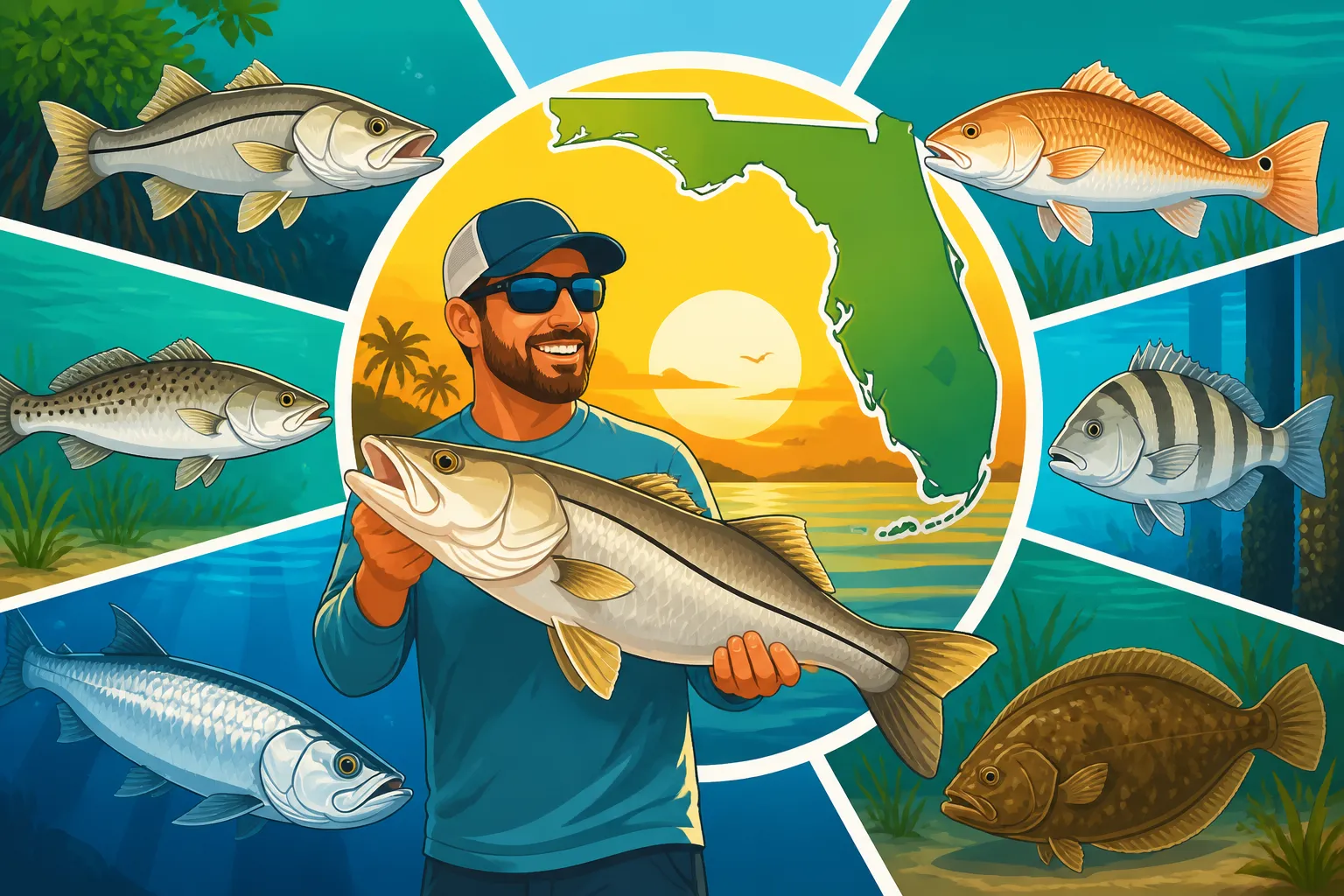
The spotted seatrout is arguably one of Florida's most cooperative and beloved inshore game fish, available to anglers year-round. Known for their beautiful spots and delicious white meat, trout are prolific inhabitants of our vast seagrass flats, sandy potholes, and mangrove-lined shorelines. While cooler weather often brings larger "gator" trout into shallower waters, you can catch them in good numbers throughout the summer too.
Their year-round availability is due to their widespread habitat and adaptability. They'll adjust their depth and feeding times based on water temperature and tide, but they are always around. Live shrimp, twitchbaits, and soft plastic jigs are consistently effective. An incoming or outgoing tide is often best, moving baitfish through their ambush points. For many Florida anglers, a day on the water isn't complete without a few speckled trout in the cooler. Just remember to check the Spotted Seatrout Size and Bag Limits before you head out.
Redfish: Resilient Red Drum
Redfish, or red drum, are another cornerstone of Florida's inshore fishing scene that provides thrilling action every single month of the year. Renowned for their powerful fights and distinctive tail spot, redfish are incredibly resilient and adaptive, making them a consistent target for anglers across the state's coastal waters. They inhabit a wide range of environments, from shallow grass flats and oyster bars to mangrove shorelines and deeper channels.
While redfish might school up more tightly in cooler months and spread out a bit in warmer waters, their presence is unwavering. Sight fishing for reds on the flats is a popular year-round pursuit, as is targeting them around structure with live bait like pilchards or shrimp, or artificial lures such as spoons and soft plastics. They are tough fighters and offer a fantastic challenge, making them a top choice for any angler seeking year-round excitement. Remember to be mindful of Redfish Size and Bag Limits as you enjoy your catch.
Mangrove Snapper: Inshore and Nearshore Constancy
Often overlooked by those solely focused on the big three (snook, redfish, trout), the mangrove snapper is a fantastic year-round target that offers excellent table fare and a surprisingly strong pull for its size. These smart, wary fish are found in almost any structure, from residential docks and bridges inshore to artificial reefs and wrecks nearshore, making them incredibly accessible.
Mangrove snapper are masters of their environment, using structure for ambush and protection. This means they don't migrate far, staying put year-round. They respond well to stealthy presentations of small live baits like pilchards, shrimp, or fiddler crabs, as well as cut baits. Targeting them often requires light tackle and quick reflexes, as they'll dart back into cover at the slightest opportunity. For those who enjoy varied fishing experiences, Florida Mangrove Snapper Fishing Guide offers more specific techniques.
Sheepshead: The Convict Fish's Steady Presence
The sheepshead, affectionately known as the "convict fish" due to its distinctive black and white stripes and human-like teeth, is another reliable year-round saltwater species in Florida. While they are often associated with cooler winter months when they spawn and become more accessible, you can absolutely catch sheepshead every month of the year. They are persistent foragers, constantly nibbling on barnacles, oysters, and other crustaceans.
You'll typically find sheepshead around pilings, docks, bridges, rock jetties, and oyster bars – basically, anywhere there's marine growth for them to munch on. They require a subtle touch and keen eye, as their bite is notoriously light, often feeling like just a gentle tap. Small pieces of shrimp, fiddler crabs, or barnacles are prime bait, presented on a small hook with minimal weight. They might test your patience, but the reward of a fresh sheepshead fillet is well worth the effort.
Understanding Regional and Seasonal Nuances (Even for "Year-Round" Fish)
While we celebrate these species for their year-round availability, it's important to understand that "year-round" doesn't mean "every spot, every day, exactly the same." Florida is a big state with diverse microclimates and hydrological conditions. Even fish that are present all year will exhibit seasonal shifts in behavior, feeding patterns, and preferred habitats. This understanding is what separates a consistent angler from someone who only experiences sporadic success.
Recognizing these nuances is key to maximizing your chances. It means staying adaptable, observant, and always learning. A cold front in January will impact fish differently than a scorching heat wave in August, even for the same species. Knowing how to interpret these environmental cues allows you to adjust your strategy and keep catching fish, no matter the conditions.
Adapting to Water Temperature Changes
Water temperature is perhaps the single most critical factor influencing fish behavior, even for our year-round residents. In Florida, we rarely see extreme cold, but subtle shifts from the 50s to the 80s can drastically change where fish hold and how actively they feed. For example, during cooler periods, many inshore species like redfish and trout might move to deeper channels, darker bottom areas that absorb more heat, or sun-drenched shallow flats to warm up. They might feed less aggressively during the coldest parts of the day.
Conversely, during the peak of summer, fish might seek refuge in deeper, cooler water, around springs, or in the shade of mangroves and docks during the hottest parts of the day. They'll often become more active during dawn, dusk, or even at night. Understanding these temperature-driven movements allows you to adjust your presentation, fishing depth, and even your fishing times to match the fish's activity levels.
Tides, Weather, and Local Hotspots
Beyond temperature, factors like tides and daily weather patterns play a huge role in localizing year-round fish. For saltwater species, tides dictate current, water depth, and bait movement. An incoming tide might push bait onto a flat, making it a hotspot, while an outgoing tide might concentrate fish in a channel or around an oyster bar as water recedes. Learning to Read a Tide Chart for Fishing is invaluable for saltwater anglers.
Weather also matters. A strong cold front can shut down a bite for a day or two, even for hardy species. Overcast days might encourage fish to feed longer in open areas, while bright, sunny days might drive them deeper or into cover. Local knowledge is paramount here. What works in the Mosquito Lagoon Fishing Guide might not be the best approach for Charlotte Harbor Fishing Guide. Seasoned local anglers and guides spend years learning these subtle patterns and finding specific "hotspots" that consistently hold fish in different conditions. Don't be afraid to ask around at local bait shops for current intel!
Gear and Techniques for All-Season Success
When you're targeting year-round fish in Florida, versatility in your gear and techniques is your best friend. You don't need a boatload of highly specialized equipment for every single scenario. Instead, focusing on adaptable setups that can handle a variety of situations will serve you well. Think about what will allow you to quickly switch from casting soft plastics for trout to dropping a live shrimp for snapper without re-rigging your entire arsenal.
Having a few go-to rods, reels, and a well-stocked tackle box means you're always prepared for whatever the day (or the fish) throws at you. You can find a great selection of essential tackle and fishing accessories on Amazon, making it easy to keep your gear fresh and ready. This proactive approach saves time on the water and ensures you're ready to capitalize on any opportunity, whether you're targeting a hungry bass or a schooling redfish.
Versatile Rod and Reel Setups
For most of Florida's year-round freshwater and inshore saltwater species, a medium-light to medium power spinning rod, typically 7 to 7.5 feet in length, paired with a 2500 or 3000 series spinning reel, will be your workhorse. This setup offers enough backbone to fight most bass, redfish, or trout, while still being light enough for enjoyable casting and detecting subtle bites. Spool it with 10-15 lb braided line for sensitivity and casting distance, adding a 20-30 lb fluorocarbon leader for abrasion resistance and invisibility.
If you're primarily targeting larger freshwater species like bigger catfish or trophy bass, or perhaps venturing nearshore for mangrove snapper on heavier structure, a medium-heavy rod with a 4000 series reel might be a better choice. The key is to have a setup that feels balanced and comfortable for casting all day, and strong enough to handle unexpected encounters with larger fish. For those new to the game, checking out options like "beginner rod and reel combos" on Amazon can be a great starting point.
Bait and Lure Choices for Different Conditions
When it comes to baits and lures, again, versatility is key. While fish might prefer certain presentations during different times of the year, having a few staples on hand will ensure you're always prepared.
Live Bait: Live shrimp is arguably the universal bait in Florida, effective for almost any saltwater species year-round, from trout and redfish to snapper and even some freshwater species. Live minnows, shiners, or worms are also excellent choices for freshwater bass and panfish. Keep a small cast net or bait trap handy for catching your own fresh bait.
Artificial Lures:
- Soft Plastics: Paddle tails, jerkbaits, and grub tails rigged on jig heads are incredibly versatile for both fresh and saltwater. Colors like white, chartreuse, and natural baitfish patterns are often productive.
- Topwater Lures: Walk-the-dog style baits or poppers can entice explosive strikes from bass, redfish, and trout, especially during low-light hours or in cooler temperatures.
- Spoons: Gold or silver spoons are fantastic for covering water and mimicking fleeing baitfish, attracting redfish, trout, and even some freshwater species.
- Crankbaits/Swimbaits: For bass, these are essential year-round, allowing you to target different depths and retrieve speeds.
- Jigs: From small crappie jigs to heavier bucktail jigs for mangrove snapper, jigs are consistently effective when worked slowly along the bottom or through structure.
Having a selection of these versatile baits and lures, easily stocked up through online retailers like Amazon, allows you to experiment and adapt to what the fish are biting on any given day.
The FWC and Conservation: Protecting Our Year-Round Fisheries
While Florida boasts incredible year-round fishing opportunities, it's crucial to remember that this privilege comes with a responsibility: conservation. The Florida Fish and Wildlife Conservation Commission (FWC) works tirelessly to manage our fisheries, ensuring that these resources remain abundant for generations to come. Even for species that you can catch year-round, there are almost always regulations in place regarding size limits, bag limits, and sometimes specific gear restrictions.
Ignoring these rules isn't just risking a penalty; it's detrimental to the health of the fishery. Sustainable fishing practices are what allow us to enjoy the constant action that Florida offers. By doing our part, we help guarantee that the thrill of a bent rod and the bounty of our waters remain a permanent fixture in the Sunshine State. If you're unsure about the rules, it's always better to err on the side of caution and double-check.
Staying Informed on Regulations
The FWC updates its regulations regularly, and it's every angler's responsibility to stay informed. These rules can vary by species, region, and even time of year for certain fish, even those considered "year-round" targets. For example, while you can catch redfish all year, their slot limits and bag limits are strictly enforced to protect breeding stock.
The best way to stay current is to download the official "MyFWC" app, visit the FWC website directly, or pick up a printed copy of the latest fishing regulations guide from a tackle shop or local FWC office. Before every trip, especially if you're targeting a new species or fishing in a different part of the state, take a few minutes to review the rules. Knowing the Florida Fishing Regulations and Bag Limits will not only keep you legal but also contribute to the long-term health of our beloved fisheries.
| Fish Species (Freshwater) | Preferred Habitat (Year-Round) | Best Bait/Lure (Year-Round) | Key Tip for Consistency |
|---|---|---|---|
| Largemouth Bass | Structure (pads, timber), deep channels | Soft plastics, crankbaits | Adjust depth & retrieve to water temperature |
| Bluegill (Bream) | Vegetation, docks, shallow structure | Live worms, crickets, small jigs | Fish light tackle near cover |
| Crappie (Speck) | Deeper holes, brush piles, submerged timber | Live minnows, crappie jigs | Target schools, especially in cooler water |
| Catfish | Lake/river bottoms, deep channels | Cut bait, stink baits, worms | Night fishing often productive; fish deep |
| Fish Species (Saltwater) | Preferred Habitat (Year-Round) | Best Bait/Lure (Year-Round) | Key Tip for Consistency |
|---|---|---|---|
| Spotted Seatrout | Seagrass flats, sandy potholes, channels | Live shrimp, soft plastics | Fish moving tides, adjust depth with temperature |
| Redfish | Grass flats, oyster bars, mangrove edges | Live bait, spoons, soft plastics | Look for tailing fish or structure |
| Mangrove Snapper | Docks, bridges, reefs, wrecks | Live shrimp, fiddler crabs, cut bait | Light tackle, quick reflexes, target structure |
| Sheepshead | Pilings, jetties, oyster bars | Fiddler crabs, shrimp, barnacles | Feel for subtle "taps"; fish tight to structure |
Disclaimer
This article is for general informational purposes only and does not constitute professional advice. Laws, prices and regulations vary by location and change over time. Consult a qualified professional for guidance on your specific situation.