How to Tell a Mangrove Snapper From a Mutton Snapper
It's happened to all of us: you're out on the water, you feel that familiar tug, reel in a beautiful snapper, and then you stare at it, scratching your head. Is it a mangrove or a mutton? The truth is, these two popular Florida snappers can look remarkably similar, especially to the untrained eye, leading to confusion and, sometimes, even legal trouble if you keep the wrong fish. This comprehensive guide is here to untangle that mystery, giving you the knowledge to confidently identify a Mangrove Snapper from a Mutton Snapper every single time you land one.
Why Distinguishing Snappers Matters
The subtle differences between fish species aren't just for marine biologists or competitive anglers. For recreational fishermen like us, knowing exactly what you've caught can be the difference between a fantastic day on the water and a hefty fine. Beyond the legalities, there are practical considerations for table fare and understanding the ecosystem you're fishing in.
Legal Implications and Bag Limits
Let's be real, nobody wants to get a ticket for misidentifying a fish. Florida has specific regulations for different snapper species, including distinct size limits, bag limits, and sometimes even seasonal closures. What's legal for a Mangrove Snapper might be completely illegal for a Mutton Snapper, and vice-versa. Imagine the frustration of reeling in what you think is a keeper, only for a Florida Fish and Wildlife Conservation Commission (FWC) officer to tell you it's an undersized specimen of a different species. It's a quick way to ruin a fishing trip and lighten your wallet.
These regulations are put in place for a good reason: conservation. By respecting these rules, we help ensure healthy fish populations for future generations of anglers. Keeping an undersized fish or exceeding the bag limit for a specific species contributes to overfishing, and nobody wants to be part of that problem. Knowing the nuances of species identification is a fundamental part of being a responsible angler. For a deeper dive into the overall rules, you might want to check out Florida Fishing Regulations and Bag Limits. And remember, if you accidentally keep a fish that's too small, you could face penalties – understanding What Happens If You Keep an Undersized Fish in Florida? is always smart.
Culinary Value and Taste Differences
While both Mangrove and Mutton Snappers are highly prized table fare in Florida, some anglers swear by the taste or texture of one over the other. It's a matter of personal preference, of course, but understanding which fish you've caught allows you to appreciate its unique culinary qualities. Generally, both offer delicate, white, flaky meat perfect for grilling, frying, or baking. However, Mutton Snapper can grow considerably larger than Mangroves, yielding thicker fillets that might be preferred for certain preparations.
For many, the joy of fishing culminates in a delicious meal shared with family and friends. Being able to confidently say, "Tonight, we're having fresh Mutton Snapper!" adds to the experience. If you're planning to prepare your catch, learning How to Fillet a Snapper properly will ensure you get the most out of your hard-earned fish. Some folks might even find the flesh of one to be a bit firmer or sweeter than the other, making the identification crucial for those who are particular about their dinner.
The Mangrove Snapper: A Closer Look
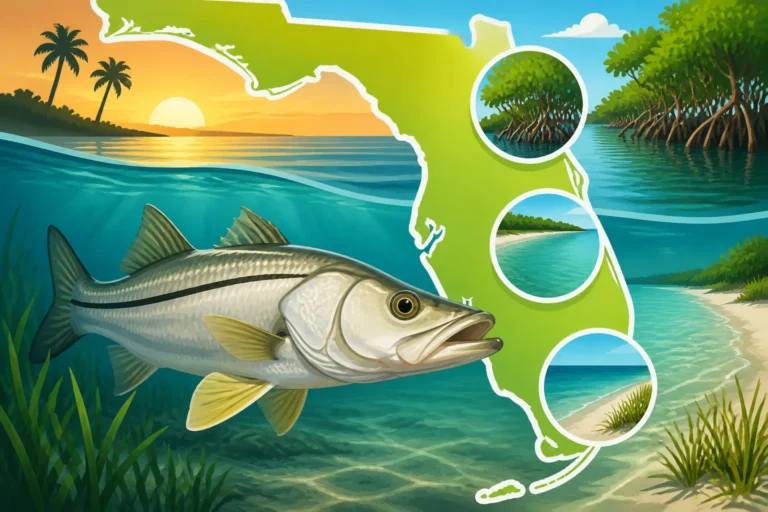
Often called "Mangos" or "Gray Snapper," the Mangrove Snapper is an incredibly common and popular target for anglers throughout Florida. They're resilient, plentiful, and can be found in a wide variety of habitats. While generally smaller than Muttons, they put up a respectable fight on light tackle and are absolutely delicious.
Key Physical Characteristics
Mangrove Snappers are masters of camouflage, which is how they get their "gray" moniker. Their bodies typically range from a grayish-brown to a reddish-brown, often with hints of red or brassy orange. What truly stands out, though, are the subtle stripes and spots. You'll usually see faint, horizontal lines along their sides, and juveniles might even have a darker stripe running through their eye. Their dorsal fin is sharply pointed, and their tail fin is slightly forked. One key feature to look for is the canine teeth – Mangroves have relatively prominent canines, especially on their upper jaw, giving them a bit of a meaner look up close. Their mouth is quite large, extending back almost to the middle of the eye. Their scales are relatively large compared to some other snapper species.
The overall body shape of a Mangrove Snapper is somewhat streamlined, built for darting in and out of structures. They don't have the deep, compressed body that some other snappers exhibit. When you're trying to figure out if you have a Mangrove, pay close attention to the overall muted color palette and the specific markings. Sometimes, the best way to train your eye is to look at photos of confirmed catches, or even better, spend some time observing them underwater if you get the chance. You can learn a lot more about targeting these fish in our Florida Mangrove Snapper Fishing Guide.
Habitat and Behavior
True to their name, Mangrove Snappers absolutely love structure, especially mangrove roots, oyster bars, docks, seawalls, and rock piles. They are incredibly versatile and can tolerate a wide range of salinities, often venturing far up brackish rivers and canals. You'll find them in both inshore and nearshore waters, making them accessible to anglers without big offshore boats. They're often schooling fish, so if you catch one, there's a good chance more are lurking nearby.
They are opportunistic feeders, preying on small fish, shrimp, crabs, and other invertebrates. Their aggressive nature makes them a blast to catch, as they'll readily strike live baits or artificial lures. They are often active during both day and night, though cooler water temperatures can make them a bit more sluggish. Understanding their preferred habitats is crucial for finding them; if you're fishing along a busy shoreline with plenty of structure, you're likely in Mangrove territory. They're a prime target for Florida Inshore Fishing Techniques due to their preference for shallower, structured areas. If you're wondering what mangrove snapper eat, understanding their diet can help you choose the best bait.
Size and Growth
While they can grow larger, a typical Mangrove Snapper caught by recreational anglers in Florida will be in the 1 to 5-pound range, often around 10 to 20 inches long. They can reach sizes upwards of 15-20 pounds, but these are considered trophy catches and are much less common. The FWC has specific size and bag limits in place to protect these populations, and knowing these is paramount. Generally, they mature relatively quickly and can live for several years.
Don't let their average size fool you; a 3-pound Mangrove in tight quarters near a dock or mangrove root can feel like a much larger fish. Their fighting spirit is commendable, making them a favorite target even when other, larger species are available. Consistent angling pressure means that larger, older fish are less common in easily accessible areas, often requiring a bit more effort to find.
The Mutton Snapper: A Detailed Examination
The Mutton Snapper, often simply called "Muttons," is a highly sought-after game fish, particularly in the warmer, clearer waters of South Florida and the Florida Keys. They are renowned for their beauty, impressive fighting ability, and exceptional table quality. Landing a large Mutton is a badge of honor for many Florida anglers.
Distinctive Physical Traits
Mutton Snappers boast a more vibrant and striking appearance than their Mangrove cousins. Their coloration is usually a beautiful blend of olive green on top, fading into silvery sides with hints of pink and red. What truly sets them apart is a prominent, rectangular black spot located just below the lateral line, usually below the soft dorsal fin. This spot is perhaps the most reliable visual indicator. They also often display iridescent blue lines and spots on their face and gill plates, which can be absolutely stunning in clear water.
Their dorsal and anal fins are sharply pointed, similar to the Mangrove, but their tail fin is distinctively deeply forked, more so than a Mangrove's. The Mutton's body is generally deeper and more compressed than a Mangrove's, giving it a more "blocky" appearance. Their mouth is not as large as the Mangrove's, and their canine teeth are less pronounced. When you see those brilliant blues, pinks, and that unmistakable black spot, you're almost certainly looking at a Mutton.
Preferred Haunts and Habits
Mutton Snappers are primarily denizens of offshore and nearshore waters, preferring coral reefs, rocky ledges, wrecks, and deeper grass flats. While juveniles might occasionally venture into shallower, protected areas, adults are rarely found far from hard bottom or structure in clear, open water. They are particularly abundant in the Florida Keys, where the extensive reef system provides ideal habitat.
Unlike Mangroves, which can tolerate murkier, brackish conditions, Muttons typically prefer clean, clear, oceanic water. They are often caught while bottom fishing or drift fishing over reefs. Their diet consists mainly of small fish, crabs, shrimp, and cephalopods. They can be finicky eaters, often requiring a subtle presentation with live bait. Because they are found in more open and deeper waters, targeting them often falls under Florida Offshore Fishing Techniques or specialized Florida Keys Fishing Guide strategies. They don't typically hang out in the super shallow mangrove roots like their gray counterparts.
Size and Growth Potential
Mutton Snappers grow significantly larger than Mangroves. A common recreational catch will be between 5 to 15 pounds, and fish exceeding 20 pounds are not uncommon. They can grow to be over 30 pounds, representing a true trophy catch. The state record fish are indeed impressive, showcasing the species' considerable growth potential. Their larger size means they pull harder and make for an even more exciting battle on the line.
Because of their size and delicious flesh, Mutton Snappers are a highly prized target for anglers. This means that responsible fishing practices are crucial to maintain their populations. Always be aware of the current FWC regulations regarding size and bag limits for Mutton Snapper, as they can change. These larger fish also tend to live longer, contributing more significantly to the reproductive health of the species.
Side-by-Side Comparison: Spotting the Differences
When you have both fish side-by-side, the differences become much clearer. However, when you're just looking at one fish, especially a small one, it can still be tricky. Let's break down the most reliable identifiers.
Head and Eye Features
One of the first places to look is the head. Mangrove Snappers have a larger mouth relative to their head size, and those prominent canine teeth are a dead giveaway. You can often see them even when the mouth is closed. Their eyes might appear a bit more central to the head. Mutton Snappers, on the other hand, have a smaller, more pointed snout, and their canine teeth are far less noticeable, almost blending in with the other teeth. Their eyes also tend to be positioned slightly higher on the head.
The iridescent blue lines and spots on a Mutton's face are another strong indicator. These are typically absent or very faint on a Mangrove. Think of the Mutton as having a more "refined" or "streamlined" face compared to the more "robust" and "toothy" appearance of a Mangrove. Sometimes, if you can get a good look, the angle of the jawline or the slope of the forehead can also provide clues, with Muttons often having a slightly steeper profile.
Tail and Fin Markings
The tail, or caudal fin, is another crucial identifier. Both have somewhat forked tails, but the Mutton Snapper's tail is much more deeply forked, almost V-shaped, with longer, more pointed lobes. The Mangrove's tail is less dramatically forked, appearing a bit more rounded at the tips of the lobes. In terms of color, Mutton Snappers often have a darker margin on their tail, sometimes with a reddish hue. Mangroves typically have a more uniformly gray or brownish tail.
Look at the other fins too. While both have pointed dorsal and anal fins, the Mutton's fins might exhibit subtle reddish or pinkish tints, particularly on the pectoral fins (the ones behind the gills). Mangrove fins are almost always uniformly gray or dusky. These color differences can be subtle, but when combined with other features, they paint a clearer picture.
Overall Body Coloration and Patterns
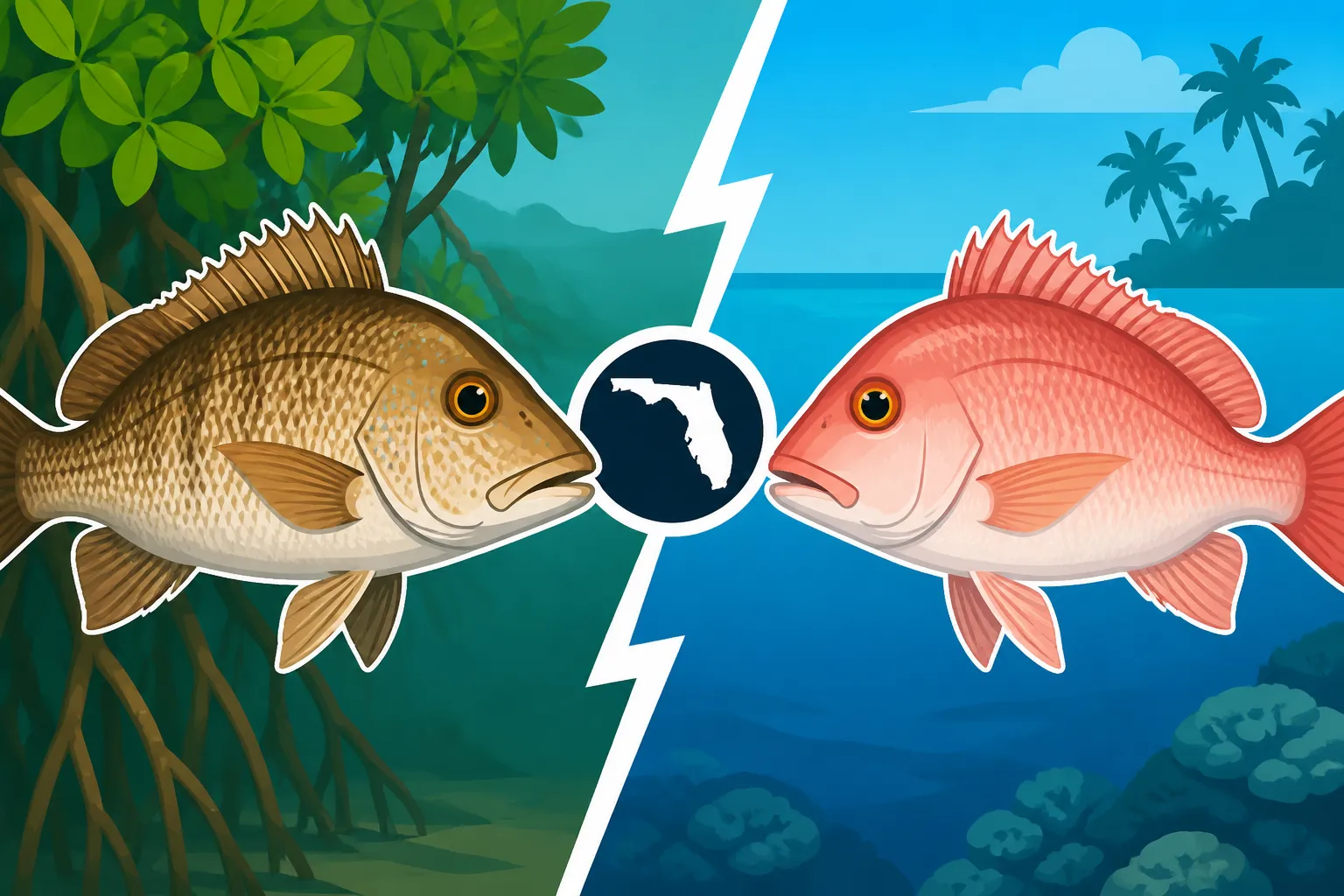
This is where the most striking differences lie. As mentioned, Mangrove Snappers are primarily gray or brownish. While they may have faint lines, they lack the vibrant colors and the definitive black spot of the Mutton. Think of them as blending in with murky backgrounds. Mutton Snappers, conversely, are much more colorful, with their olive-green backs, silvery-pink sides, and often those beautiful blue streaks.
The most important feature here, which cannot be overstated, is the black spot on the Mutton Snapper. It's usually a distinct, rectangular or sometimes oval shape, located below the lateral line and just beneath the soft rays of the dorsal fin. If you see that clear, distinct black spot, you've got a Mutton. If you don't, and the fish is predominantly gray or brown with subtle lines, it's almost certainly a Mangrove.
Here's a quick comparison table to help you keep things straight:
| Feature | Mangrove Snapper (Gray Snapper) | Mutton Snapper |
|---|---|---|
| Primary Coloration | Grayish-brown to reddish-brown, often muted | Olive green back, silvery-pink sides, sometimes blue/red hues |
| Key Body Marking | Faint horizontal lines (especially juveniles), no prominent spot | Prominent rectangular black spot below lateral line and dorsal fin |
| Head/Face | Larger mouth, pronounced canine teeth, less defined snout | Smaller, pointed snout, less pronounced canines, often blue lines on face |
| Tail Fin | Moderately forked, lobes less pointed, generally uniform color | Deeply forked, pointed lobes, often darker margin |
| Body Shape | More streamlined, elongated | Deeper, more compressed body (more "blocky") |
| Typical Habitat | Mangroves, docks, bridges, inshore structures, brackish water | Offshore reefs, wrecks, deeper grass flats, clear oceanic water |
Real-World Scenarios and Common Misidentifications
Even with all this knowledge, identifying fish in the field can still present challenges. Conditions aren't always ideal, and fish don't always read the textbook descriptions. Let's talk about some common real-world issues.
Juvenile Snappers
This is perhaps the trickiest scenario. Young Mangrove and Mutton Snappers can look even more similar than their adult counterparts. Juveniles often have less pronounced adult characteristics, and their coloration can be more uniform. A young Mutton Snapper's black spot might be faint or not fully developed, and a juvenile Mangrove might display slightly stronger stripe patterns that could be confusing.
When dealing with smaller fish, it's always best to err on the side of caution. If you're truly unsure, it's safer to release the fish. The FWC regulations often have minimum size limits, and if you can't confidently identify a small fish, you definitely can't be sure it meets the legal size. It might be helpful to carry a laminated fish identification card, which you can easily find on Amazon or at local bait shops, especially if you're fishing areas known for both species.
Environmental Color Variations
Fish coloration isn't always static. It can vary significantly based on their habitat, diet, and even their stress levels. A Mangrove Snapper living over a dark mud bottom might appear much darker than one caught over a sandy flat. Similarly, a Mutton Snapper from deeper, clearer water might exhibit more vibrant colors than one from a slightly murkier nearshore reef. This adaptability helps them camouflage themselves from both predators and prey.
Don't rely solely on the overall color. While it's a good general indicator, always look for the more consistent physical traits, like the black spot on the Mutton, the shape of the mouth and teeth, and the specific fork of the tail. These structural differences are less likely to change with environmental factors. Think of color as a hint, but the hard features as definitive proof.
Tips for Quick Identification on the Boat
When you've just brought a fish over the gunnel, time is of the essence, especially if you plan to release it. Here are some quick tips:
- Look for the Spot: First and foremost, check for that distinct, rectangular black spot on the side of the fish, below the dorsal fin. If it's there, it's a Mutton.
- Examine the Tail: Quickly glance at the tail fin. Is it deeply forked, almost like a "V"? That's a strong Mutton indicator. If it's less dramatically forked, it leans towards a Mangrove.
- Check the Mouth: Briefly observe the mouth and teeth. Are there prominent canines jutting out? That's a Mangrove trait. Muttons have a less toothy grin.
- Consider the Habitat: Where did you catch it? If you're deep offshore on a reef, a Mutton is far more likely. If you're fishing mangroves or docks inshore, it's probably a Mangrove. This isn't foolproof, but it adds to the overall picture. Remember to equip yourself with the right gear. For offshore adventures, a good Best Rod and Reel Setup for Florida Offshore Fishing is crucial, while for inshore pursuits, Best Rod and Reel Setup for Florida Inshore Fishing will serve you well.
- Use a Reference: Keep a fish identification chart or an app on your phone handy. Several free and paid apps can help with quick identification using photos. Some waterproof fishing reference cards are also available on Amazon and are excellent to have on the boat.
By quickly running through these checks, you can often make an accurate identification within seconds, allowing you to comply with regulations and get that fish back in the water if it's not a keeper, or into the cooler if it is! Understanding the difference between State Waters vs Federal Waters Fishing Rules in Florida can also impact how you approach your catch, as regulations can differ.
Whether you're targeting Mangrove Snapper in the backwaters or searching for trophy Mutton Snapper on the reefs, confidence in your fish identification skills will significantly enhance your Florida fishing experience. It allows you to fish smarter, comply with conservation efforts, and fully appreciate the incredible diversity of marine life in our beautiful state.
Disclaimer
This article is for general informational purposes only and does not constitute professional advice. Laws, prices and regulations vary by location and change over time. Consult a qualified professional for guidance on your specific situation.