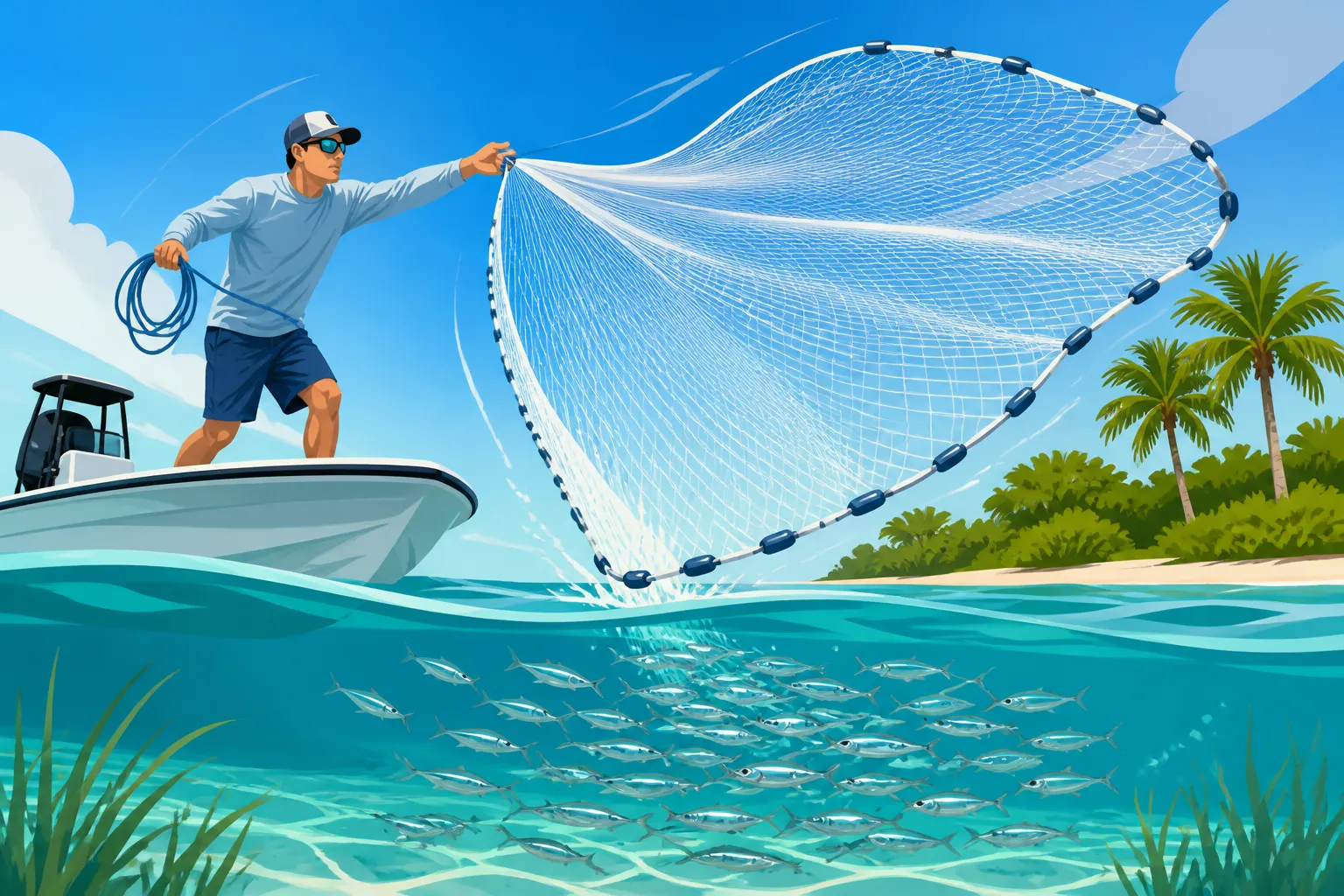
Cast Netting for Bait in Florida Waters
There's nothing quite as frustrating as heading out for a glorious day of Florida fishing, only to find the bait shop is out of your preferred live bait, or what they have is just… well, not quite lively enough. We've all been there, staring at a bucket of listless minnows, wondering if our dream catch will even bother to look their way. This guide is all about taking control of your bait supply, diving deep into the art and science of cast netting in Florida waters so you can always have the freshest, most enticing bait right at your fingertips.
Why Cast Netting for Bait is a Game Changer in Florida
Imagine the satisfaction of catching your own bait. Not only does it connect you more deeply with the entire fishing process, but it also provides a huge advantage on the water. Fresh, live bait is often the secret sauce to a successful day, and buying it every time can quickly add up.
The Unbeatable Freshness and Effectiveness of Live Bait
When you cast net your own bait, you're getting the freshest possible offering. These baitfish are swimming just moments before they're on your hook, full of natural energy and allure. Store-bought bait, even if kept alive, has often undergone transport and handling stress, making it less vibrant and less appealing to predatory fish. Think about it: a lively, frantic pilchard darting around your hook is far more enticing to a hungry snook or redfish than one that looks like it's already given up on life. The natural scent, movement, and vigor of truly fresh bait can make all the difference, particularly when targeting finicky species or when the bite is tough. This hyper-local approach means your bait is perfectly acclimated to the water conditions, further increasing its appeal.
Significant Cost Savings Over Time
Let's be honest, fishing can be an expensive hobby. Rods, reels, lures, fuel, boat maintenance – it all adds up. The recurring cost of live bait, especially if you fish frequently, can become a substantial drain on your wallet. A dozen live pilchards might set you back anywhere from $8 to $15, and if you're burning through multiple dozens in a session, that's real money. Investing in a good cast net is a one-time cost that pays for itself quickly. Once you have your net, the "bait" becomes essentially free, allowing you to allocate those funds to other gear, more fuel for exploring, or even just a celebratory meal after a successful trip. It’s a smart, economical move for any dedicated Florida angler.
Enhancing Your Overall Fishing Experience
Beyond the practical benefits, cast netting adds a whole new dimension to your fishing adventure. It transforms a simple fishing trip into a multi-faceted experience. You learn to read the water differently, looking for subtle signs of baitfish schools, understanding their movements, and anticipating their patterns. This knowledge alone makes you a more skilled and observant angler. There's an immense sense of accomplishment that comes with catching a perfect net full of shimmering bait, knowing that you've personally secured the foundation for your day's success. It's a skill that can be refined over years, turning a necessary chore into an enjoyable part of the overall outdoor experience.
Understanding Florida's Cast Netting Regulations
Florida's waters are teeming with life, and the state takes conservation seriously. That means there are specific rules and regulations around what kind of cast net you can use, what you can catch, and where you can throw your net. Failing to follow these rules can lead to fines, so it's crucial to be informed.
Licensing Requirements and Exemptions
One of the most common questions anglers have is, "Do You Need a License to Cast Net in Florida?" The answer is generally yes, if you are cast netting for personal consumption and are 16 years of age or older. A valid Florida saltwater fishing license is typically required to use a cast net in saltwater, and a freshwater fishing license for freshwater environments. The good news is, if you already have a general fishing license, it usually covers cast netting for recreational purposes.
However, there are some important nuances and exemptions. For example, if you are a Florida resident using a cast net specifically to catch bait for non-commercial purposes from the shore or a structure attached to shore, you might be exempt from needing a separate shoreline fishing license, as long as you adhere to all other regulations regarding the net itself and catch limits. Still, having a general Florida Saltwater Fishing License Rules or Florida Freshwater Fishing License Rules is usually the safest bet to avoid any confusion. It's always best to check the latest Florida Fish and Wildlife Conservation Commission (FWC) regulations before you head out, as rules can occasionally change.
Permitted Species, Bag Limits, and No-Go Zones
While a cast net is incredibly efficient at catching many species, it's not a free-for-all. Florida has specific regulations about what you can legally keep. Generally, cast nets are used to catch "unprotected" baitfish species like mullet, pilchards, threadfin herring, anchovies, and various small minnows. However, you cannot legally keep regulated game fish such as snook, redfish, or trout, even if you accidentally catch them in your net. If you happen to net a protected species, you must immediately release it unharmed.
There are also specific bag limits for certain baitfish, and you must adhere to these. For instance, there might be a limit on the number of mullet you can possess. Understanding Florida Fishing Regulations and Bag Limits is vital not just for your main target species, but for your bait as well. Furthermore, some areas are completely off-limits to cast netting, such as certain preserves, national parks, or designated conservation zones. Always be aware of local postings and regulations. You definitely don't want to get into trouble by casting your net in an area where it's prohibited.
Legal Net Specifications
The FWC also dictates the physical characteristics of the cast net itself. For most recreational bait-gathering in Florida, the maximum legal radius for a cast net is 10 feet. This means that when the net is fully spread, it can't measure more than 20 feet in diameter. The mesh size is also regulated. While not as strictly defined for all bait species as the radius, using nets with very small mesh (like ¼ inch) is common for catching smaller baits such as glass minnows or fingerling pilchards, while larger mesh (like ⅜ or ½ inch) might be used for larger baits like mullet or pinfish. It's important that your net doesn't become a hazard to marine life by having too small a mesh that traps everything indiscriminately. When you're buying a new net, make sure it explicitly states that it meets Florida FWC recreational guidelines.
Choosing the Right Cast Net for Florida Waters
Picking the perfect cast net can feel a little overwhelming with all the options out there. But trust me, having the right net for the job makes all the difference in your success and your enjoyment of the process. It's not just about throwing a piece of mesh; it's about matching the net to your strength, your target bait, and the specific fishing conditions you'll encounter.
Net Size, Mesh Size, and Weight Considerations
This is where the rubber meets the road. The "size" of a cast net refers to its radius, typically ranging from 4 feet for beginners up to the legal maximum of 10 feet in Florida.
- Net Size (Radius): A 6-foot net is a fantastic starting point for most anglers. It's manageable to throw, even for novices, and covers enough area to be effective. As you gain skill, an 8-foot net offers a larger spread, increasing your chances of catching more bait with each throw. Remember, larger nets are heavier and require more technique and strength to throw effectively. If you're planning to target bait from a kayak, a 6-foot net might be easier to manage than an 8-foot net.
- Mesh Size: This dictates the size of the bait you'll primarily catch.
- ¼-inch mesh: Ideal for catching very small baits like glass minnows, fingerling pilchards, or tiny threadfin herring. It's excellent for getting a high volume of small bait but can get snagged more easily on bottom debris.
- ⅜-inch mesh: This is arguably the most versatile mesh size for Florida. It's great for common bait like pilchards, medium-sized threadfins, and smaller mullet. It allows smaller, undesirable bait to escape while retaining your target species.
- ½-inch mesh: Best for larger baits like adult mullet, pinfish, or larger threadfin herring. It allows smaller bait to escape freely but might miss some of the smaller, more common bait species.
- Lead vs. Galvanized Weights: The weight system at the bottom of the net is crucial for how fast it sinks.
- Lead weights: These are denser, sink faster, and create a tighter seal on the bottom, which is excellent for catching fast-moving bait or when fishing in slightly deeper water. They are generally preferred by experienced anglers.
- Galvanized weights: These are less expensive and more environmentally friendly but don't sink as quickly or create as tight a seal. They are often found on beginner-friendly nets and can be adequate for shallow, slower-moving bait.
Here's a quick comparison:
| Net Characteristic | Recommendation for Small Bait (e.g., glass minnows) | Recommendation for Medium Bait (e.g., pilchards, threadfin) | Recommendation for Large Bait (e.g., mullet, pinfish) |
|---|---|---|---|
| Net Size (Radius) | 4-6 feet (easier to throw, still effective) | 6-8 feet (good balance of coverage and manageability) | 8-10 feet (maximize spread for larger schools) |
| Mesh Size | ¼ inch | ⅜ inch (most versatile) | ½ inch |
| Weight Type | Lead (for faster sink) | Lead (for faster sink and better seal) | Lead (essential for fast-moving, larger bait) |
Material Quality and Construction
Most cast nets are made from either monofilament or nylon.
- Monofilament: This is the most popular choice for cast nets in Florida. It’s nearly invisible in the water, sinks quickly, and creates a wider, more open spread when thrown. However, it can be prone to tangling if not handled carefully and can be a bit stiffer.
- Nylon: Nylon nets are softer, easier to handle, and less prone to tangling, which makes them a good option for beginners. They are also generally more durable against abrasions. The trade-off is that nylon nets tend to absorb water, making them heavier, and they don't sink as fast or spread as widely as monofilament.
When inspecting the construction, look for strong, well-tied lead lines and robust braille lines (the lines that pull the net closed). A high-quality swivel connecting the hand line to the braille lines is also important for smooth retrieval. Brands like Betts and Fitec are well-regarded for their durable and effective cast nets. You can often find a good selection of various sizes and mesh configurations on Amazon, making it easy to compare options and read reviews before purchasing.
Importance of a Good Hand Line and Swivel
Don't overlook these often-forgotten components. The hand line, or "horn line," is what you hold onto as you throw and retrieve the net. It should be comfortable to hold, strong, and long enough for your typical casting distance. Many nets come with a relatively short hand line; consider replacing it with a longer, more comfortable one if needed. The swivel, located where the hand line meets the net's braille lines, is critical. A high-quality, heavy-duty swivel prevents twisting and tangling during retrieval, allowing the net to close properly and smoothly. A cheap swivel can be a constant source of frustration, leading to lost bait and wasted throws.
Mastering the Art of Throwing a Cast Net
Ah, the cast net throw! It looks so effortless when a seasoned pro does it, but many beginners end up with a tangled mess or a half-hearted pancake. Don't worry, it's a skill that can absolutely be learned with practice. The key is technique, not brute strength.
Step-by-Step for a Consistent, Full Spread
There are several ways to throw a cast net, but the goal is always the same: to get a wide, flat pancake-like spread that descends evenly. Here's a common and effective method, often called the "shoulder throw" or "over-the-shoulder" technique:
- Gather the Net: Start by holding the horn (the small ring at the top of the net where the hand line attaches) in your non-dominant hand. Gather the hand line in comfortable loops in this same hand.
- Organize the Lead Line: Let the net hang freely. Use your dominant hand to pick up about half of the lead line (the weighted perimeter). Drape this half over your non-dominant arm, allowing it to hang freely. This is crucial for preventing tangles and ensuring an even spread.
- Create a Pocket: Now, with your dominant hand, grab a portion of the lead line from the opposite side of the net, about halfway around. You'll want to form a "pocket" or "cup" by bringing this section up and holding it with your dominant hand, near the weights you just draped over your non-dominant arm. Some people even put a small section of the lead line into their teeth for extra tension and control, though this isn't strictly necessary.
- The Swing: Turn your body slightly, away from your target. Swing the net back slightly, generating momentum.
- The Release: In one fluid motion, swing the net forward towards your target. As you do, simultaneously release the lead line from your dominant hand first, then "throw" the lead line off your non-dominant arm. The key is to release the dominant hand's lead line with a bit more force, causing it to unfurl and create that wide, round spread. Imagine trying to throw a dinner plate perfectly flat onto the water.
- Let it Sink: Allow the net to sink completely. Watch for the bait to get trapped before starting your retrieve.
It sounds complex, but it becomes second nature with repetition. Don't get discouraged if your first few throws aren't perfect – that's totally normal!
Practice Drills and Troubleshooting Common Issues
The best place to practice is in your yard or an open park, away from obstructions. You can even use a hula hoop or a small target to aim for. The more you practice, the more muscle memory you'll build. Focus on the timing of your release and the smoothness of your swing.
- Issue: The "Taco" or "Burrito" (Net doesn't open fully): This usually means you're not releasing the lead lines evenly, or you're not getting enough centrifugal force in your throw. Make sure you have about half the lead line in your dominant hand, and that you're releasing that side with a bit more oomph to kick it open.
- Issue: Tangled Lines (Braille lines getting knotted): This is often due to poor organization before the throw. Always take the time to gather your hand line neatly and ensure the lead line is draped smoothly over your non-dominant arm without any twists or knots. Sometimes, even slight current can cause tangles during the sink.
- Issue: Not Sinking Fast Enough: This could be a sign you need a net with heavier lead weights, or that you're targeting bait in water that's too deep for your current net. Consider a net with more pounds per foot of lead line for quicker sinks.
Remember, patience is key. Watch videos of experienced anglers throwing a net, and try to mimic their technique. You'll get it!
Safety First: Being Mindful of Your Surroundings
While cast netting is relatively safe, it's important to be aware of your surroundings.
- Avoid Overhanging Obstacles: Trees, power lines, and boat rigging can snag your net, causing damage or even personal injury if it whips back.
- Watch for People: Always ensure no one is in the immediate vicinity of your throw, especially if you're still perfecting your technique. Those lead weights can pack a punch.
- Water Hazards: Be mindful of oyster bars, rocks, or heavy vegetation on the bottom, as these can easily tear your net. If you're fishing from a boat, be aware of props and engines.
- Currents: Strong currents can make casting and retrieving difficult, and can also make your net drift, potentially into hazards. Choose calmer waters when possible, or adjust your technique for the current.
Targeting Common Baitfish with Your Cast Net
Florida's waters are a buffet for predatory fish, and knowing how to find and catch the right bait can dramatically improve your fishing success. Different baitfish prefer different habitats, and understanding their behavior will make you a much more effective cast netter.
Identifying Popular Bait Species
Florida offers a variety of fantastic baitfish you can catch with a cast net. Here are some of the most common and effective:
- Pilchards (Whitebait/Sardines): These are perhaps the holy grail of inshore live bait in Florida. They are energetic, durable on a hook, and almost everything eats them – snook, redfish, trout, tarpon, you name it. They typically school up in shallow grass flats or around channel markers and docks. They can be tricky to net as they are very fast.
- Threadfin Herring: Another excellent all-around bait, slightly larger than pilchards often. They have a more slender body profile and are also highly effective for a wide range of game fish. They often school in open water, sometimes in very large numbers, making them easier to target than pilchards.
- Mullet (Fingerling or Adult): Smaller "finger mullet" are superb bait for snook, redfish, and even some freshwater bass when they push into brackish areas. Larger mullet are great for targeting bigger predatory fish or cut bait. They are often found in canals, creeks, and along shorelines.
- Pinfish: These hardy little fish are spiny, making them less appealing to some fish, but they are incredibly tough and great for bottom fishing for snapper or grouper, and even larger snook or redfish. Pinfish love grassy areas and rocky bottoms. Learning How to Catch Pinfish for Bait specifically can really boost your bottom fishing game.
- Mojarras (Sand Perch): These silvery, flat-bodied fish are found over sandy bottoms, often near passes or along beaches. They are a fantastic bait for pompano, permit, and even snook when they're feeding in the surf.
- Glass Minnows (Bay Anchovies): Tiny, translucent, and incredibly effective for schooling predators like Spanish mackerel or smaller trout. They often form dense schools just below the surface.
Each of these baits has its own strengths and its own ideal targets. For instance, a lively pilchard is a prime choice when targeting a cruising Florida Snook Fishing Guide, while a finger mullet might be perfect for a hungry Florida Redfish Fishing Guide in a shallow pond.
Reading the Water for Signs of Baitfish
This is where your observational skills come into play. Baitfish rarely hide their presence completely.
- "Showers": Look for eruptions on the surface of the water, resembling rain. This is a classic sign of baitfish being chased by predators, or simply schooling densely near the surface.
- Dark Patches/Shadows: In clear, shallow water, you might see dark patches moving just under the surface. These are often schools of pilchards, mullet, or threadfins.
- Bird Activity: Diving birds, especially terns and pelicans, are a huge clue. They're usually diving into schools of baitfish. Where the birds are feeding, the bait is abundant.
- Subtle Ripples/Flashes: Sometimes, especially on a calm day, you'll see small, subtle ripples or flashes of silver just below the surface as baitfish move or turn.
- Tide Lines and Current Breaks: Baitfish often congregate along tide lines or where currents create eddies, bringing them food and a sense of security. Pay attention to Best Tides for Inshore Fishing in Florida as baitfish movement is heavily influenced by tidal flow.
- Structure: Docks, bridges, channel markers, and oyster bars provide cover and food for baitfish. Always cast around these structures.
Seasonal and Environmental Considerations
Florida's baitfish populations can fluctuate with seasons, water temperatures, and even red tide events.
- Spring and Fall: These are generally prime times for cast netting. Pilchards, threadfins, and mullet are abundant as water temperatures are stable and comfortable. This is when the baitfish are most active and schooling heavily.
- Summer: Bait is usually plentiful, but higher water temperatures can make some species sluggish, and afternoon thunderstorms can make casting challenging.
- Winter: Bait can be harder to find, especially during cold snaps. Many species move to deeper, warmer waters or seek refuge in canals and residential areas. You might need to adjust your approach or target different bait species, like shrimp (if legal to net in your area – or you can learn How to Catch Shrimp for Bait in Florida).
- Red Tide and Algae Blooms: These events can significantly impact baitfish populations, often causing fish kills or driving bait away from affected areas. Always check local conditions before heading out, as fishing can be severely hampered during these times.
Maintaining Your Cast Net for Longevity
A good cast net is an investment, and like any fishing gear, it performs best when properly cared for. Neglecting your net can lead to foul smells, tears, and a significantly shortened lifespan. A little effort after each trip goes a long way.
Proper Cleaning and Drying Techniques
This is probably the most crucial step in cast net maintenance.
- Rinse Immediately: As soon as you're done cast netting, rinse your net thoroughly with fresh water. Saltwater, mud, sand, and fish scales can all degrade the monofilament or nylon over time. A garden hose is perfect for this. Make sure to rinse every part, including the hand line and the braille lines. If you've been netting in brackish or murky water, give it an extra good rinse to remove any algae or debris.
- No Soap (Usually): Generally, soap is not recommended as it can strip protective coatings or leave residues that can affect the net's performance or attract fish negatively. A plain freshwater rinse is almost always sufficient.
- Hang to Dry Completely: After rinsing, hang your net in a shady, well-ventilated area to dry completely. Direct sunlight, especially prolonged exposure, can weaken monofilament over time. Hang it from a single point, allowing it to unfurl and drain. Make sure it's not touching the ground, where bugs or rodents could chew on it. Never store a wet or damp net, as this is a surefire way to invite mildew, rot, and an absolutely awful smell.
Patching Holes and Replacing Braille Lines
Even with the best care, snags happen. Oyster shells, sharp rocks, and even powerful baitfish can cause tears in your net.
- Patching Small Holes: For small holes, you can often use a specialized cast net repair kit, available at most tackle shops or on Amazon. These kits usually include monofilament line of various sizes and a netting needle. Learning a basic netting knot, like the square knot or a sheet bend, will allow you to quickly patch small tears. The key is to address them quickly before they unravel into larger problems.
- Repairing Larger Tears: For bigger tears or multiple small holes in one section, it might be more efficient to cut out the damaged section and re-net a new piece of mesh. This is a more advanced technique that takes practice, but it can save an otherwise ruined net.
- Replacing Braille Lines: The braille lines are the individual lines that run from the horn to the lead line, and they are responsible for pulling the net closed. Over time, these can fray or break. Replacing a braille line involves tying a new length of monofilament (matching the original strength) from the horn down to its attachment point on the lead line. Ensure all braille lines are of equal tension for an even closure.
Proper Storage for Longevity
How you store your net between trips is almost as important as cleaning it.
- Cool, Dry Place: Once completely dry, store your net in a cool, dry place, away from direct sunlight, extreme temperatures, and chemicals. A dedicated net bucket or bag is ideal.
- Avoid Compression: Try to avoid storing it in a way that heavily compresses the mesh for long periods, as this can create permanent creases and weaken the material.
- Pest Control: If storing for extended periods, especially in a garage or shed, be mindful of rodents or insects that might chew on the netting. Some anglers even use mothballs or cedar chips near their nets, though be cautious of any scent transfer to your fishing gear.
By following these maintenance tips, your cast net will serve you faithfully for many seasons, continuing to provide you with the freshest bait and enhancing your Florida fishing adventures.
Disclaimer
The information provided in this guide is for general informational purposes only and does not constitute legal advice. Fishing regulations in Florida, including those pertaining to cast nets, are subject to change by the Florida Fish and Wildlife Conservation Commission (FWC). It is the angler's sole responsibility to be aware of and comply with all current federal, state, and local fishing laws and regulations before engaging in any fishing activities. Always consult the most up-to-date FWC rules and guidelines, or contact the FWC directly, to ensure compliance.