Trolling vs Bottom Fishing for Offshore Species
Choosing how to fish offshore in Florida can feel like a real puzzle, especially when you're staring at the vast expanse of the Gulf or Atlantic and wondering whether to drag baits or drop lines. Many anglers struggle with the decision of whether to spend their day trolling, covering ground in search of pelagic species, or settling over a promising spot for some bottom fishing action. This guide will cut through the confusion, helping you understand the nuances of both trolling and bottom fishing so you can confidently pick the best strategy for your next offshore adventure in the Sunshine State.
Understanding Trolling for Offshore Species
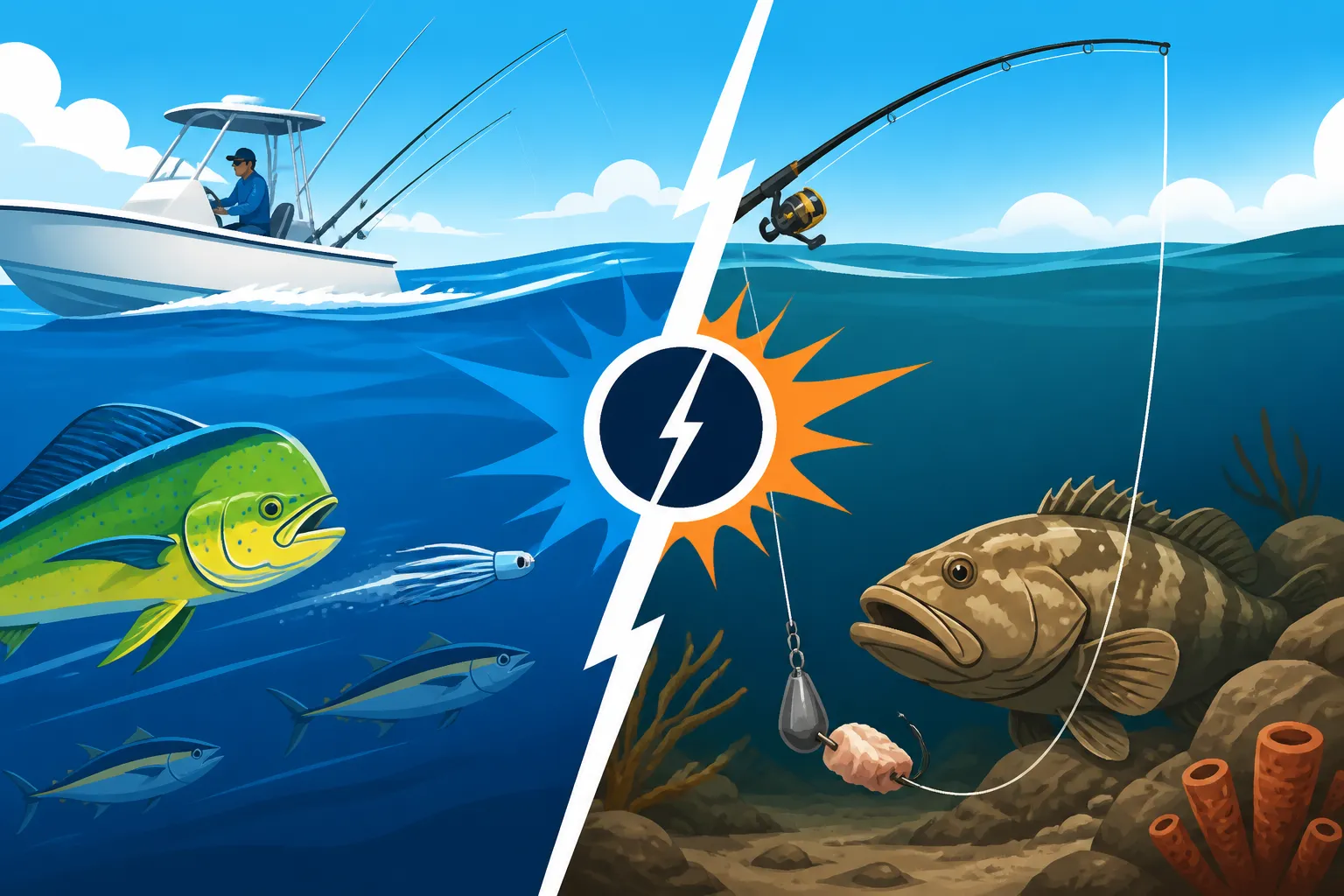
Trolling is a dynamic, active style of fishing that involves moving your boat at a slow, controlled speed while dragging baits or lures through the water. It's truly an art form, requiring constant attention to your spread, boat speed, and ocean conditions. When executed well, trolling can put you on some of Florida's most exciting and powerful offshore species.
The Basics of Trolling
At its heart, trolling is about imitating natural prey. You're trying to make your lures or baits look like a school of fleeing fish or a lone baitfish struggling to get away. This involves deploying multiple lines, often from outriggers, downriggers, or flat lines, to create a "spread" behind the boat. Each line is set at a different distance and depth, and often with different lure types and colors, to maximize your chances of appealing to a wide range of predators. The goal is to cover as much water as possible, presenting your offering to fish that might be scattered across a vast ocean.
Boat speed is absolutely crucial in trolling. Too fast, and your baits might skip unnaturally; too slow, and they might lack the enticing action needed to draw a strike. Typically, you'll be looking for speeds anywhere from 4 to 10 knots, but this can vary greatly depending on the species you're targeting, the type of bait or lure you're using, and the sea conditions. Pay close attention to how your baits are swimming. They should look alive, darting and weaving, simulating an easy meal. Many seasoned anglers will even make subtle turns or changes in speed to trigger a bite from a following fish.
Target Species and Optimal Conditions for Trolling
Trolling is primarily a technique for pursuing pelagic (open ocean) species that are often found near the surface or in the upper water column. In Florida, this means you're frequently targeting species like mahi-mahi (dolphin), wahoo, tuna, king mackerel, and the majestic sailfish. These fish are notorious for chasing down fast-moving prey, making a properly trolled spread incredibly effective. If you're looking for an adrenaline rush with explosive surface strikes, trolling is definitely your go-to method.
Optimal conditions for trolling often involve calm to moderate seas, which allow for better lure presentation and easier detection of strikes. While you can certainly troll in rougher water, it becomes more challenging to keep your baits swimming correctly and to maintain consistent boat speed. Look for signs of life on the surface: diving birds, baitfish schools, weed lines, or current rips are all indicators that predators might be in the area. These features act as natural congregating points for bait and, consequently, for the larger fish you're hoping to catch. Targeting these areas increases your odds significantly. For those wondering how far out to go, you can check out How Far Offshore Do You Need to Go for Mahi Mahi?.
Essential Trolling Gear
When you're gearing up for a day of trolling, especially for larger offshore species, having the right tackle is paramount. You'll need stout rods and reels capable of handling powerful runs and heavy drag pressures. For many Florida trolling applications, 30-pound to 50-pound class outfits are common, often spooled with monofilament line known for its stretch, which can act as a shock absorber during violent strikes. However, braided lines are also popular for their sensitivity and strength.
Your lure selection is vast, from flashy skirted lures that imitate squid or baitfish, to cedar plugs, spoons, and dive baits. Many anglers also incorporate natural baits like ballyhoo or bonito strips, often rigged to swim like live bait behind a skirt or lead head. Don't forget the terminal tackle: heavy fluorocarbon leaders are essential for their abrasion resistance and low visibility, while strong, sharp hooks are non-negotiable. You can find a huge array of these items, from rods to lures, readily available on platforms like Amazon, making it easy to build out your offshore arsenal. You might also want to check out Best Rod and Reel Setup for Florida Offshore Fishing for more specific recommendations.
Deciphering Bottom Fishing for Offshore Species
In stark contrast to the active pursuit of trolling, bottom fishing is often about patience and precision. It’s a method that relies on finding the right structure and presenting your bait directly to the fish that live there. It can be incredibly rewarding, often leading to a cooler full of delicious table fare.
The Fundamentals of Bottom Fishing
Bottom fishing, as the name suggests, involves dropping baits or lures down to the seafloor where many desirable species reside. This method is all about structure: reefs, wrecks, ledges, rocks, and even subtle changes in bottom composition. These underwater features provide habitat, food, and protection for a wide variety of fish, making them prime targets. Once you've located a promising spot, you'll position your boat directly over or slightly up-current from it, often using a reliable GPS and a good fish finder.
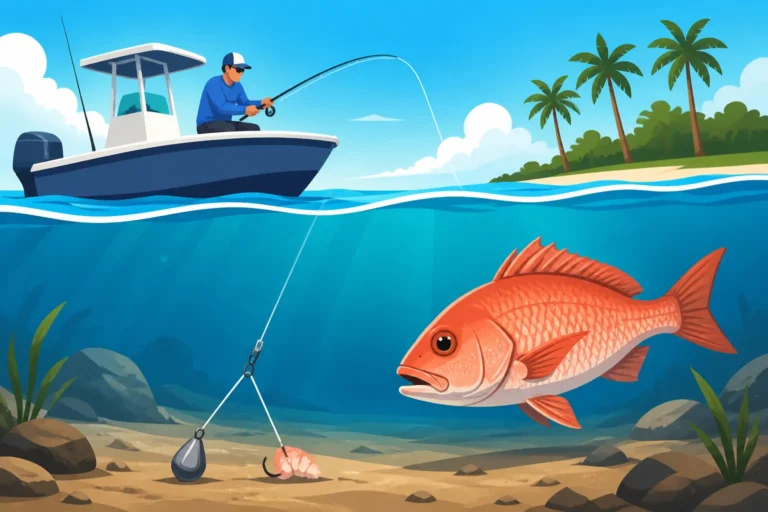
The technique itself usually involves a weighted rig, often a "knocker rig" or a "Carolina rig," with one or more hooks baited with natural offerings like squid, cut bait, or live pinfish. The goal is to get your bait directly to the bottom or just a few feet above it, keeping it in the strike zone. You might simply hold your rod, feeling for bites, or place it in a rod holder and wait for the tell-tale tug. Some anglers prefer to gently lift and drop their bait (jigging) to add action and attract attention. It’s a slower, more deliberate approach than trolling, but can yield incredibly consistent results when you're on the right spot. For more detailed instructions on specific techniques, check out Bottom Fishing Technique for Snapper and Jigging Technique for Grouper.
Target Species and Optimal Conditions for Bottom Fishing
Bottom fishing in Florida is a fantastic way to target a wide array of delicious reef fish. You'll often be aiming for various snapper species like mangrove, lane, and mutton snapper, as well as several types of grouper, including gag, red, and black grouper. Amberjack, hogfish, and various porgies also frequent these structured habitats. These fish are typically strong fighters, providing a thrilling battle once hooked.
Optimal conditions for bottom fishing often involve relatively calm currents, allowing your bait to reach and stay on the bottom without too much drift. While you can bottom fish in almost any sea state, calmer waters make it easier to maintain your boat's position and feel those subtle bites. Look for distinct underwater features on your fish finder – schools of bait, large arcs that indicate bigger fish, or changes in depth. Tidal movements can also be important, with certain stages of the tide bringing more active feeding periods. Knowing your specific target species and their preferred habitats is key, whether it's the deeper haunts of a Florida Grouper Fishing Guide or the rocky ledges favored by a Florida Red Snapper Fishing Guide.
Essential Bottom Fishing Gear
For bottom fishing, your gear needs to be robust enough to handle heavy weights, strong currents, and powerful fish that will try to dive back into the structure once hooked. Heavy-action rods with good backbone are essential, paired with conventional reels (baitcasters) or large spinning reels that can hold plenty of strong braided line. Braided line is often preferred for bottom fishing because its minimal stretch allows you to feel even the lightest bites in deep water and provides maximum power to pull fish away from structure.
Sinkers will be a crucial part of your bottom fishing setup. You'll need an assortment of weights, from a few ounces to several pounds, depending on the depth and current. Circle hooks are highly recommended, especially when targeting snapper and grouper, as they tend to hook the fish in the corner of the mouth, making for easier release of undersized fish and less harm to the fish. Of course, a wide variety of baits are used, from fresh cut bait (sardines, squid, bonita) to live pinfish, grunts, or pilchards. All these essentials, from heavy-duty reels to a wide selection of hooks and weights, are easily accessible online, with many anglers finding great deals and quick shipping through retailers like Amazon to stock their tackle boxes.
Trolling vs. Bottom Fishing: A Comparative Analysis
Deciding between trolling and bottom fishing really comes down to what you're hoping to catch, the conditions you face, and your personal fishing style. Both methods are incredibly effective in Florida's offshore waters, but they offer vastly different experiences and target different ecosystems.
Key Differences in Technique and Strategy
The most fundamental difference between trolling and bottom fishing lies in their approach to finding fish. Trolling is a search-and-destroy mission: you're actively covering ground, hoping to intercept migratory or schooling pelagic fish. You're constantly moving, deploying multiple lines, and adjusting speed and direction. It's a high-energy, dynamic style of fishing that relies on presenting baits that mimic fast-moving prey. The success often comes from sheer coverage and hitting the right patch of water where fish are feeding.
Bottom fishing, on the other hand, is a more stationary and often more patient game. You're typically targeting specific, known structures where fish congregate. It's about precision: getting your bait into a very particular zone and waiting for the fish to come to you. While you might drift over a larger area, the core strategy involves pinpointing productive spots and anchoring or using a trolling motor/spot-lock to stay put. This method focuses on the habitat and the fish that live within it, rather than broad-ranging pursuit. These distinct strategies make for very different days on the water, appealing to different types of anglers. You can explore more general strategies in Florida Offshore Fishing Techniques.
Pros and Cons of Each Method
Let's break down the advantages and disadvantages of both trolling and bottom fishing to help you weigh your options:
Trolling
- Pros:
- Covers More Water: Excellent for locating scattered fish or migratory patterns.
- Exciting Strikes: Pelagic fish often hit lures with explosive force, providing an adrenaline rush.
- Variety of Species: Can encounter a wide range of pelagic predators in a single outing, from mahi-mahi to king mackerel to sailfish.
- Active Fishing: Always something to do, from checking lines to adjusting boat speed.
- Cons:
- Fuel Consumption: Constant boat movement means burning more fuel than stationary fishing.
- Can Be Less Productive if Fish Are Not Active: If fish aren't aggressively chasing, you might pass over many without a bite.
- Requires More Complex Spreads: Setting up multiple lines, outriggers, and downriggers can be complicated for beginners.
- Less Table Fare (Sometimes): While delicious, some pelagic species are caught purely for sport (e.g., sailfish often released).
Bottom Fishing
- Pros:
- Consistent Catch Rates: Once you find a good spot, you can often catch multiple fish, leading to a full cooler.
- Delicious Table Fare: Many bottom species like snapper and grouper are highly prized for eating.
- Less Fuel Consumption: Often involves less boat movement, saving on gas.
- Simpler Setup: Typically requires fewer rods and a less complex tackle spread.
- Cons:
- Can Be More Stationary: If you prefer constant action, waiting for bites might feel slow.
- Snags and Break-offs: Fishing near structure means a higher risk of getting hung up and losing tackle.
- Limited Species Variety (Usually): Primarily targets reef-dwelling fish, so you're less likely to catch pelagics.
- Depth Challenges: Fishing in very deep water can be physically demanding and requires specialized gear.
Here's a quick comparison table:
| Feature | Trolling | Bottom Fishing |
|---|---|---|
| Primary Goal | Locate and intercept active, migratory fish | Target structure-oriented, resident fish |
| Boat Movement | Constant, slow movement (4-10 knots) | Stationary or slow drift over structure |
| Target Depth | Upper water column (surface to ~100 ft) | Seafloor and immediate surrounding structure |
| Key Species | Mahi-mahi, Wahoo, Tuna, King Mackerel, Sailfish, Florida King Mackerel Fishing Guide, Florida Sailfish Fishing Guide | Grouper, Snapper, Amberjack, Hogfish, Florida Amberjack Fishing Guide |
| Fuel Usage | Higher due to constant engine operation | Lower, often idling or anchored |
| Tackle Complexity | Moderate to High (multiple lines, outriggers) | Low to Moderate (less spread, heavier gear) |
| Typical Bite | Aggressive, often visual surface strike | Subtle to strong tug on the line |
| Risk of Snags | Low (open water) | High (fishing near wrecks, reefs) |
When to Choose Trolling, When to Choose Bottom Fishing
The decision often comes down to a few factors, and sometimes, experienced captains even combine both methods during a single trip. If your primary goal is to cover vast distances, search for migratory fish, and experience the thrill of a high-speed strike, then trolling is your best bet. This is particularly true if you're targeting species like wahoo or tuna in clear blue water, or if there's a strong weed line or current rip that you want to work up and down. If you're going out specifically for species like mahi-mahi, which often school and travel in open water, Florida Mahi Mahi Fishing Guide would certainly point you towards trolling as the preferred method.
On the other hand, if you're aiming for a consistent catch of delicious eating fish, prefer a more relaxed pace, or have access to known productive reefs or wrecks, then bottom fishing is the way to go. It's an excellent choice when targeting Florida Grouper Fishing Guide or various snapper species. Many anglers will head offshore, troll for a few hours to see if they can pick up some pelagics, and then, if the trolling bite is slow or they're ready for some different action, they'll stop on a numbers of spots and switch to bottom fishing. For those considering a guided trip, understanding these distinctions can also help you communicate your preferences to your captain, whether you're booking a Florida Fishing Charter Guide or a Florida Deep Sea Fishing Charter Guide.
Ultimately, both trolling and bottom fishing offer unique and exciting ways to experience Florida's incredible offshore waters. Knowing when and how to employ each technique will dramatically increase your chances of a successful and memorable fishing trip.
Disclaimer
This article is for general informational purposes only and does not constitute professional advice. Laws, prices and regulations vary by location and change over time. Consult a qualified professional for guidance on your specific situation.