Florida Amberjack Fishing Guide
Few fish in Florida waters offer the raw power and stubborn fight quite like the amberjack. If you've ever hooked one, you know the feeling – that immediate, relentless dive, bending your rod into a question mark and testing every sinew in your arms. Many anglers, especially those new to offshore fishing, are often left exhausted but exhilarated, wondering how to consistently target these formidable "reef donkeys." This comprehensive guide will equip you with all the knowledge you need to successfully find, hook, and land amberjack in Florida's diverse marine environments.
Understanding Florida Amberjack: The Reef Donkey
Amberjacks are truly one of Florida's most iconic offshore game fish, known for their incredible strength and penchant for deep-water structures. There's a reason they've earned the nickname "reef donkey" – they pull like one! If you're looking for a serious workout on the water, targeting amberjack is the way to go.
What Makes Amberjack So Unique?
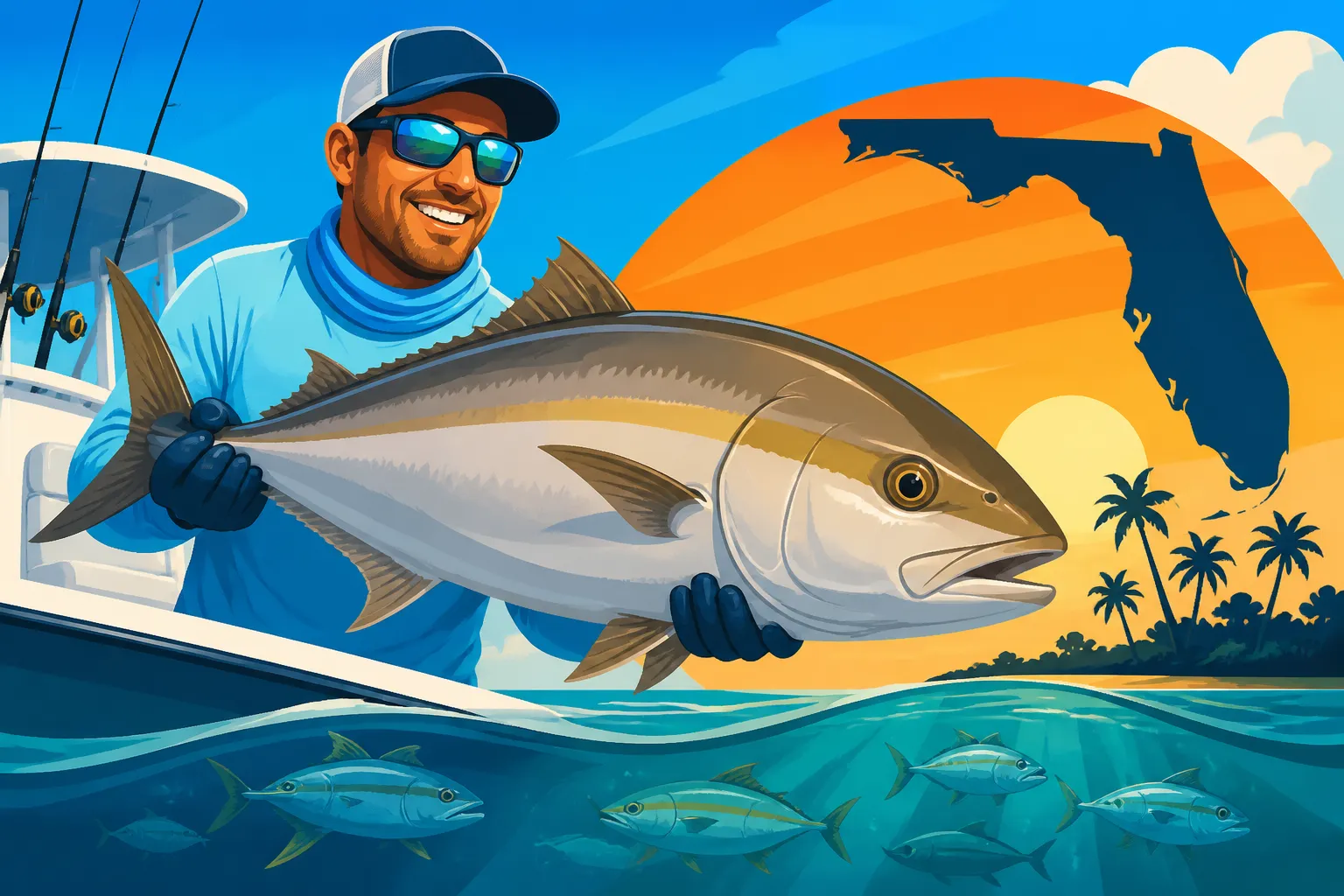
The greater amberjack (Seriola dumerili) is the most commonly encountered species in Florida. They're easily identifiable by their elongated, somewhat compressed bodies, typically dark blue or purplish-blue on the back, fading to silvery-white on the belly. A distinctive dark amber stripe runs from their nose through their eye to the front of their dorsal fin, which often disappears or becomes faint as the fish matures. They also have a dark band that slants from the first dorsal fin to the pectoral fin, a feature that becomes more pronounced when they're excited or stressed.
What truly sets them apart is their sheer power. These fish are built for speed and endurance, making them formidable opponents on the line. When hooked, they make blistering runs towards the safety of structures, often leading to cut-offs if your drag isn't set right or your tackle isn't up to the task. They typically school in good numbers, so once you find one, you're likely to find more, leading to exciting multiple hook-ups.
Where Do Amberjack Live in Florida Waters?
Amberjacks are primarily offshore dwellers, preferring deeper waters. You'll find them congregating around various submerged structures throughout the Gulf of Mexico and the Atlantic Ocean off Florida's coasts. They're highly opportunistic feeders, and these structures provide both a food source and a protective environment. From the Panhandle down to the Florida Keys, if there's significant offshore structure, there's a good chance amberjack will be calling it home.
They are typically found in depths ranging from 60 to 300 feet, but they can occasionally be caught shallower, especially over pronounced wrecks or reefs close to the coast. Their preferred habitat includes natural rock outcroppings, coral reefs, artificial reefs, shipwrecks, and even oil rigs. These areas attract smaller baitfish, which in turn attract the amberjack. Understanding their habitat is crucial for successful targeting, as simply drifting in open water won't usually cut it.
Amberjack Species: Greater vs. Lesser
While the greater amberjack is the star of the show for most Florida anglers, it's important to be aware of its smaller cousin, the lesser amberjack (Seriola fasciata). These two species share many similarities but have distinct differences that are important for identification, especially when considering regulations. Lesser amberjacks are generally smaller, rarely exceeding 15 pounds, and have a proportionately larger eye and a deeper body than the greater amberjack.
The most reliable way to distinguish them is by looking at the dorsal fin. Lesser amberjacks have a small, detached finlet behind their second dorsal fin, which is absent in greater amberjacks. They also tend to inhabit slightly shallower waters than greater amberjacks. While both are fun to catch, the sheer size and fighting ability of the greater amberjack are what most anglers are after. You'll want to be able to tell the difference quickly, particularly to ensure you're adhering to specific size and bag limits for each species.
Prime Time for Amberjack: Seasons and Regulations
Navigating the rules for amberjack fishing in Florida can sometimes feel like a moving target. Regulations are put in place to ensure sustainable populations, and they can change based on scientific assessments and fishing pressure. Staying informed is crucial, as going out unprepared can lead to fines and harm fish stocks.
When is Amberjack Season in Florida?
Amberjack seasons in Florida are typically managed separately for the Gulf of Mexico and the Atlantic Ocean, and they can vary year to year. Historically, there have been periods where the season is closed for extended periods, especially in the Gulf, to allow stocks to rebuild. These closures are common with highly sought-after species like amberjack and red snapper. Florida Red Snapper Season Guide highlights how closely monitored these fisheries are. When the season is open, it's often a limited window, so you'll need to pay close attention to the Florida Fish and Wildlife Conservation Commission (FWC) website or a reliable local bait shop for the most current information.
Generally, amberjack are present year-round around Florida's offshore structures, but their availability for harvest is strictly controlled. Anglers often flock to the waters during these brief open seasons, so expect more boat traffic around popular spots. Always verify the current opening and closing dates before planning your trip to avoid disappointment or legal trouble. It's not uncommon for recreational seasons to open for just a few weeks or months, sometimes split into spring and fall segments.
Florida Amberjack Size and Bag Limits
Just like the seasons, the size and bag limits for amberjack are subject to change and differ between the Gulf and Atlantic. For greater amberjack, there's usually a minimum size limit, often around 30-34 inches fork length (measured from the tip of the jaw to the fork of the tail). The bag limit is typically one fish per person per day. Lesser amberjacks usually have a smaller minimum size and a more generous bag limit, often five fish per person per day, but again, this can fluctuate.
These limits are designed to protect spawning populations and allow younger fish to grow to maturity. Keeping undersized fish or exceeding the bag limit not only impacts the future of the fishery but can result in significant penalties. It's a good idea to have a measuring device on your boat and be familiar with how to properly measure fish. If you're unsure about any regulation, it's always better to err on the side of caution or consult the latest FWC guidelines. Remember, these rules are in place for the long-term health of our beloved fishing opportunities. You can find general information on statewide rules in the Florida Fishing Regulations and Bag Limits.
How Regulations Protect Amberjack Populations
The strict management of amberjack seasons, size, and bag limits is a direct response to past overfishing and the species' vulnerability. Amberjacks are relatively slow-growing and long-lived, making them susceptible to population declines if not managed carefully. When anglers consistently remove too many large, breeding-age fish, it severely impacts the species' ability to reproduce and maintain healthy numbers.
Conservation efforts are vital not just for amberjack, but for the entire marine ecosystem. By adhering to these regulations, we're doing our part to ensure that future generations of anglers can also experience the thrill of battling a "reef donkey." The funds generated from fishing licenses, which you'll need to obtain as described in Florida Fishing License Guide, also directly contribute to these vital conservation programs, funding research, enforcement, and habitat restoration. These rules might feel restrictive at times, but they are a necessary component of responsible angling and protecting Florida's incredible fishing heritage.
Gear Up: Tackle and Techniques for Amberjack
When it comes to amberjack, you absolutely cannot show up with light tackle and expect to win. These fish are brutes, and they will expose any weakness in your gear or technique. Preparing properly is half the battle, ensuring you have the right tools for the job.
Heavy-Duty Rods and Reels for the Fight
Amberjack demand heavy-duty equipment. Think about it: you're often fishing in depths of 100-300 feet, battling a fish that can exceed 100 pounds and is determined to cut you off on structure. A good amberjack setup starts with a stout, fast-action rod, typically rated for 50-80 pound line, and anywhere from 6 to 7.5 feet in length. The rod needs backbone to lift heavy fish and absorb their powerful dives.
For reels, a high-quality conventional reel is usually preferred for its cranking power and line capacity. Look for models with excellent drag systems that can be smoothly adjusted under heavy load. A lever drag reel is often a favorite, allowing quick adjustments from free spool to strike and full drag settings. Spool your reel with 60-80 pound braided line, known for its incredible strength-to-diameter ratio and lack of stretch, which helps with feeling bites in deep water. A top-shot of monofilament or fluorocarbon leader, typically 80-150 pound test, is then tied to the braid to provide abrasion resistance against the amberjack's rough skin and the jagged structures they inhabit. Brands like Penn, Shimano, and Daiwa offer excellent options, and you can find a wide selection of these heavy-duty setups on platforms like Amazon. For more detailed gear advice, check out Best Rod and Reel Setup for Florida Offshore Fishing.
Best Baits and Lures for Amberjack
Amberjacks are aggressive predators, and they're not particularly picky, but some baits and lures definitely outperform others. Live bait is almost always king when targeting larger amberjack. Here are some of the top choices:
- Live Bait: Large pilchards, goggle eyes, blue runners, threadfin herring, pinfish, and mullet are all excellent choices. The bigger the bait, the bigger the amberjack you're likely to attract. Hook them through the nose or back, allowing them to swim naturally. Best Live Bait for Florida Inshore Fishing can give you ideas, though you'll be looking for larger versions offshore.
- Jigs: Heavy vertical jigs are incredibly effective, especially when amberjack are schooled up and actively feeding. Sizes can range from 6 to 16 ounces, depending on depth and current. Jigging techniques involve dropping the jig to the desired depth and then working it aggressively with a series of rips and falls. Speed jigs are particularly popular for their fast drop and enticing flutter.
- Poppers and Plugs: While less common for deep-water amberjack, large topwater poppers or subsurface plugs can be exhilarating when amberjack are busting bait near the surface, typically around shallower wrecks or when they're pushed up by current. These are high-energy methods that can result in explosive strikes.
Always ensure your hooks are sharp and strong enough to withstand the immense pressure of an amberjack fight. Circle hooks are often preferred when using live bait, as they tend to hook fish in the corner of the mouth, increasing survival rates for released fish.
Proven Fishing Techniques
There are several effective ways to target amberjack, each with its own advantages depending on the conditions and the fish's mood.
- Jigging: This is arguably the most popular and effective method. Once you've located a promising structure with your fish finder, position your boat directly over or slightly up-current from it. Drop your heavy jig to the bottom or the depth where you're seeing fish on your sonar. Then, aggressively crank and drop the jig, imitating a wounded baitfish. Be prepared for a strike at any point during the retrieve, but often they hit on the fall. The action of a speeding jig is irresistible to a hungry amberjack.
- Live Baiting: This involves drifting or slow-trolling live baits over or near structures. You can use a lead sinker to get the bait down to the desired depth, or slow-troll it on the surface if the fish are higher in the water column. When drifting, allow your bait to slowly move across the structure, covering more ground. Having a few different depths running can help you pinpoint where the fish are holding. Florida Offshore Fishing Techniques will provide a broader context of similar methods.
- Slow-Trolling: For amberjack, slow-trolling involves dragging large, deep-diving plugs or live baits over structures. This method is great for covering a larger area and can entice strikes from amberjack that might not be actively jigging or schooling. Pay attention to your sonar for fish holding on the structure and adjust your trolling path accordingly.
Regardless of the technique, the key is to stay engaged and be ready for a powerful strike. Amberjack hit hard, and you'll need to react quickly to set the hook and begin the battle.
Finding the Hot Spots: Where to Target Amberjack
Knowing where to find amberjack is paramount to a successful trip. These fish are creatures of structure, and understanding what kind of structure they prefer and how to locate it will significantly increase your chances of success.
Natural and Artificial Reefs: Amberjack Magnets
Florida's coasts are blessed with an abundance of natural reefs and an extensive program of artificial reef deployments. Both are incredible magnets for amberjack. Natural reefs, composed of rock ledges, coral outcroppings, and hard bottom, provide complex ecosystems where baitfish thrive, attracting larger predators. These formations offer shelter, feeding grounds, and spawning areas, making them prime amberjack habitat.
Artificial reefs, which include everything from sunken ships and barges to concrete culverts and purpose-built reef balls, serve the same function. States and local governments strategically place these structures to enhance marine habitats and fishing opportunities. They are often marked on nautical charts and readily available through online resources or local bait shops. When approaching a reef, use your depth finder to locate the structure and look for baitfish schools or arches indicating larger fish holding around it. Amberjack will often be suspended just above or off to the side of the main structure, waiting to ambush prey. These locations are also fantastic for other species like grouper, as noted in the Florida Grouper Fishing Guide.
Wrecks and Ledges: Prime Hunting Grounds
Shipwrecks are absolute goldmines for amberjack. A sunken vessel provides a massive vertical structure, creating complex currents and attracting a huge diversity of marine life. Amberjack love to cruise the perimeter of wrecks, often holding just above the highest points or patrolling deeper sections. The larger the wreck and the deeper it lies, the more likely it is to hold significant numbers of amberjack, especially larger ones.
Ledges, particularly those with a significant drop-off, also offer prime hunting grounds. These geological features create upwellings and current breaks that concentrate baitfish. Look for ledges that transition from shallower to deeper water over a short distance. Often, the amberjack will position themselves on the deeper side of the ledge, facing into the current, ready to snatch unsuspecting prey as it drifts over the drop-off. Always approach these spots cautiously, as they can be snaggy, and be prepared for a strong fight as the amberjack tries to wrap your line around the structure.
Understanding Depth and Current
Successful amberjack fishing isn't just about finding the structure; it's about understanding the dynamics of depth and current. Amberjack are often found in water depths ranging from 60 feet to several hundred feet. The specific depth at which they hold can vary based on factors like water temperature, bait presence, and light conditions. Your fish finder is your best friend here, helping you pinpoint the exact depth where fish are congregating on or around a structure.
Current plays a massive role in how fish position themselves and how you should approach a spot. Amberjack prefer to face into the current, allowing bait to drift naturally towards them. When fishing a wreck or reef, try to position your boat up-current from the structure and drift your baits or jigs into the feeding zone. This allows for a more natural presentation. Too much current can make fishing difficult, requiring heavier lead or jigs to get down to the fish. Conversely, too little current might mean the fish are less active. Learning how to Read a Tide Chart for Fishing will give you a significant advantage, even in offshore settings, as current dictates fish behavior.
The Thrill of the Fight: Landing and Handling Amberjack
Hooking an amberjack is just the beginning of the adventure. The real challenge, and the reason many anglers target them, is the epic battle that ensues. Knowing how to properly fight, land, and handle these powerful fish is essential for both your success and the fish's well-being.
The Amberjack Battle: What to Expect
When an amberjack hits your bait or jig, it's usually an unmistakable, jarring strike. From that moment on, brace yourself. The first run is almost always an explosive, drag-screaming dive straight for the nearest structure. This is where your heavy tackle and strong drag setting become critical. You need to apply as much pressure as possible without breaking the line or pulling the hook, trying to turn its head before it reaches the safety of the wreck or reef. If it gets tangled in the structure, it's often game over.
Once you manage to turn its head and pull it away from the initial dive, the fight often settles into a relentless, stubborn tug-of-war. Amberjack will make powerful, short runs, constantly trying to dive back down. It's a test of endurance for both you and your equipment. Maintain consistent pressure, pump the rod to gain line, and reel down quickly. Don't be afraid to lean into the fish; they can take it. This intense fight is why many compare them to "reef donkeys" – their stubbornness is legendary.
Safely Landing and Releasing Amberjack
Given the often-challenging regulations and the sheer size of many amberjack, responsible landing and handling are crucial, especially if you plan to release the fish.
For keeping legal fish:
A strong gaff is almost always necessary for landing larger amberjack. Ensure it's sharp and long enough to reach the fish comfortably. Aim for the lower jaw or shoulder to minimize damage to the meat. Once gaffed, quickly bring the fish aboard and dispatch it humanely. Having a designated spot in a large cooler with ice is vital for maintaining the quality of the meat.
For releasing fish (which is often the case outside of open seasons):
Minimize the fight time. The longer the fight, the more exhausted and stressed the fish becomes, decreasing its chances of survival. Use heavy tackle to bring it in quickly. Once alongside the boat, try to dehook the fish while it's still in the water using a dehooking tool. If you must bring it aboard, handle it carefully with wet hands, supporting its body horizontally. Avoid touching its eyes or gills. Many anglers use a lip-gripper to control the fish safely for dehooking. If the fish shows signs of barotrauma (swollen stomach, bulging eyes), which is common when pulled from deep water, a venting tool or descending device should be used to help it return to depth. Learning Catch and Release Best Practices for Snook offers transferable skills here. You can find essential release tools on Amazon.
Amberjack on the Table: Eating Quality
The eating quality of amberjack is a topic of much debate among anglers. Some absolutely love it, while others find it less desirable than other prime species like snapper or grouper. The flavor can be quite strong, and the texture firm, often described as steak-like. Smaller, younger amberjack tend to have a milder flavor and better texture than very large, older fish, which can sometimes be a bit tougher or have a higher parasite load.
Many chefs and home cooks enjoy amberjack prepared in various ways:
- Grilled or Broiled: Often marinated to mellow the flavor, then cooked to a medium-rare or medium for optimal texture.
- Smoked: Amberjack takes well to smoking, developing a rich, savory flavor.
- Fish Dips: The firm flesh is excellent for flaking into a smoked fish dip.
- Fish Tacos: Cut into strips and pan-seared or grilled, it makes for hearty fish tacos.
The key to good amberjack on the table is proper bleeding and icing immediately after the catch. This significantly improves the flavor and texture. If you're accustomed to delicate white fish, amberjack might be a surprise, but for those who appreciate a robust, meaty fish, it can be a delicious reward for a hard-fought battle.
Common Challenges and Tips for Success
Even with the right gear and knowledge, amberjack fishing can present its share of challenges. These powerful fish aren't always easy to trick, and the environment they inhabit can be unforgiving. Being prepared for common pitfalls can make your trip much more successful and enjoyable.
Avoiding Common Amberjack Fishing Mistakes
Many anglers, especially those new to targeting amberjack, make a few common mistakes that can lead to frustration. First, using underpowered tackle is a recipe for disaster. Light rods, reels with weak drags, or insufficient line capacity will quickly lead to broken lines, pulled hooks, or simply being unable to turn the fish away from structure. Remember, they are aptly named "reef donkeys" for a reason!
Another common error is not staying tight on the fish. After the initial strike, any slack in the line gives the amberjack an opportunity to shake the hook or, worse, wrap your line around a jagged edge of the wreck. Keep constant, heavy pressure on the fish throughout the fight. Lastly, giving up too soon is a mistake. Amberjack fights are long and arduous. It's easy to get tired, but pushing through that fatigue often leads to a successful landing. Florida Deep Sea Fishing Charter Guide often emphasizes these points for offshore newcomers.
Dealing with Bycatch and Unwanted Visitors
While amberjack are your primary target, you'll inevitably encounter other species while fishing offshore structures. Some are welcome bycatch, like snapper and grouper, but others can be a nuisance or even a danger.
- Sharks: Barracuda and various shark species, particularly smaller ones, are common around wrecks and reefs. They're often attracted to the commotion of a hooked amberjack and can try to snatch it off your line. If a shark takes your fish, it's best to cut your losses and re-rig rather than engaging in a prolonged fight with a shark, which can be dangerous and damage your tackle.
- Barracuda: These toothy predators are a common sight and can be an exciting fight, but they can quickly sever your line if you're not using a wire leader. If barracuda are a persistent problem, consider adding a short section of heavy mono or fluorocarbon leader (100+ lb test) or even a bite wire leader to your setup.
It's important to be prepared for these interactions. Carry extra leader material, hooks, and jigs, as you're likely to lose some tackle when fishing around sharp-toothed fish or snaggy structures. Always prioritize safety when dealing with any large, potentially dangerous bycatch.
Preparing for a Successful Amberjack Trip
A well-planned trip is a successful trip. Before you even leave the dock, consider these preparation tips:
- Check Regulations: Double-check the current amberjack season, size, and bag limits for your specific fishing area (Gulf or Atlantic). These change, so a quick check of the FWC website is always a good idea.
- Weather and Seas: Monitor the marine forecast closely. Offshore fishing for amberjack often means heading miles offshore, where conditions can change rapidly. Look for calm seas and favorable wind conditions for a safe and comfortable trip.
- Boat Prep: Ensure your boat is fully fueled, your safety gear is in order (life jackets, flares, VHF radio), and your electronics (GPS, fish finder) are working correctly. Make sure you have enough ice for your catch and cold drinks.
- Tackle Check: Inspect all your rods, reels, lines, and leaders. Replace any worn line, sharpen hooks, and ensure your drag systems are functioning smoothly. Bring plenty of spare terminal tackle, including extra jigs, hooks, and heavy leader material.
- Bait: If you plan on live baiting, make sure you have a sufficient supply of healthy, lively baits. This might mean waking up early to cast net or using a sabiki rig to catch them over shallower structures before heading offshore.
A typical day targeting amberjack involves an early start, a run offshore, precise boat positioning over structure, and a lot of hard work. But the reward – a powerful amberjack on the line – is absolutely worth the effort. By being prepared and understanding the nuances of this fantastic fishery, you're setting yourself up for an unforgettable experience on the Florida waters.
Disclaimer
This article is for general informational purposes only and does not constitute professional advice. Laws, prices and regulations vary by location and change over time. Consult a qualified professional for guidance on your specific situation.