How to Pole a Flats Boat Quietly
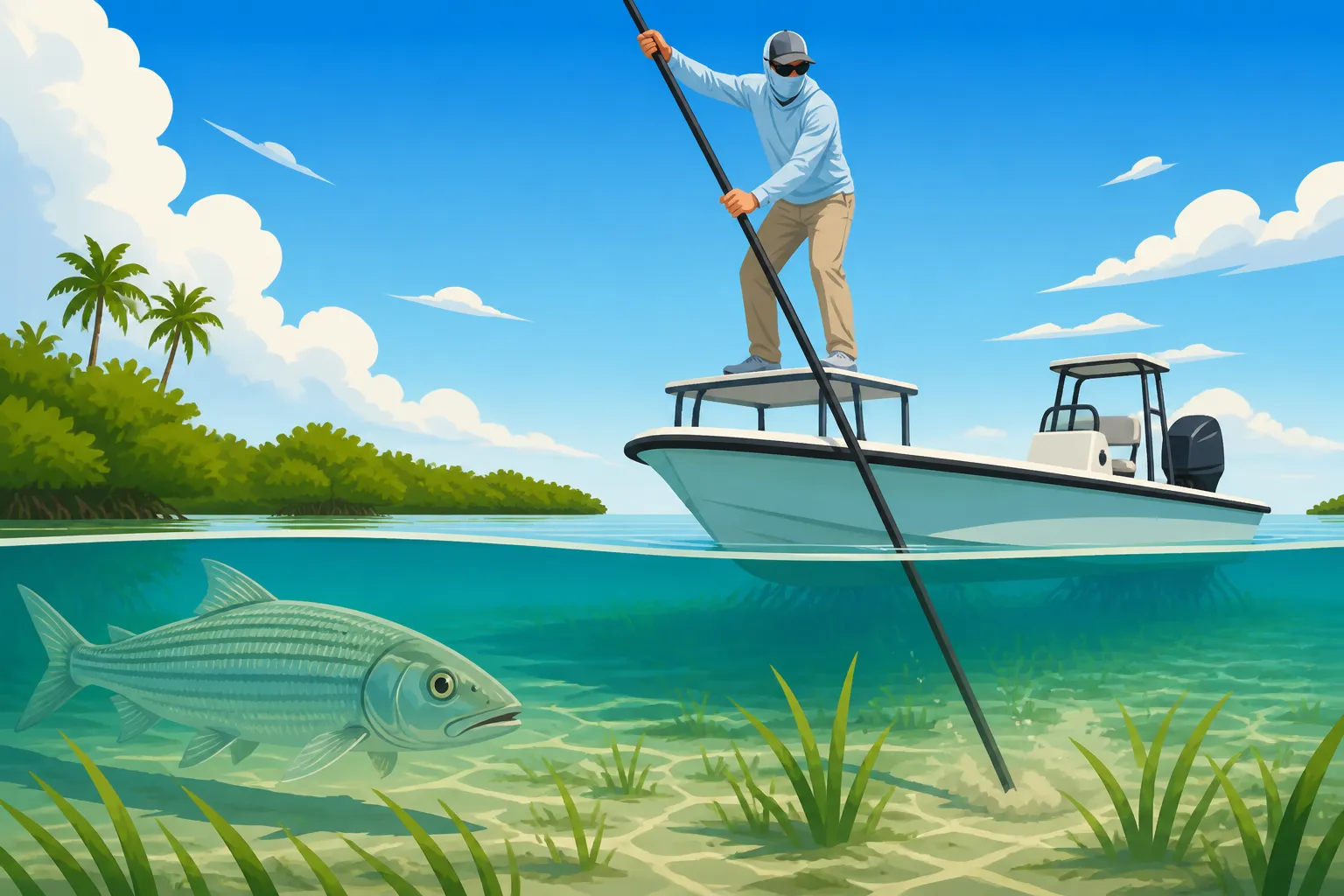
There’s nothing quite like the serenity of poling a flats boat, gliding silently across crystal-clear shallows, scanning for that tell-tale push of water or the subtle flash of a tail. But boy, can it be frustrating when your best efforts at stealth are undone by a squeaky deck, a clumsy pole stroke, or a dropped piece of gear, sending a trophy snook or redfish rocketing away. This guide is all about helping you master the quiet art of poling, ensuring your approach is as undetectable as possible, giving you the best shot at those elusive inshore giants.
Understanding the "Why" Behind Stealth Poling
Before we dive into the how-to, it’s crucial to understand why stealth is paramount when you're fishing Florida's skinny waters. It's not just about being polite to the fish; it's about respecting their environment and maximizing your chances of a successful cast.
Why Fish Get Spooked So Easily
Imagine you're walking across a vast, open field, and suddenly you hear a loud thump right next to you. Your immediate reaction is probably to jump, maybe run, right? Fish in shallow water feel the same way, but often more acutely. Florida's flats are typically clear and relatively calm, meaning sounds and vibrations travel incredibly well.
- Vibrations are the Enemy: Fish have a lateral line system, a sensory organ that detects changes in water pressure and vibrations. A heavy footstep, a dropped anchor, or even the subtle hum of a poorly maintained boat can send vibrations through the water that are amplified in shallow conditions. Think of how sound travels through a solid object versus air – water is a much more efficient conductor of vibrations than air.
- Sudden Movements and Shadows: A dark shadow passing overhead or a quick, jerky movement on the boat can instantly alert fish to your presence. These creatures are constantly on the lookout for predators from above (birds of prey) and below (sharks, larger fish). Anything out of the ordinary in their visual field is a red flag.
- Audible Noises: While vibrations are often the biggest culprit, direct sounds like loud talking, dropping pliers, or the clank of a cooler lid can echo surprisingly far in shallow water, especially on a still day. A fish might not understand what the sound is, but it knows it's something unnatural and potentially threatening.
The Benefits of a Silent Approach
Mastering the quiet approach isn't just a fancy trick; it's a fundamental skill that directly translates to more hookups and a more rewarding day on the water.
- Increased Catch Rates: This is the most obvious benefit. When fish aren't spooked, they're more relaxed, more likely to feed, and less likely to bolt before you can present your bait or lure effectively. A calm fish is a catchable fish. You'll find yourself getting closer to your targets and making more accurate, unhurried casts. This is especially true for wary species like snook and redfish in clear, shallow water.
- Better Observation and Learning: When you're not constantly chasing fleeing fish, you have more time to observe their natural behavior. You can watch how they feed, how they react to different presentations, and where they position themselves in relation to structure or current. This observational learning is invaluable for becoming a better angler. You'll see more fish, and importantly, you'll see them before they see you.
- Less Stress on Fish: Catch and release is a huge part of conservation in Florida, and a quiet approach contributes to the health of the fish. Less stress during the approach means a more energetic fight, but also a fish that's less exhausted when released, increasing its chances of survival.
- More Enjoyable Experience: There's a certain meditative quality to poling silently across a flat, the only sounds being the gentle splash of your pole and the distant call of a bird. It's a peaceful, immersive way to experience Florida's stunning natural beauty, free from the roar of an outboard or the clang of misplaced gear. It allows you to truly connect with the environment. You'll also learn the subtle art of Sight Fishing Technique for Shallow Flats, which is intrinsically linked to silent poling.
Essential Gear and Boat Setup for Quiet Poling
Your stealth journey begins long before you push off the dock. It starts with your equipment and how you've prepared your vessel. Thinking ahead about your gear and boat setup can make a huge difference in your ability to pole quietly.
The Right Poling Skiff and Pole
Not all boats are created equal when it comes to poling, and neither are all push poles. Making the right choices here can significantly impact your stealth.
- Poling Skiff Design: A true poling skiff is specifically designed for shallow water operation and stealth. Look for boats with a very shallow draft, a flat or nearly flat bottom (which helps distribute weight and reduce hull slap), and an integrated poling platform. The lighter the boat, the easier it is to pole and the less displacement it creates. Some skiffs even incorporate sound-dampening materials in their construction. A high-quality poling platform helps you see further and gives you a stable, elevated vantage point, which is critical for spotting fish before they spot you.
- The Push Pole: This is your primary tool, so invest wisely.
- Length: A good rule of thumb is that your pole should be at least 1.5 times the length of your boat, but often even longer, especially if you have a tall poling platform. This allows you to push effectively without leaning too far over and risking a splashy retrieve. A longer pole also allows you to push further away from the boat, reducing direct noise transmission.
- Material:
- Fiberglass: More affordable, but heavier and can be prone to bending with prolonged use. It can also be noisier if it flexes and "slaps" the water.
- Carbon Fiber (Graphite): The gold standard for serious flats anglers. It's incredibly lightweight, stiff, and strong. This stiffness means less flex and less water slap, making it significantly quieter. While a bigger investment upfront, the reduced fatigue and enhanced stealth are well worth it. You can find excellent carbon fiber push poles on retailers like Amazon, often with different lengths and flex ratings to suit various poling styles and boat sizes.
- Tip Design: The foot of the pole (the part that touches the bottom) should be designed to minimize suction and drag. A broad, flat, or slightly cupped tip works best, allowing for a smooth entry and exit from the mud or sand without getting stuck or creating excessive noise.
Minimizing Boat Noise and Clutter
Even with the best skiff and pole, a noisy boat interior can betray your presence. Every item on board needs to be secured and, if possible, quieted.
- Stow Gear Properly: Rods should be secured in rod holders, not clattering around the deck. Tackle boxes should be latched and placed in compartments. Anything that can roll, slide, or bang around needs to be tied down or put away. Imagine your boat is going over a ripple – what will move? That's what needs to be secured.
- Use Non-Slip, Sound-Dampening Mats: Deck mats made of closed-cell foam or rubber can absorb sound and cushion footsteps. This is a game-changer for reducing vibrations from movement on deck. Brands like SeaDek or similar products found on Amazon are popular for this purpose.
- Quiet Hatches and Lids: If your hatches rattle, line them with foam weather stripping or rubber gaskets. A simple modification can eliminate a surprising amount of noise. Ensure they latch securely and don't bounce.
- Soft-Soled Shoes: This might seem minor, but hard-soled shoes transmit impact vibrations directly to the hull. Soft-soled deck shoes or even going barefoot (if safe and comfortable) can significantly reduce noise.
- Clear the Deck: Less clutter means fewer things to trip over, and fewer things to accidentally knock over and make noise. Keep only essential items readily accessible. Consider the weight distribution of everything on board. Even small items can create noise if they're not secured.
Mastering the Art of the Pole Stroke
This is where the rubber meets the road, or rather, where the pole meets the bottom. A smooth, controlled pole stroke is the cornerstone of stealth. It takes practice, but the payoff is immense. This skill goes hand-in-hand with understanding how to silently approach fish, a crucial part of How to Approach Fish Without Spooking Them.
Proper Stance and Body Mechanics
Your body is an integral part of the poling machine. How you position yourself and move will directly affect the boat's movement and noise level.
- Balance is Key: Maintain a wide, athletic stance on the poling platform. Your feet should be shoulder-width apart, or even wider, providing a stable base. This isn't just for safety; it allows you to shift your weight subtly and fluidly without jarring the boat. A solid stance means less wobble and less accidental noise.
- Use Your Core, Not Just Your Arms: Poling effectively is a full-body exercise. Engage your core muscles and legs to provide power for the push, rather than relying solely on your arms. This distributes the effort, reduces fatigue, and allows for a more powerful, consistent push. Your arms should primarily guide the pole, not generate the propulsion.
- Keep Movement Fluid and Controlled: Avoid jerky, sudden movements. Every action, from reaching for the pole to pushing off the bottom, should be deliberate and smooth. Think of it like Tai Chi – a continuous, flowing motion. This minimizes water disturbance and hull vibration. If you're struggling with balance, practice in calm conditions until it becomes second nature.
The "Silent Stroke" Technique
This is the holy grail of quiet poling. It's about getting maximum propulsion with minimal disturbance.
- The Entry: Lower the pole into the water smoothly, close to the boat's stern. Don't jab or drop it. The key is to slide it into the water with minimal splash. Aim for a quiet, subtle entry, letting the pole slice into the water almost unnoticed.
- The Push: Once the pole tip is firmly on the bottom, lean into it, using your body weight and core strength to push the boat forward. Keep the pole at a relatively shallow angle to the water, pushing parallel to the hull rather than straight down. This optimizes propulsion and reduces the chance of the pole getting stuck. Maintain consistent pressure throughout the push.
- The Glide: After your powerful push, let the boat glide forward, taking advantage of its momentum. This is the quietest part of the stroke. As you glide, you can recover the pole for the next stroke, preparing it for a smooth re-entry.
- The Exit: This is often where noise happens. To minimize splash and suction, rotate the pole slightly as you lift it from the water, allowing the water to drain off the tip without a loud "pop." The goal is a gentle, almost silent lift. Imagine peeling the pole off the bottom rather than ripping it out.
- Consistent Rhythm: Find a smooth, unhurried rhythm. A consistent, quiet stroke is far better than a series of powerful but noisy pushes followed by long, uncontrolled glides. This steady propulsion is key to maintaining stealth.
Controlling Speed and Direction
Stealth isn't just about silence; it's about control. A quiet boat that's drifting off course or moving too fast isn't truly stealthy.
- Subtle Adjustments: Use small, precise pushes to make directional corrections. Avoid broad, sweeping pushes that can turn the boat too sharply or create unnecessary water disturbance. Think of steering a car with slight turns of the wheel rather than yanking it hard.
- Utilizing Wind and Current: This is a crucial skill. If you can pole with the wind or current, you'll need less effort and create less noise. Learn to position your boat to let these natural forces assist your movement. This also means understanding Best Tides for Inshore Fishing in Florida and how they influence water movement on the flats. Sometimes, waiting for the right tide or wind direction can make your poling efforts significantly more effective and quiet.
- Avoiding Jerky Movements: Sudden changes in speed or direction can alert fish. Maintain a steady, predictable pace. If you need to stop, do so gradually, letting the boat lose momentum slowly. This smooth control helps to keep the fish unaware of your presence, crucial for targeting wary species found in a Florida Snook Fishing Guide or a Florida Redfish Fishing Guide.
Reading the Environment for Optimal Stealth
Even the most skilled poler with the quietest boat can be thwarted by failing to read the water and weather correctly. Integrating environmental awareness into your poling technique is paramount.
Using Wind and Current to Your Advantage
Mother Nature can be your best friend or your worst enemy when poling quietly. Learning to harness her power makes a huge difference.
- Poling With the Elements: Whenever possible, try to pole with the prevailing wind or current. This reduces the amount of effort you need to expend, leading to fewer, softer pole strokes and less overall noise. It allows the boat to drift more naturally, which is often less alarming to fish than being actively pushed against a strong force. Imagine trying to push a shopping cart against a strong wind versus with it – the latter is much easier and quieter.
- Understanding Drift and Positioning: Even when poling, the wind and current will influence your boat's drift. Learn to anticipate this and make subtle adjustments to your pole strokes to maintain your desired course. This helps you position the boat perfectly for a cast, allowing you to present your lure or bait to fish that are unaware of your presence. Often, the best shots come from drifting silently into casting range rather than poling directly on top of fish. For more on this, check out How to Anchor a Boat on a Flat Without Spooking Fish for comparison, though poling is the ultimate stealth.
- Wind as a Noise Buffer: A light chop on the water caused by a gentle breeze can actually work in your favor by breaking up the surface and reducing the visual clarity for fish. It also creates ambient noise that can mask the subtle sounds of your poling. However, too much wind can make poling incredibly difficult and noisy, pushing you off course and forcing harder, splashier pushes.
Navigating Shallow Water Hazards Quietly
Florida's flats are beautiful but can hide unseen obstacles. Bumping into something can ruin your stealth instantly.
- Oyster Bars and Rocks: These are prime habitats for many inshore species, but they can be incredibly noisy if you scrape your hull or pole against them. Maintain vigilance, always looking ahead for dark patches, ripples, or changes in water color that indicate structure. If you have to cross them, do so with extreme caution and minimal forward momentum.
- Grass Flats: Healthy seagrass beds are vital ecosystems and fantastic fish habitat. Poling over them is fine, but avoid dragging your pole through thick grass, as this creates drag and can make a rustling noise that spooks fish. Be mindful not to "prop scar" or damage these delicate environments with your pole, just as you would avoid it with a propeller. The goal is to glide over the grass, not through it.
- Depth Awareness: Keep an eye on the water depth at all times. Poling in water that's too shallow can cause your pole to dig into the bottom, creating a loud "thwack" or getting stuck, both of which are major stealth killers. Learn to gauge the depth by observing the color of the water or using a short lead line with a weight if necessary. Sometimes, you'll need to dismount the platform and use the pole like a giant walking stick to move the boat through extremely skinny water. Knowing Where You Can Fish in Florida Without Buying a License might mean these very shallow, often less trafficked spots are where your poling skills truly shine.
Situational Awareness and Fish Behavior
Ultimately, stealth poling is about being a keen observer of the environment and the fish within it.
- Look for Signs of Fish: Before you even begin poling, scan the water for clues: nervous baitfish, subtle pushes of water, actual fish tails or backs breaking the surface, or even mud trails. These are all indicators of active fish. Your elevated position on the poling platform is a huge advantage here. The more you pole, the better you’ll get at spotting these subtle signs.
- Understand Their Escape Routes: When you spot fish, consider their likely escape routes. Fish often flee towards deeper water or dense cover. Position your boat to cut off these escape routes or to approach from an angle that doesn't immediately put them on high alert. Never pole directly at a fish you're trying to catch. Instead, try to parallel their movement or get slightly ahead of them.
- Avoid Casting Shadows: Pay attention to the sun's position. A long shadow cast from your boat or your body directly over the fish you're targeting is a sure way to spook them. Try to pole with the sun at your back or at an angle that minimizes shadows falling on your target zone. This is a common mistake even experienced anglers make, especially on bright, sunny days.
- Respond to Fish Behavior: If you see fish getting nervous, slow down, even stop poling for a moment, and let the boat drift. Sometimes, a brief pause can allow them to settle down before you resume your silent approach. The goal is to blend in, not intrude. Mastering this dynamic interplay is essential for consistent success when targeting a Florida Spotted Seatrout Fishing Guide or similar species that are highly sensitive to disturbance.
| Noisy Boat Issue | Cause | Stealth Solution |
|---|---|---|
| Clattering Gear | Loose rods, tackle boxes, tools | Secure all items in holders or compartments, use bungee cords. |
| Loud Footsteps | Hard-soled shoes, unpadded deck | Wear soft-soled deck shoes or go barefoot; install foam deck mats (e.g., from Amazon). |
| Rattling Hatches/Lids | Loose-fitting compartment lids | Line hatch edges with rubber or foam weather stripping; ensure latches are tight. |
| Pole Splash/Suction | Jerky pole entry/exit, wrong pole tip | Practice smooth, rotating pole strokes; use a well-designed, broad pole tip. |
| Hull Slap | Choppy water, boat design | Pole with the current/wind; consider hull design with less flat surface (if buying new). |
| Dropped Items | Loose items, clumsy hands | Clear the deck of non-essentials; tether critical tools to your person or boat. |
| Loud Talking/Music | Human noise | Keep conversations low; turn off music or keep volume minimal. |
Disclaimer
This article is for general informational purposes only and does not constitute professional advice. Laws, prices and regulations vary by location and change over time. Consult a qualified professional for guidance on your specific situation.