Florida Red Snapper Fishing Guide
Oh, Florida Red Snapper! Just hearing those two words conjures up images of deep blue water, bent rods, and the thrilling fight of one of the most sought-after game fish in the Gulf and Atlantic. But let's be real, chasing after these beautiful, delicious fish isn't always sunshine and rainbows. Anglers often face immense frustration with incredibly short seasons, ever-changing regulations, and the sheer challenge of locating and enticing these reef dwellers. This comprehensive guide is here to cut through the confusion and equip you with everything you need to know to successfully target and enjoy Florida Red Snapper.
The Allure of Florida Red Snapper
There’s a reason why the Red Snapper holds such a revered spot in the hearts of Florida anglers. It's not just another fish; it's an icon. From its striking crimson scales to its formidable fighting spirit, every aspect of the Red Snapper contributes to its legendary status. Understanding what makes this species so special is the first step in appreciating the pursuit.
Why Red Snapper Are Such a Prized Catch
Let's talk about why everyone gets so hyped up for Red Snapper season. First off, the taste! Oh my goodness, the delicate, flaky white meat of a Red Snapper is truly a culinary delight. Whether it’s baked, grilled, or fried, it consistently ranks as one of the best-eating fish you can pull from Florida's waters. When you catch one, you're not just getting a meal; you're getting a gourmet experience. That alone makes the effort worthwhile for many.
Beyond the dinner plate, there's the fight. Red Snapper are strong, stubborn fish. When you hook into a good one, especially in deeper water, you’re in for a serious battle. They’ll make powerful runs, try to dive back into the structure, and put a real bend in your rod. It’s a rewarding challenge, testing your tackle and your angling skills. Landing a big Red Snapper after a spirited fight is a feeling of accomplishment that few other species can match. Plus, they're beautiful fish! Their vibrant red color makes for fantastic photos, creating lasting memories of a successful day out on the water. It’s this combination of deliciousness, a tough fight, and aesthetic appeal that elevates the Red Snapper to such a high pedestal in the angling community.
Key Characteristics and Identification
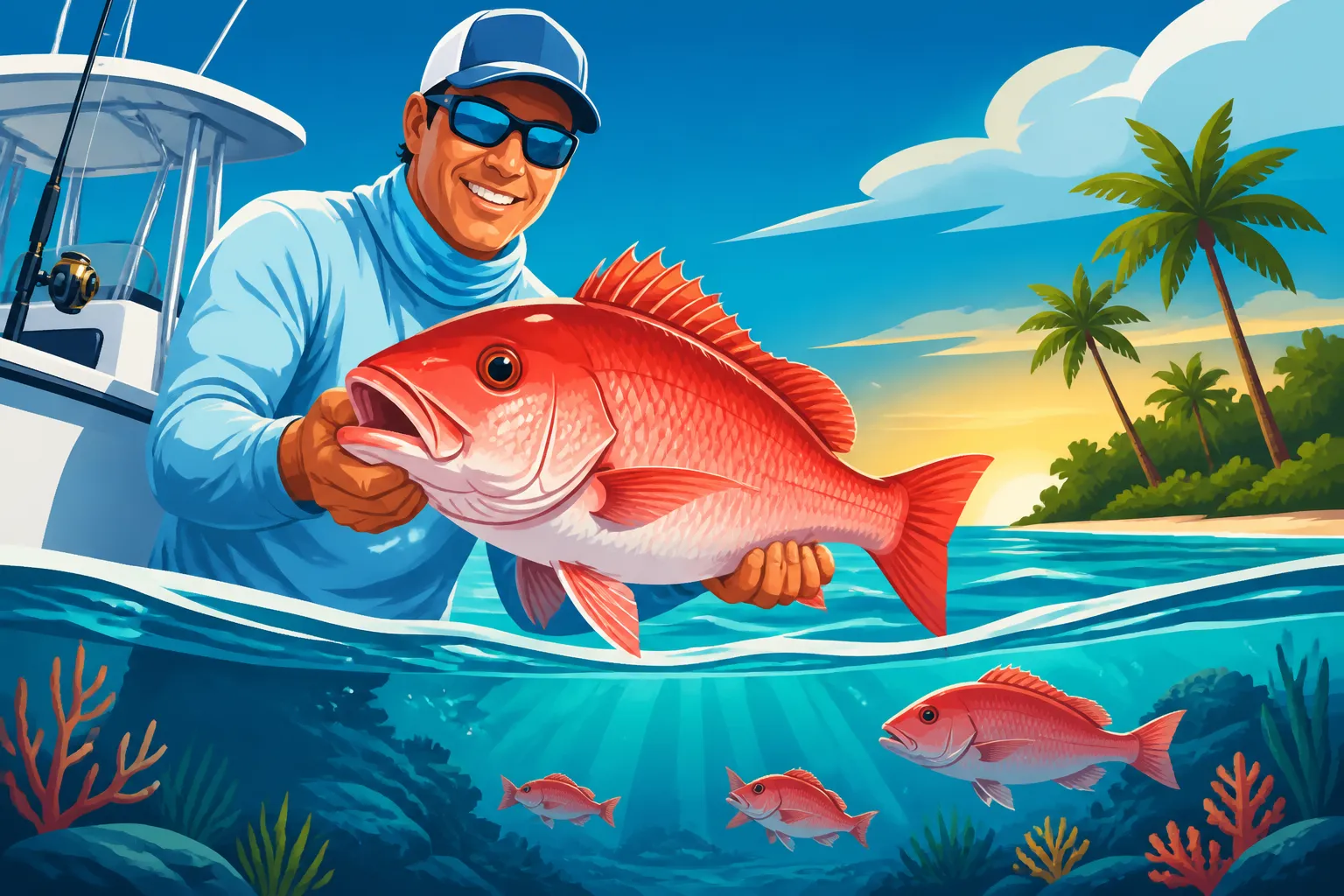
Identifying a true Red Snapper is crucial, especially given that other snapper species can sometimes be mistaken for them. The most distinguishing feature is their overall body color, which ranges from a vibrant rose red to a deeper brick red on the back, fading to a lighter pink or whitish on the belly. They have a relatively pointed snout, and those beautiful red eyes are another tell-tale sign. Look closely at their anal fin, too – it typically has a sharp, pointed lobe, unlike some other snapper species that have a more rounded one.
Size-wise, Red Snapper can grow quite large. While smaller "lane snapper" or "vermilion snapper" might be caught more frequently in some areas, a mature Red Snapper can easily tip the scales into the double digits, with some giants reaching over 40 pounds! They're robust fish with powerful jaws and teeth, perfectly adapted for crushing the crustaceans and smaller fish that make up their diet on the reef. Knowing these identifying features will help you quickly determine if you've landed the prized Red Snapper you've been after, or if it's another species that might have different regulations. This visual confirmation is especially important when you're out on the water, juggling the excitement of a catch with the need to adhere to strict guidelines.
Understanding Florida's Red Snapper Seasons
Ah, Red Snapper season. For many anglers, it’s a source of both immense excitement and deep frustration. The seasons are notoriously short, often only lasting a few weeks or even a few days, and they can vary dramatically depending on where you plan to fish in Florida. Staying on top of these dates is paramount, as misjudging them can lead to serious consequences.
The Gulf of Mexico vs. Atlantic Seasons
One of the biggest sources of confusion for Florida anglers is the stark difference between the Red Snapper seasons in the Gulf of Mexico and those in the Atlantic Ocean. These are managed by different federal councils and state agencies, leading to often wildly divergent opening and closing dates, as well as separate size and bag limits. The Gulf of Mexico season, managed primarily by the Gulf of Mexico Fishery Management Council and NOAA Fisheries, is typically the one that gets the most attention, often opening for a brief recreational window during the summer months. It's usually a mad dash to get out on the water because these federal waters only allow for a limited number of harvest days each year.
On the Atlantic side, the season is managed by the South Atlantic Fishery Management Council and NOAA Fisheries, and it's generally even more restricted, sometimes only opening for a few precious days or weekends, or even remaining closed for recreational harvest in some years, depending on stock assessments. This means an angler living in Pensacola might have a very different experience (and calendar) than someone fishing out of Jacksonville. You absolutely cannot assume the rules for one coast apply to the other. Before you even think about dropping a line, you need to know which body of water you'll be fishing and then consult the specific regulations for that region. It’s a complex system, but it's in place to help manage and protect this valuable fishery. You can find more details on these seasonal changes in guides like Florida Red Snapper Season Dates.
Navigating the Short and Sweet Windows
The brevity of the Red Snapper season is legendary, and not in a good way for most recreational anglers. Imagine planning your whole year around a few precious weekends, only for the dates to be announced just weeks, or sometimes even days, beforehand. It’s enough to make even the most seasoned angler tear their hair out! This short window creates a frenetic rush to the boat ramps and charter docks, with everyone trying to capitalize on the limited opportunity. Finding availability with a good charter captain can be incredibly difficult, and private boat owners often find themselves scrambling to get their vessels ready and fuel tanks filled.
This isn't just an inconvenience; it can be a real logistical nightmare. Many anglers need to take vacation days, coordinate with fishing buddies, and make travel arrangements, all for a season that might be less than a month long, sometimes even just a handful of days. The frustration is palpable, but it's a necessary evil born from conservation efforts to rebuild the Red Snapper population. While frustrating, it ensures that this prized species will be around for future generations to enjoy. The key is to be prepared to act fast once the dates are announced and have your plan A, B, and C ready to go!
Keeping Up with Regulatory Changes
Because Red Snapper populations are so closely monitored and the seasons are so sensitive, regulations can change frequently, sometimes even mid-season if certain quotas are met faster than expected. Relying on old information or hearsay is a recipe for disaster. The Florida Fish and Wildlife Conservation Commission (FWC) and the National Oceanic and Atmospheric Administration (NOAA) are your primary sources for the most current and accurate information. The FWC website has a dedicated section for recreational fishing regulations, and NOAA Fisheries also provides updates for federal waters. These are living documents, updated regularly, so checking them just before your trip is not just recommended, it's essential.
Many tackle shops and marinas also do a great job of posting current regulations, but always cross-reference with the official sources. There are also state-run apps and online portals that can provide real-time updates. The responsibility ultimately falls on the individual angler to be informed. It might seem like a lot of homework for a fishing trip, but ensuring you're compliant protects you from fines and helps contribute to sustainable fishing practices for a species that has faced significant management challenges. Understanding how these decisions are made is also insightful; for example, you might want to learn more about How NOAA Sets Florida's Red Snapper Season Length.
Where to Find Red Snapper in Florida Waters
Red Snapper aren't just swimming around anywhere; they are true structure-oriented fish. Knowing their preferred habitats is key to locating them and setting yourself up for success. Whether you're targeting them in state or federal waters, understanding the underwater landscape is paramount.
Deepwater Structures and Reefs
If you're looking for Red Snapper, you need to think structure. These fish absolutely love to congregate around natural reefs, rocky outcroppings, shipwrecks, and even man-made artificial reefs. Why? These structures provide them with protection from larger predators, a place to ambush prey, and a constant food source. In the Gulf of Mexico, this often means heading out to deeper waters, sometimes 60 feet or more, where these formations are more prevalent. The edge of the continental shelf, limestone ledges, and even oil rigs (if fishing in federal waters permits) are prime locations.
On the Atlantic side, you'll find them around the numerous ledges, rocky bottom, and wrecks that dot the coastline, often starting in depths around 80 feet and going much deeper. Experienced captains and guides have extensive "numbers" – GPS coordinates for these productive spots – that they've accumulated over years of fishing. For the recreational angler, publicly available artificial reef coordinates are a fantastic starting point. Remember, these structures are often shared with other species like grouper and amberjack, so be prepared for a mixed bag! The key is to fish directly on or very close to the structure, as Red Snapper rarely stray far from their preferred homes.
State Waters vs. Federal Waters
Understanding the distinction between state and federal waters is absolutely critical when targeting Red Snapper, as regulations, especially season dates and bag limits, can differ wildly. Florida's state waters extend out to 9 nautical miles in the Gulf of Mexico and 3 nautical miles in the Atlantic Ocean. Beyond those lines, you're in federal waters. This boundary isn't just an arbitrary line on a map; it represents a significant jurisdictional shift in fishing laws. You might encounter a situation where Red Snapper season is open in state waters but closed in federal waters, or vice-versa, or sometimes only one is open.
This can be incredibly confusing, and it means you need to know exactly where your boat is at all times. Modern GPS units with marine charts can display these boundaries, which is an invaluable tool for any offshore angler. It's not enough to simply be "offshore"; you need to be aware of the specific regulations for the zone you are in. Getting caught with Red Snapper outside of the legal boundaries during a closed season can lead to severe fines and penalties. For a deeper dive into these jurisdictional lines, you can consult guides like State Waters vs Federal Waters Fishing Rules in Florida or How Far Out Are Florida's State Waters?. Always know your location and the rules that apply to it.
Locating Promising Red Snapper Bottom
Finding the "promising bottom" for Red Snapper is a bit of an art and a science, and it often separates the successful trips from the slow ones. These fish aren't usually found over flat, sandy bottom. You're looking for irregularities, changes in depth, and hard bottom. This is where your boat's electronics become your best friend. A good fish finder with a high-resolution display is essential for identifying ledges, humps, wrecks, and even bait schools that might indicate Red Snapper presence. Side-scan and down-scan sonar technologies can provide even more detailed images of the seafloor, allowing you to "see" the structure and fish holding around it.
Many anglers use bathymetric charts (depth charts) in conjunction with their sonar to identify potential spots before they even leave the dock. Look for areas marked as "rocky bottom," "wrecks," or "ledges" on your charts. Once you're in the general vicinity, slow down and meticulously scan the area. When you see a "hard bottom" return on your sonar, or distinct marks of fish congregating near structure, that's your cue to stop and investigate. Don't be afraid to make multiple passes over a promising area. Local knowledge, whether from fishing forums, fellow anglers, or charter captains, is also incredibly valuable. They often have experience with how fish relate to specific structures in your area.
Essential Gear and Tackle for Red Snapper
Chasing Red Snapper isn't a job for ultralight tackle. These are powerful fish that live in unforgiving environments, so having the right gear is non-negotiable. You need equipment that can withstand the brutal fight of a big snapper and the abrasive nature of their rocky homes.
Rods, Reels, and Line for the Fight
When it comes to Red Snapper, you need to go heavy-duty. A medium-heavy to heavy conventional rod, typically 6 to 7 feet long with a fast action, is ideal. This gives you the backbone to turn a strong fish away from structure and the sensitivity to feel subtle bites. Pair that with a stout conventional reel, like a star drag or lever drag reel, capable of holding a substantial amount of line and delivering serious drag pressure. Think reels designed for bottom fishing for grouper or amberjack; they’re built for this kind of work. A common choice would be a reel in the 30-50 size class, depending on the brand.
For line, braided line is almost universally preferred for its strength-to-diameter ratio and lack of stretch. A 50-80 pound test braided mainline is a good starting point, allowing you to feel every nibble and quickly set the hook in deep water. The lack of stretch is crucial when you're fishing in 100+ feet of water. You'll then tie a monofilament or fluorocarbon leader to your braid. For Red Snapper, a 60-100 pound test fluorocarbon leader, typically 5-10 feet long, provides excellent abrasion resistance against the rough structure and the fish's teeth, while also offering some invisibility in the clear offshore waters. Ensuring your knots are strong and reliable is just as important as the line itself. You can find a fantastic selection of these robust rods, reels, and high-quality braided lines on Amazon, often with detailed reviews to help you choose the best fit for your budget and fishing style.
Baits and Lures That Get the Bite
Red Snapper aren't usually too picky, but some baits definitely outperform others. Live bait is almost always king. A frisky pilchard, sardine, herring, pinfish, or even a small grunt hooked through the nose or back will often entice the biggest and most aggressive snapper. The natural movement of live bait is hard for any predator to resist. If live bait is scarce, cut bait is a very close second. Chunks of fresh bonita, mackerel, mullet, or even squid can be incredibly effective. Make sure your cut bait is fresh and smells strong – snapper rely heavily on scent.
While live and cut bait dominate, artificial lures can also work, especially if you're looking for a more active approach. Heavy jigs, anywhere from 4 to 12 ounces depending on depth and current, tipped with a soft plastic grub or a piece of cut bait, can be deadly. Drop them to the bottom, jig them aggressively a few times, then let them settle. Vertical jigs, butterfly jigs, and even large bucktail jigs can all draw strikes. Sometimes, the flash and vibration of an artificial lure can trigger a reaction bite when natural bait isn't working as well. Having a variety of options, both natural and artificial, will increase your chances of success.
Rigging for Success: Knots and Setups
Proper rigging is absolutely essential when targeting Red Snapper, as faulty knots or an incorrect setup will lead to lost fish, especially when they dive into structure. The most common and effective rig for Red Snapper is a simple Carolina rig or a modified bottom rig. This typically involves a heavy lead sinker (4-12 ounces, depending on current and depth) to get your bait to the bottom quickly and keep it there. You'll want an egg sinker or a torpedo sinker that can slide freely on your main line or leader, with a swivel below it to prevent line twist and connect to your fluorocarbon leader.
Below the swivel, you'll have a 2-4 foot section of 60-100 lb fluorocarbon leader. At the end of that leader, a sharp, strong circle hook is paramount. Circle hooks are often legally mandated for Red Snapper fishing in federal waters, and they are excellent for promoting conservation by hooking fish in the corner of the mouth, reducing gut-hooking. Sizes typically range from 6/0 to 10/0, depending on the size of your bait. Ensure your knots are strong; a Palomar knot or a snell knot for your hook are reliable choices. When deploying your bait, drop it directly to the bottom, engage your reel, and keep a light tension on the line. With circle hooks, resist the urge to "set the hook" aggressively; instead, slowly reel until the fish loads the rod, and the hook will do its job. You can easily find high-quality, regulation-compliant circle hooks and robust terminal tackle like swivels and weights on Amazon before your trip.
Proven Techniques for Catching Red Snapper
Catching Red Snapper consistently requires more than just good luck; it demands a blend of careful planning, precise execution, and a bit of finesse. From how you position your boat to how you handle a hooked fish, every detail matters.
Bottom Fishing Fundamentals
Bottom fishing is the primary method for targeting Red Snapper. The core principle is straightforward: get your bait to the bottom, right where the snapper live. This sounds simple, but there's an art to it. First, boat positioning is crucial. You want to anchor up-current of the structure you intend to fish, allowing your bait to drift back naturally into the snapper's feeding zone. If you're drift fishing, you'll want to plan your drift to pass directly over or along the edges of the structure. Many anglers utilize a "sea anchor" or drift sock to slow down their drift in strong currents, allowing the bait to stay in the strike zone longer.
Once your bait is on the bottom, the key is feel. Red Snapper bites can range from a subtle tap to a vicious strike that almost rips the rod from your hands. Don't be too quick to yank the rod up when you feel a bite, especially with circle hooks. Instead, let the fish eat, allow the rod tip to load up, and then slowly reel to tighten the line, allowing the circle hook to do its work. Keep your rod tip slightly elevated and your drag set appropriately – tight enough to turn the fish away from structure, but loose enough to prevent line breakage during powerful runs. Re-bait frequently, especially if you're getting picked at by smaller bait stealers.
Using Electronics to Your Advantage
In today's offshore fishing world, your electronics are arguably as important as your rod and reel, especially for bottom fish like Red Snapper. A high-quality fish finder is your window into the underwater world. You’ll use it not just to identify the depth, but more importantly, to "read the bottom." Look for hard returns on your screen, indicating rock, coral, or artificial structures. These will appear as darker, often jagged lines or blobs, distinct from the softer, flatter returns of sand or mud.
Beyond just finding structure, pay attention to the fish arches or blobs you see on or near these structures. Large, dense marks often indicate schools of snapper or other reef fish. Many modern units also offer side-scan and down-scan imaging, which can give you a photographic-like view of the bottom and fish off to the sides of your boat, helping you pinpoint exactly where the fish are holding relative to the structure. Knowing how to interpret these readings is a skill developed over time. Don't just motor over a spot and drop a line; spend some time idling and marking the structure and fish concentrations on your GPS. This allows you to make precise drops right into the strike zone, maximizing your chances of a bite.
Handling and Releasing Red Snapper Responsibly
Given the short seasons and strict regulations, it's highly likely you'll encounter Red Snapper that are either out of season, undersized, or simply more than your bag limit. Responsible handling and release are crucial for the sustainability of the fishery. Red Snapper, caught from deep water, often suffer from barotrauma – a condition caused by the rapid change in pressure as they are brought to the surface. Symptoms include a distended swim bladder, bulging eyes, and the inability to swim back down.
To minimize mortality, two key tools are often mandated and always recommended:
- Venting tools: A hypodermic needle-like device used to deflate the swim bladder. This must be done carefully and precisely, just behind the pectoral fin, into the swim bladder, to release trapped gas without damaging organs.
- Descending devices: These tools, like a weighted clip or a release cage, rapidly lower the fish back to depth, allowing its swim bladder to recompress naturally. Once at depth, the device releases the fish, giving it a much higher chance of survival.
Always have both of these tools readily available and know how to use them correctly. When handling the fish, minimize its time out of water, use wet hands or a wet towel, and support its body weight. Prompt, careful release is key. You can find essential descending devices and sturdy, protective fishing gloves on Amazon to ensure you're equipped for responsible handling. Learn proper release techniques, especially during open seasons, to ensure that the fish you release can thrive and spawn again.
Florida Red Snapper Regulations: What You Need to Know
Florida's Red Snapper regulations are among the most dynamic and closely managed in the state. Ignoring or misunderstanding them can quickly turn an exciting fishing trip into a costly legal headache. These rules exist for a reason: to protect and rebuild the species, so compliance is not just about avoiding a ticket, it's about being a responsible steward of our marine resources.
Size Limits and Bag Limits
The size and bag limits for Red Snapper are perhaps the most critical regulations to be aware of, and they can vary significantly between the Gulf and Atlantic, and sometimes even within federal vs. state waters. Generally, for Gulf recreational Red Snapper, there’s a minimum fork length, and a daily bag limit per person. The Atlantic recreational season, when open, might have different minimum size and bag limits. These numbers are subject to change annually, and sometimes even within a season, so relying on memory is dangerous.
For instance, you might find that in the Gulf, the minimum size is a specific measurement from the tip of the jaw to the fork of the tail, and you might only be allowed to keep one or two fish per person per day. On the Atlantic, the size might be slightly different, and the bag limit potentially even lower, or the season could be closed entirely. These limits are designed by fishery managers to control harvest and allow the population to recover and grow. Always measure your fish carefully and immediately release any that are undersized. It's not worth the risk of a citation. Check out Red Snapper Size and Bag Limits and Florida Red Snapper Minimum Size for more detailed information, but always verify with official FWC and NOAA sources before you head out.
Special Gear Requirements: Circle Hooks and Descending Devices
Beyond size and bag limits, Florida has specific gear requirements that are mandatory when fishing for Red Snapper, particularly in federal waters. The most important of these is the use of non-stainless steel circle hooks when fishing with natural bait. The intent behind this regulation is conservation: circle hooks are designed to hook fish in the corner of the mouth, significantly reducing the chances of gut-hooking, which dramatically increases the survival rate of released fish. Aggressively setting the hook like you might with a J-hook is counterproductive with a circle hook; instead, simply reel until the line tightens and the fish is on.
Another critical piece of equipment is a descending device or venting tool. As discussed earlier, these are essential for mitigating barotrauma in fish caught from deep water. Having at least one of these on board and knowing how to use it effectively is not just a recommendation; it's a legal requirement in some areas for species caught in certain depths. Law enforcement officers, such as the Florida Fish and Wildlife Conservation Commission (FWC) or U.S. Coast Guard, routinely check for these items during vessel inspections. Failing to have them, or not using them properly, can result in fines. These rules highlight Florida's commitment to sustainable fishing practices for vulnerable species like Red Snapper.
Avoiding Penalties: Check Before You Go
It cannot be stressed enough: always verify the current Red Snapper regulations immediately before your fishing trip. The season dates, size limits, and bag limits are subject to change, sometimes with very short notice. Don't rely on information from last year, or even last month. The Florida Fish and Wildlife Conservation Commission (FWC) website and the NOAA Fisheries website are your official sources for state and federal regulations, respectively. Many anglers find it helpful to print out the current regulations or save them to their phone for easy reference while on the water.
Penalties for violating Red Snapper regulations can be steep, ranging from significant fines to confiscation of your catch, fishing gear, and even your vessel in severe cases. Ignorance of the law is not considered a valid defense. FWC officers and the Coast Guard actively patrol state and federal waters, and they are very diligent about enforcing these rules due to the species' protected status. Imagine the disappointment of landing a beautiful limit of Red Snapper, only to have them confiscated and receive a hefty fine because you were fishing outside the open season, or you didn't have the correct gear. It's a frustrating but entirely avoidable situation. For general information on what can happen if you fish without adherence to regulations, you can read Penalty for Fishing Without a License in Florida, but always remember the specifics for Red Snapper are particularly stringent.
Planning Your Red Snapper Adventure
A successful Red Snapper trip doesn't happen by accident; it's the result of meticulous planning and preparation. From deciding whether to hire a guide or run your own boat, to knowing what to bring and when to go, every decision contributes to the outcome.
Chartering a Boat vs. Private Vessel
When it comes to Red Snapper fishing, you essentially have two main options: chartering a boat with an experienced captain or taking your own private vessel. Both have their pros and cons.
Chartering a Boat:
- Pros: This is often the easiest route, especially for beginners or those without offshore experience. The captain knows the best spots (their secret numbers!), has all the necessary tackle, bait, and safety gear, and will handle all the regulations. The boat will likely be well-equipped with advanced electronics. Plus, your fishing license is typically covered by the charter's license. You can relax and focus on fishing. Florida Fishing Charter Guide offers a broader look at charters.
- Cons: Cost can be a significant factor, as charters can be quite expensive, especially for a full-day offshore trip. You're also on the captain's schedule and fishing style, which might not always align with your preferences. Sometimes you're sharing the boat with strangers on a "head boat" or "party boat," which means less personalized attention.
- Best For: Anglers new to offshore fishing, those without a suitable boat, or groups looking for a hassle-free experience. If you’re targeting deep-water Red Snapper, especially in federal waters, an experienced offshore charter captain is invaluable. You can explore options in Florida Offshore Fishing Charter Guide.
Private Vessel:
- Pros: You have complete freedom and flexibility. You decide where to go, when to leave, and how long to stay. It's often more cost-effective if you own the boat and spread the fuel costs among friends. The satisfaction of finding and catching fish on your own boat is immense.
- Cons: You need to have a capable offshore vessel, extensive knowledge of navigation and safety, and experience with offshore fishing techniques. The investment in boat maintenance, fuel, tackle, and electronics can be substantial. You're also responsible for knowing and adhering to all regulations and carrying all necessary safety equipment.
- Best For: Experienced boat owners with a well-equipped offshore vessel, who enjoy the challenge and independence of doing it themselves. It's also great for those who prefer to fish with only their chosen companions.
Ultimately, the choice depends on your budget, experience level, and comfort with offshore fishing.
Best Times of Day and Weather Considerations
While Red Snapper are often targeted when the season is open, regardless of the time of day, paying attention to certain factors can definitely improve your chances. Often, the early morning hours, just after sunrise, can be very productive. As the sun rises higher, the bite might slow down, only to pick back up towards late afternoon. However, slack tide (the period of minimal water movement between incoming and outgoing tides) can sometimes be less productive, as the fish might be less active without a strong current bringing food to them. A good, consistent current is often preferred, as it signals feeding activity.
Weather is a major consideration for any offshore trip, and especially for Red Snapper. A calm day with light winds and minimal swell is ideal. Rough seas not only make for an uncomfortable ride but can also make it incredibly difficult to maintain proper bait presentation on the bottom. Always check the marine forecast before heading out. A high-pressure system often indicates stable weather and good fishing conditions, while rapidly changing barometric pressure or approaching storms can shut down the bite. Never underestimate the power of the ocean; if the forecast looks iffy, it’s always better to reschedule than to risk your safety.
Essential Safety Gear and Provisions
Safety should always be your top priority when heading offshore, especially when targeting Red Snapper in deeper waters. Don't skimp on essential safety gear. A properly functioning VHF radio is absolutely critical for communication, especially in areas where cell service might be spotty or nonexistent. Personal flotation devices (PFDs) for everyone on board are non-negotiable. Beyond these basics, consider a complete first-aid kit, emergency flares, an EPIRB (Emergency Position Indicating Radio Beacon) or PLB (Personal Locator Beacon), a fire extinguisher, and a sound-producing device.
Beyond safety, ensure you bring ample provisions. Offshore trips can be long, so pack plenty of water to stay hydrated, especially in the Florida heat. Sunscreen, hats, and protective clothing are essential to prevent sunburn. Pack enough food and snacks to keep everyone fueled throughout the day. A good cooler filled with ice is not just for your catch; it's also vital for keeping drinks and food cold. Don't forget seasickness medication if anyone in your party is prone to it – it's much better to take it before you feel sick. A waterproof dry bag for phones, wallets, and other valuables is also a smart addition. You can find a wide range of essential safety items, durable waterproof bags, and high-quality coolers on Amazon to ensure you're fully prepared for any offshore adventure. For more ideas on what to bring, check out What to Pack for a Florida Offshore Fishing Trip.
Cooking and Enjoying Your Red Snapper Catch
After all the effort, the planning, the regulations, and the fight, the best part of catching a Red Snapper is undoubtedly enjoying the fruits of your labor. But to truly savor that delicious white meat, proper care from the moment it leaves the water to when it hits your plate is essential.
Field Care: From Water to Cooler
The quality of your Red Snapper on the dinner table begins the moment it's brought into the boat. Neglecting proper field care can quickly diminish the flavor and texture. The very first step, if you intend to keep the fish, is to humanely dispatch it as quickly as possible. Many anglers use a "brain spike" or "ike jime" technique, which involves inserting a sharp spike into the fish's brain to induce immediate death. This not only makes for a more ethical harvest but also minimizes stress, which can lead to a build-up of lactic acid in the muscle tissue, impacting flavor.
Immediately after dispatching, it's highly recommended to bleed the fish. You can do this by cutting the gills or severing the artery near the tail. Bleeding helps remove any remaining blood from the flesh, resulting in cleaner, whiter fillets with a milder taste. Once bled, get the fish onto ice as quickly as possible. A cooler packed with a generous amount of ice (preferably an ice-slurry, which chills fish faster and more thoroughly) is ideal. Lay the fish flat on the ice, ensuring it's completely surrounded and not just resting on top. This rapid chilling preserves the quality, texture, and flavor of the meat, keeping it fresh until you can get it home for cleaning.
Cleaning and Filleting Your Fish
Cleaning a Red Snapper can seem daunting due to its large scales and sharp fins, but with the right technique, it's quite manageable. You'll want a sharp, flexible filleting knife, a good cutting board, and a pair of sturdy gloves for protection. Many anglers start by removing the pectoral and dorsal fins to make handling easier and safer.
To fillet, begin by making a cut behind the gill plate, down to the backbone. Then, turn your knife and run it along the backbone towards the tail, keeping the blade tight against the bones to maximize your yield. Once the first side is filleted, flip the fish over and repeat the process for the second fillet. You'll then typically remove the rib cage from the fillet, often by sliding your knife under the ribs and cutting them away. Finally, you can choose to remove the skin, which is usually done by placing the fillet skin-side down, making a small cut at the tail end, and holding the skin firmly while you slide your knife between the skin and the flesh. The goal is clean, bone-free fillets ready for cooking. If you need a visual guide, searching for "how to fillet a snapper" will bring up many helpful videos. For more specific instructions, you might consult How to Fillet a Snapper.
Simple and Delicious Recipes
Red Snapper is renowned for its delicate flavor and firm, flaky white meat, making it incredibly versatile in the kitchen. You don't need complex recipes to enjoy it; often, simple preparations allow its natural goodness to shine through.
One of the easiest and most popular ways to cook Red Snapper is to bake or grill it. For baking, simply place your fillets on a baking sheet, drizzle with olive oil, season with salt, black pepper, a touch of garlic powder, and a squeeze of fresh lemon juice. A sprinkle of fresh parsley or dill adds a nice touch. Bake at around 375°F (190°C) until the fish is opaque and flakes easily with a fork, typically 10-15 minutes depending on thickness.
For grilling, brush the fillets with olive oil, season lightly, and place them skin-side down (if you kept the skin on) on a medium-hot grill. Cook until the fish releases easily from the grates, then flip and cook for just a few more minutes until done. Don't overcook it!
Frying is another fantastic option, especially for smaller fillets or portions. A light breading of seasoned flour or cornmeal will give you a crispy exterior while keeping the inside moist and tender. Serve your snapper with a side of roasted vegetables, rice pilaf, or a simple salad, and you have a meal that rivals any seafood restaurant. For more general cooking advice, consider articles like Best Way to Cook Snapper.
| Feature | Gulf of Mexico Red Snapper | Atlantic Ocean Red Snapper |
|---|---|---|
| Managing Authority | Gulf of Mexico Fishery Management Council (GMFMC) | South Atlantic Fishery Management Council (SAFMC) |
| State Waters Extent | 9 nautical miles | 3 nautical miles |
| Season Duration | Typically a few weeks/days in summer | Often very short or closed annually |
| Minimum Size Limit | Specific fork length (variable) | Specific fork length (variable) |
| Bag Limit | 1-2 fish per person (variable) | Often 1 fish per person (variable) |
| Circle Hook Mandate | Often required with natural bait | Often required with natural bait |
| Descending Device | Required if fishing in certain depths | Required if fishing in certain depths |
| Population Status | Managed under rebuilding plan | Managed under rebuilding plan |
Disclaimer
This article is for general informational purposes only and does not constitute professional advice. Laws, prices and regulations vary by location and change over time. Consult a qualified professional for guidance on your specific situation.