Best Spots for Speckled Trout in the Everglades
The vast, wild expanse of the Everglades can feel like a daunting maze, especially when you're trying to pinpoint a specific species like the elusive speckled trout. Many anglers arrive, eager to experience this unique fishery, only to find themselves overwhelmed by the sheer scale and complexity. This guide is designed to cut through that confusion, offering clear, actionable insights into the best spots for speckled trout in the Everglades, along with essential tips to make your fishing trip a success.
Why the Everglades is Prime Speckled Trout Territory
The Everglades isn't just any fishery; it's a dynamic, intricate ecosystem where freshwater and saltwater dance a complex tango. This unique blend creates an unparalleled habitat for a variety of species, including the highly sought-after speckled trout. Understanding what makes this environment so special is key to finding where these beautiful fish congregate.
Understanding the Unique Estuarine Environment
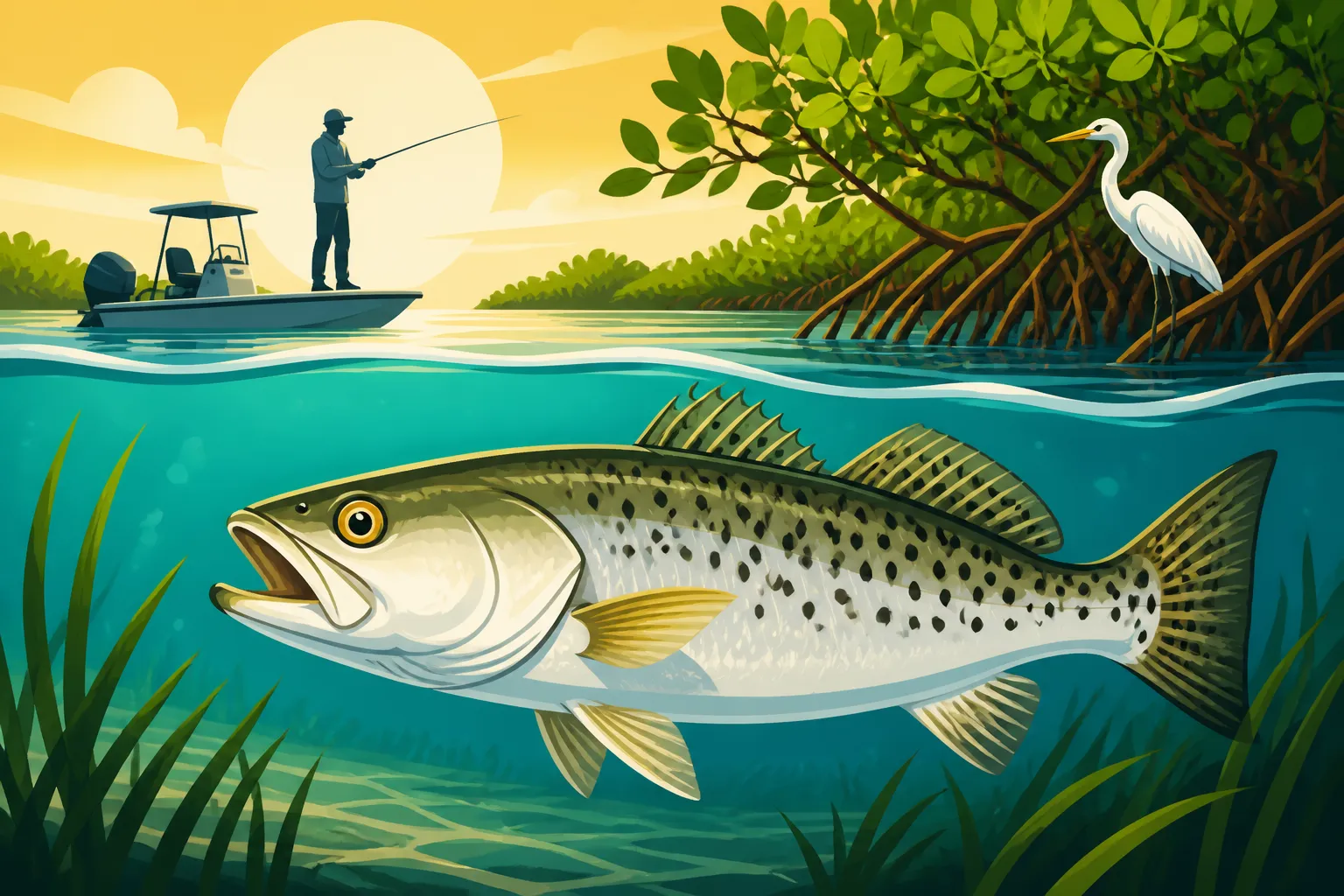
Imagine a place where the fresh water, slowly making its way from Florida's interior, meets the salty embrace of the Gulf of Mexico. That's the Everglades estuary in a nutshell. This brackish water zone is absolutely teeming with life, creating a buffet for speckled trout. The intricate network of mangrove fringes, with their prop roots dipping into the water, offers protection from predators and acts as a nursery for countless baitfish and crustaceans. You'll find vast, shallow grass flats, often stretching for miles, which are vital feeding grounds. These grass beds hold an abundance of shrimp, crabs, and small fish – the primary diet for speckled trout. Beyond the grass, scattered oyster beds also provide structure and attract even more forage. The trout here aren't just surviving; they're thriving in a robust food chain that supports a healthy population.
The Seasonal Dance of Everglades Speckled Trout
Just like us, speckled trout are influenced by the seasons, especially when it comes to temperature. Their movement patterns are a direct response to water conditions. In the cooler months, generally from late fall through early spring, you'll find them pushing into shallower waters. These sun-warmed flats and dark-bottomed creeks retain heat better, offering comfort and continued feeding opportunities. When the water gets colder, especially after a strong cold front, trout will often move to deeper, protected pockets within creeks or canals where the water temperature is more stable.
Conversely, as Florida's famously hot summer approaches and the water temperatures begin to soar, speckled trout seek refuge in cooler, more oxygenated areas. This often means they'll move towards deeper channels, shaded mangrove cuts, or near passes with strong tidal flows that churn the water and bring in fresh oxygen. Understanding these seasonal shifts is crucial. Don't go looking for them on the vast, open flats in the middle of July unless you're targeting early morning or late evening bites. For a deeper dive into how different times of year impact fishing across the state, check out our guide on the Best Time of Year to Fish in Florida.
Top Fishing Grounds for Speckled Trout in the Everglades
While the entire Everglades system holds trout, certain areas consistently produce better results due to their specific hydrological and habitat features. These are the spots where you’ll want to focus your efforts.
The Flamingo and Florida Bay Nursery Grounds
When you think of Everglades fishing, Flamingo often comes to mind, and for good reason. Nestled on the southern tip of the Florida peninsula, Flamingo serves as the gateway to the sprawling wonders of Florida Bay. This immense, shallow body of water is a veritable nursery for marine life, making it an absolute mecca for speckled trout. The bay is characterized by its vast, expansive grass flats, which can stretch for miles, dotted with sandy potholes and numerous oyster bars. These features are precisely what speckled trout seek out for feeding and protection.
Specific zones like the East Cape Canal, Middle Cape, and the areas surrounding Bear and Rabbit Key are renowned for their healthy trout populations. The network of tidal creeks and passes connecting the backcountry of the Everglades to Florida Bay acts as highways for baitfish, concentrating them and, by extension, the predatory trout. Accessing these areas is typically done via a boat launch at the Flamingo Marina, which offers excellent facilities. Kayaking is also an incredibly popular and effective way to explore the shallower reaches of the bay, allowing for stealthy approaches to undisturbed flats. Whether you're planning a full day out or just an afternoon paddle, Florida Bay truly encapsulates the wild beauty and fishing potential of the Everglades. For a general overview of this incredible region, be sure to read our comprehensive Everglades Fishing Guide.
Chokoloskee and the Labyrinthine Ten Thousand Islands
Moving to the western side of the Everglades, you'll encounter Chokoloskee and the mesmerising Ten Thousand Islands. This area offers a completely different, yet equally productive, trout fishing experience. Instead of vast open flats, you’re greeted by an intricate, mangrove-lined labyrinth of islands, creeks, and passes that extend far into the Gulf of Mexico. The sheer complexity of this environment means that local knowledge often makes all the difference, as unmarked oyster bars and hidden channels can make navigation tricky for the uninitiated.
Here, speckled trout hide in the numerous creeks, around the edges of oyster bars, and in the passes that funnel tidal flow. Specific hot spots include Indian Key Pass, the main Chokoloskee Bay, and the countless unnamed creeks and bays that crisscross this incredible region. The constant movement of water through these channels brings food to the trout, making them excellent ambush predators in these tight quarters. Given the maze-like nature of the Ten Thousand Islands, finding the best fishing spots can be challenging without prior experience. This is where resources like FishingBooker come in handy, allowing you to easily find and book local guides who specialize in navigating these intricate waters and know exactly where those honey holes are hiding. An experienced guide can drastically increase your chances of success and ensure a safe trip through this unique landscape.
Northern Reaches: Marco Island and Naples Backwaters
While much of the Everglades trout fishing focuses on the protected national park areas, don't overlook the northern fringes, particularly around Marco Island and the backwaters of Naples. This is a transition zone where the vast wilderness of the Everglades gradually gives way to more developed coastal communities, but the fishing opportunities for speckled trout remain outstanding. These areas offer a mix of accessibility and excellent habitat, appealing to anglers who might prefer less remote excursions.
Here, you'll find productive fishing in the passes that connect the numerous bays and estuaries to the Gulf, along with residential canals (which can hold surprisingly good numbers of trout, especially the deeper ones during colder snaps), and expansive grass beds that border the barrier islands. The combination of strong tidal flow in the passes and the abundance of baitfish makes these areas prime targets. It’s a great option for anglers looking for a blend of natural beauty and convenience, offering fantastic speckled trout fishing without necessarily venturing deep into the most remote parts of the Everglades.
Strategies for Targeting Everglades Speckled Trout
Catching speckled trout in the Everglades isn't just about finding them; it's about understanding how to entice them. The right bait, tackle, and approach can make all the difference between a slow day and a bent rod.
Bait & Lure Selections for Success
Speckled trout are not overly picky eaters, but presenting the right offering in the right way is critical.
When it comes to live bait, shrimp are universally effective. You can rig live shrimp under a popping cork, which creates an enticing "chug" sound that mimics a struggling baitfish and draws trout in. Alternatively, free-lining a live shrimp allows it to drift naturally with the current, especially effective in deeper channels or around mangrove edges. Pilchards and pinfish are also excellent live bait choices, particularly for targeting larger trout. Hook them through the nose or back, allowing them to swim freely. For more on rigging various live baits, refer to our guide on the Best Live Bait for Florida Inshore Fishing.
For artificial lures, soft plastic paddle tails on a light jig head are perhaps the most versatile. Brands like Gulp! Shrimp or Z-Man DieZel Minnowz in natural colors (like new penny, white, or chartreuse) are incredibly effective when retrieved with a slow, steady retrieve or a bounce along the bottom. Topwater plugs, such as the MirrOlure Top Dog or Heddon Super Spook Jr., provide exhilarating surface strikes, especially during low light conditions in the early morning or late evening. Suspending twitchbaits like the MirrOdine are fantastic for imitating injured baitfish just below the surface, allowing you to pause the lure in the strike zone. When choosing colors, think natural tones (shrimp, white, light green) for clear water and brighter colors (chartreuse, pink, gold) for murky conditions or when the sun is low.
Rod, Reel, and Line for Everglades Trout
Selecting the right gear for speckled trout fishing in the Everglades is crucial for both casting accuracy and fighting these feisty fish. A light to medium-light spinning setup is generally ideal. I recommend a 7-foot medium-light to medium power spinning rod. This length provides excellent casting distance for covering expansive flats, while the sensitivity allows you to feel even the lightest "thump" of a trout bite. Pair this rod with a 2500-3000 series spinning reel. These reels offer a good balance of line capacity and smooth drag performance, which is vital when a big trout makes a run.
For your main line, 10-15 lb braided line is an excellent choice. Braid offers superior sensitivity, allowing you to detect subtle bites, and its thin diameter provides exceptional casting distance. Always tie a fluorocarbon leader to your braided mainline. A 20 lb fluorocarbon leader, about 2-3 feet long, offers excellent stealth due to its nearly invisible properties underwater and provides critical abrasion resistance, especially when fishing around oyster bars or mangrove roots. Ensure your reel's drag system is set smoothly; speckled trout have relatively soft mouths, and a sticky drag can easily lead to pulled hooks. Stealth is often a factor, particularly in clear, shallow waters, so consider a quiet approach. You can learn more about specific setups in our guide on the Best Rod and Reel Setup for Florida Inshore Fishing.
Reading the Tides and Water Conditions
In an estuarine environment like the Everglades, understanding and "reading" the tides is not just helpful, it's absolutely critical for consistent speckled trout success. Tidal movement directly impacts where trout feed and where baitfish congregate.
Incoming tides often push nutrient-rich water and baitfish onto the shallow grass flats and into the mouths of creeks. This is an excellent time to target trout actively feeding in these shallower areas. They'll often stage along the edges of grass beds or near oyster bars, waiting to ambush unsuspecting prey.
Outgoing tides can concentrate baitfish in deeper channels, around points, or at the mouths of creeks and passes as the water recedes from the flats. Trout will often position themselves in these deeper areas, letting the current bring the food to them. Fishing the last hour of an outgoing tide and the first hour of an incoming tide around these choke points can be incredibly productive.
Water clarity also plays a significant role. In clear water, trout rely more on sight, making natural-colored baits and lures more effective. You might also need a longer, lighter fluorocarbon leader. In murky water, caused by wind, rain, or tidal churn, noise-making baits (like popping corks or topwater plugs) or brightly colored lures can help trout find your offering. The influence of wind, too, shouldn't be underestimated; it can affect water levels, create current, and impact how you present your bait, so always observe the conditions around you. Mastering this aspect of inshore fishing will significantly increase your catch rates. If you want to dive deeper into this topic, check out our article on the Best Tides for Inshore Fishing in Florida.
Navigating the Everglades Responsibly and Legally
Fishing in the Everglades is an incredible privilege, and it comes with the responsibility of preserving its pristine nature and respecting its unique regulations. Being prepared and informed ensures a safe and sustainable experience for everyone.
Everglades-Specific Safety Precautions
The Everglades is a wild place, and its remoteness means you need to be extra prepared. Unlike fishing in urban areas, help can be a long way off. Always ensure your boat is in excellent working condition, especially your motor. Carry a reliable GPS unit with detailed charts, but also pack paper charts as a backup – electronics can fail. Extra fuel is not just a good idea; it's a necessity. It’s also wise to bring plenty of fresh water, high-energy snacks, and a comprehensive first-aid kit. Given the limited cell service in many areas, an emergency communication device like a satellite phone or a Personal Locator Beacon (PLB) could be a lifesaver.
Wildlife encounters are part of the Everglades experience. Alligators and crocodiles are common residents; always observe them from a safe distance and never feed them. Be aware of snakes and other potentially dangerous critters when wading or exploring shorelines. And of course, Florida's sun can be brutal, even on cloudy days. Sun protection – wide-brimmed hats, long-sleeved UPF clothing, polarized sunglasses, and plenty of sunscreen – is paramount to avoid severe sunburn and heat exhaustion.
Understanding Florida's Fishing Regulations
Before you even launch your boat or cast your first line, it's absolutely critical to be familiar with the current Florida Fish and Wildlife Conservation Commission (FWC) regulations for spotted seatrout. These regulations, which include size limits (slot limits) and daily bag limits, are in place to ensure the sustainability of the fishery. Always measure your fish carefully, and immediately release any that are undersized or oversized, or if you've already met your bag limit. Knowing these rules helps protect the species for future generations. For a comprehensive overview of statewide rules, check out our Florida Fishing Regulations and Bag Limits guide.
Furthermore, a valid Florida fishing license is almost always required for recreational fishing in the Everglades, whether you're a resident or non-resident. There are specific exemptions, for instance, if you're fishing on certain charter boats or during designated Florida Free Fishing Days, but generally, you'll need one. Ensure you have the appropriate freshwater, saltwater, or combination license for the waters you plan to fish. You can find detailed information about species-specific rules in our Florida Spotted Seatrout Fishing Guide. By adhering to these regulations, you contribute directly to the conservation efforts that keep the Everglades a fantastic fishing destination.
Everglades Trout Fishing Comparisons
To help you visualize the differences and choose your adventure, here's a breakdown comparing the primary speckled trout fishing regions within the Everglades:
| Feature | Flamingo / Florida Bay | Chokoloskee / Ten Thousand Islands | Marco Island / Naples Backwaters |
|---|---|---|---|
| Primary Habitat | Expansive shallow grass flats, oyster bars, tidal creeks | Mangrove islands, intricate creeks, oyster bars, passes | Estuarine passes, residential canals, nearshore grass beds |
| Accessibility | Direct access from Flamingo Marina, good for kayaks | Chokoloskee Marina, often requires shallow draft boat or experienced guide | Numerous public ramps, easier access from developed areas |
| Water Type | Mostly brackish to saltwater | Brackish to saltwater, highly tidal | Primarily saltwater, with brackish mixing in bays |
| Target Depths | 2-5 feet, often shallower on flats | 3-8 feet in creeks, variable on flats | 4-10 feet in channels, 2-6 feet on flats |
| Typical Trout Size | Abundant numbers, good keeper-sized fish | Potentially larger trophy trout in deeper creeks | Mix of sizes, good numbers in backwaters |
| Navigation | Can be tricky due to vast shallow areas | Extremely complex, strong local knowledge recommended | Generally straightforward, but watch for shoals |
| Best Fishing Method | Drifting flats, wading, casting into creek mouths | Poling mangrove edges, jigging passes, blind casting into creeks | Drifting channels, casting near structure, trolling passes |
| Remoteness | Very remote, wilderness experience | Remote, intricate wilderness | Less remote, more amenities nearby |
Disclaimer
The information provided in this guide is for general informational purposes only and is subject to change. Fishing regulations, seasons, and local conditions can vary. Always consult the latest Florida Fish and Wildlife Conservation Commission (FWC) regulations and local weather and tide charts before planning any fishing trip. Safety should always be your top priority when venturing into the Everglades.