Florida Hogfish Fishing Guide
There's nothing quite like the thrill of targeting a truly special fish in Florida, and for many anglers, the hogfish sits high on that coveted list. These incredibly delicious and notoriously tricky fish can leave you scratching your head if you don't understand their quirky habits. This comprehensive guide is dedicated to unraveling the mysteries of hogfish, helping you understand where to find them, what gear you'll need, and the best techniques to finally land one of these highly prized catches.
Understanding the Elusive Hogfish
The hogfish isn't your average reef fish. It’s got a look that’s truly unique, a taste that’s absolutely divine, and a disposition that can make even seasoned anglers pull their hair out. But understanding what makes them tick is the first step to putting one in your cooler.
The Hogfish's Unique Characteristics
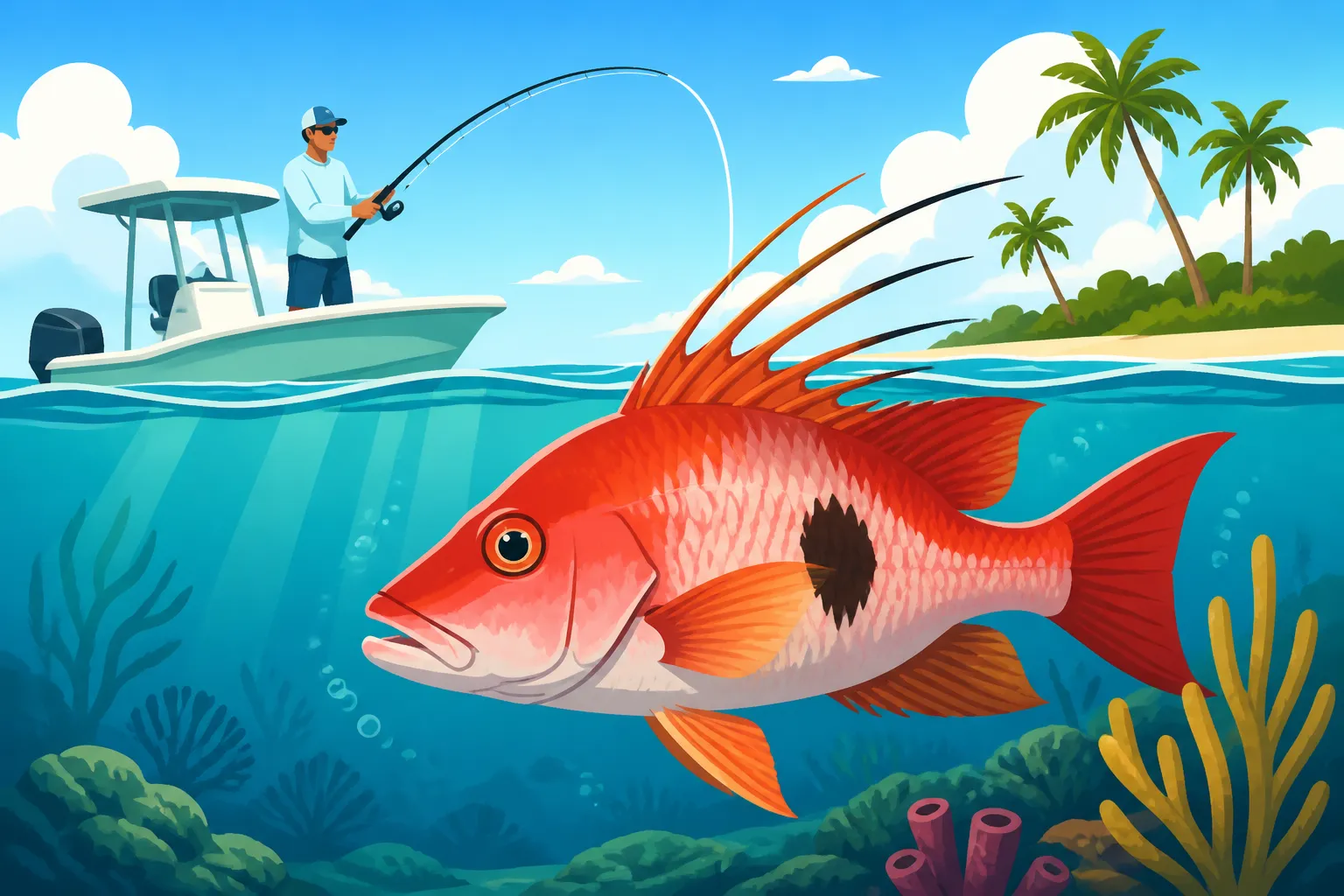
Let's talk about what makes a hogfish, well, a hogfish. These members of the wrasse family are easily identifiable by their elongated snout, which they use to root around in the sand and rubble for their favorite snacks. You'll notice they have large, fleshy lips and a set of prominent canine teeth. Their coloration can vary quite a bit, ranging from a mottled reddish-brown to pinkish-white, often with darker blotches. Males, especially during spawning, tend to be more vibrantly colored, often sporting a dark band through the eye and along the back, along with an impressive, pointy dorsal fin that gives them their distinct silhouette.
The reason they're so highly sought after isn't just their unique appearance; it's their firm, flaky, white meat that's incredibly mild and sweet. Many folks consider it one of the absolute best-eating fish in Florida waters, often ranking it right up there with snapper and grouper. This reputation drives a lot of the excitement around hogfish fishing. When you finally pull one of these beauties into the boat, there's a real sense of accomplishment, not just because they're delicious, but because they're often challenging to entice.
Preferred Habitat and Behavior
Hogfish are true connoisseurs of structure. They absolutely love coral reefs, rocky outcroppings, ledges, wrecks, and even bridge pilings. You'll typically find them in depths ranging from relatively shallow grass flats, especially the younger ones, all the way out to 100 feet or more. What's crucial to understand is that they are not open-water predators; they hug the bottom, diligently sifting through the substrate for crustaceans and mollusks. Think of them as the vacuum cleaners of the reef, always nosing around the nooks and crannies.
Their behavior is also quite distinctive. Unlike many other reef dwellers that might aggressively strike at a fast-moving lure, hogfish are often more subtle and particular. They use their elongated snout to "root" for food, which means they're accustomed to picking up small, delicate morsels. This makes them incredibly frustrating for anglers who are used to more aggressive bites. You often won't feel a huge thump or a screaming run; instead, it might be a subtle tap, or just a sudden heaviness on the line as they mouth the bait. This delicate feeding habit is a huge part of why targeting them successfully requires a specialized approach.
Why Hogfish are a Prized Catch
Beyond their incredible flavor, hogfish are a prized catch for several reasons, and it often boils down to the challenge and the experience. For one, their elusiveness makes them a true trophy. It's not a fish you're likely to catch by accident with a general-purpose bait; you have to specifically target them, often employing specialized techniques that require patience and finesse. This adds a layer of satisfaction to every successful hookup.
Secondly, they're relatively solitary or found in small groups, unlike schools of snapper or grunts. You might pick off one or two from a spot, but rarely will you fill a cooler with them from a single drop. This scarcity, combined with their delectable taste, elevates their status among recreational anglers. Plus, the areas where they thrive—vibrant coral reefs and rocky bottoms—are often teeming with other exciting species, making a hogfish trip a full experience. It's this combination of challenge, taste, and the rich environment they inhabit that cements the hogfish's place as one of Florida's most coveted fish.
Where to Find Florida Hogfish
Knowing what a hogfish is won't do you much good if you don't know where to find them! Florida's vast coastline offers a plethora of habitats they love, from the Gulf to the Atlantic. Let's dive into their favorite hangouts.
Reefs, Wrecks, and Structure
If you're looking for hogfish, you've got to find structure. These fish are masters of camouflage and prefer to live in and around places where they can find cover and food. Natural coral reefs are prime real estate for hogfish. They'll root around the edges of the reef, in sandy patches adjacent to hard bottom, and even right within the coral formations themselves. Artificial reefs, often created from sunken ships, concrete culverts, or bridge rubble, are also excellent spots. These structures attract a whole ecosystem, including the small crabs, shrimp, and mollusks that hogfish feast upon.
When you're out on the water, pay close attention to your depth sounder. Look for any significant changes in bottom contour, humps, ledges, or areas that show signs of hard bottom. These are all potential hogfish havens. Wrecks, in particular, are fantastic because they provide both cover and a rich food source. Whether it's a sunken fishing boat or a larger cargo vessel, the structure created by a wreck is almost guaranteed to hold some hogfish. It's often not about finding the biggest structure, but rather those subtle, isolated pieces of rock or coral that might only be a few feet high off a flat bottom—these can be hogfish magnets. Many anglers use specialized bottom-mapping technology to pinpoint these smaller, less obvious structures that might not get as much fishing pressure.
Targeting Hogfish in Shallow Waters
While many anglers associate hogfish with deeper offshore reefs, don't overlook the shallower waters, especially for what are often referred to as "bay hogfish." These younger, smaller hogfish can be found in depths as shallow as 10-20 feet, often around grass flats with scattered patch reefs, rock piles, or even pilings from old docks and bridges. This is particularly true on Florida's Gulf Coast, where vast expanses of seagrass give way to sandy patches and limestone rock. You might encounter them while targeting other inshore species like Florida Redfish Fishing Guide or Florida Spotted Seatrout Fishing Guide.
The beauty of shallow water hogfishing is that it's often more accessible. You might not need a big offshore boat, and the fight feels incredibly strong on lighter tackle. When fishing these areas, look for sandy potholes within grass flats, rocky edges where the grass meets hard bottom, or even isolated sponges and corals. These smaller structures provide the perfect environment for juvenile hogfish to forage and hide from predators. Remember, while they might not be the giants you pull from deep water, they are still incredibly tasty and offer a fantastic challenge, especially for those looking to stay closer to shore.
Geographic Hotspots in Florida
Florida offers fantastic hogfish opportunities throughout its coastal waters, but some areas are definitely more renowned than others. On the Gulf Coast, places like the waters off Clearwater, St. Petersburg, Sarasota, and the Florida Keys are legendary for hogfish. The vast expanse of hard bottom, natural reefs, and numerous artificial reefs in the Gulf provide ideal habitat. Areas around Anna Maria Island and Boca Grande are also known to hold a good number of these fish.
Moving to the Atlantic side, you'll find hogfish on the reefs off the coast from Fort Pierce south through Palm Beach, Fort Lauderdale, and Miami. The outer reefs and wrecks in these areas can be very productive. However, generally speaking, the Gulf Coast is often considered the epicenter of hogfish fishing due to its shallower, more extensive reef systems and clearer waters, which are crucial for the sight-fishing and light-tackle techniques often employed for this species. No matter where you are in Florida, if you have access to a boat and some bottom structure, you've got a chance at a hogfish, but certain regions simply offer more consistent opportunities and larger fish.
Hogfish Fishing Techniques & Bait
Alright, now that we know what they are and where they live, it's time to talk about how to catch these wily creatures. This is where the real fun, and sometimes frustration, begins!
The Best Rod and Reel Setups for Hogfish
When it comes to tackle, precision and sensitivity are your best friends for hogfish. You're not looking for heavy-duty offshore gear here, but rather a setup that allows you to feel those subtle bites. A medium-light to medium action spinning rod, typically in the 7-foot range, is perfect. Look for something with a fast tip that can transmit those light taps, but enough backbone to handle a good fight around structure. Think of rods designed for species like snapper or larger trout inshore; they strike a good balance.
Pair that rod with a quality spinning reel in the 2500-4000 series. The reel should have a smooth drag system, as hogfish, especially larger ones, can pull surprisingly hard when they dive back into cover. A good reel will help you manage those sudden surges without breaking your line. For line, many anglers opt for braided line, usually 10-20 pound test. Braid offers superior sensitivity and strength for its diameter, which is key for feeling those soft bites in deeper water. Amazon has a wide selection of braided lines from brands like PowerPro or Berkley that are popular choices among anglers. Remember, the goal is to feel everything happening at the business end of your line.
Live Baiting Strategies
This is arguably the most effective way to catch hogfish, hands down. These fish are not typically aggressive lure eaters; they are picky eaters that prefer natural, live offerings. The absolute king of hogfish bait is the fiddler crab. Their small size and irresistible scent are like a magnet to hogfish. If you can get your hands on them, use them! Greenbacks (pilchards), shrimp, and small pieces of cut squid or clam are also effective. Live shrimp are particularly good, but they can be expensive and prone to getting picked off by smaller, faster fish before a hogfish even gets a chance.
When baiting, remember that hogfish have small mouths designed for rooting. You want a small, sharp hook, usually a #1 or 1/0 circle hook. Thread the bait on carefully, making sure the hook point is exposed for a solid hookset. For fiddler crabs, hooking them through the edge of their shell is a good method. For shrimp, through the horn or tail. The presentation needs to be natural. Many anglers use a knocker rig or a very lightCarolina rig, where a small egg sinker (1/4 to 1/2 ounce, depending on current and depth) slides freely down to the hook. This allows the bait to move naturally on the bottom, appearing as if it's just foraging. Keeping your bait right on the bottom, with just enough weight to hold it there, is paramount. Often, the lighter the weight you can get away with, the better your presentation will be.
Terminal Tackle for Success
Your terminal tackle—the bits and pieces connecting your main line to your hook—are crucial for hogfish. Since hogfish have keen eyesight and can be leader-shy, fluorocarbon leader is a must. Its invisibility underwater gives you a significant advantage. A 15-20 pound test fluorocarbon leader, about 3-5 feet long, is a good starting point. You'll attach this to your braided main line using a strong knot like an FG knot or an Albright knot.
As mentioned, small, sharp hooks are key. Circle hooks are highly recommended because they promote mouth hooks, which are better for the fish if you plan to release it, and they are less likely to get swallowed, which can result in cut leaders from the hogfish's teeth. Sizes #1 to 1/0 are generally sufficient for hogfish. When it comes to weights, keep it minimal. A small egg sinker or a lead swiveltucked right above the leader on a knocker rig is effective. The less hardware you have clanking around, the more natural your bait presentation will be. Having a variety of small sinker weights in your tackle box from Amazon or your local tackle shop will allow you to adapt to different depths and current conditions. Best Rod and Reel Setup for Florida Inshore Fishing will offer more general guidance that can be adapted for hogfish.
The Art of Spearfishing for Hogfish
While many anglers pursue hogfish with rod and reel, it's also a highly popular species for spearfishers, especially given its tendency to root on the bottom and its often curious nature. Spearfishing for hogfish requires a slightly different approach, focusing on stealth, freediving skills, and a good understanding of their behavior. Divers typically look for them around the same types of structure as rod-and-reel anglers—reefs, wrecks, and ledges. The advantage spearfishing offers is the ability to directly target a specific fish, making it incredibly selective.
A good spearfisher will approach a promising structure slowly, scanning for the hogfish's distinct shape or tell-tale rooting behavior. They often move quite slowly, and can sometimes be curious, allowing a careful diver to get within range. However, they are also easily spooked, and a clumsy approach will send them darting into cover. Most spearfishing for hogfish involves freediving, as SCUBA diving regulations for spearfishing can be more restrictive. A pole spear or a small speargun is typically used. For those who enjoy the direct challenge of the hunt and want to be fully immersed in the underwater world, spearfishing for hogfish is an incredibly rewarding experience, offering a unique perspective on these fantastic fish.
Essential Gear for Hogfish Anglers
Having the right tools for the job can make all the difference, especially when you're dealing with a finicky eater like the hogfish. Beyond the basic rod and reel, a few other items are truly essential for a successful and enjoyable hogfish trip.
Rods and Reels for Precision
We've touched on this, but it bears repeating: your rod and reel setup for hogfish isn't about brute force, it's about finesse. A 7-foot medium-light to medium power spinning rod with a fast action tip is the sweet spot. Brands like Ugly Stik, St. Croix, or Shimano offer excellent options that provide the sensitivity needed to detect subtle bites while still having the power to pull a decent hogfish away from structure. The fast tip is critical because hogfish often "mouth" the bait rather than aggressively strike it, and that sensitive tip will show you the slightest hesitation or tap.
For the reel, a high-quality 2500 to 4000 series spinning reel with a smooth drag is non-negotiable. When a hogfish decides to run back into a coral head, you need a drag that pays out smoothly without sticking, preventing sudden line breaks. Look for reels from trusted manufacturers like Daiwa, Penn, or again, Shimano. These are readily available on Amazon and at most reputable tackle shops. Investing in a good quality reel will last you years and handle many other inshore and nearshore species, making it a versatile addition to your arsenal.
Line and Leader Choices
Your choice of line and leader is perhaps even more critical than your rod and reel for hogfish. For your main line, 10 to 20-pound braided line is ideal. Braid has almost no stretch, which means every little nibble or subtle tap is transmitted directly to your rod tip. This is absolutely vital for feeling those delicate hogfish bites, especially in deeper water or strong current. The thinner diameter of braid also allows your bait to sink faster and gives you more line capacity on your reel.
Connected to your braided main line, you'll want a 15 to 20-pound fluorocarbon leader. Fluorocarbon is less visible underwater than monofilament, which is a huge advantage when fishing for leader-shy fish like hogfish in clear Florida waters. A leader length of 3 to 5 feet is common. This length provides enough shock absorption and abrasion resistance against structure, while still allowing for easy casting. Ensure you tie strong, reliable knots to connect your braid to your fluorocarbon, such as an FG knot, a double uni knot, or an Albright Special. Having extra spools of fluorocarbon leader on hand is always a good idea, as you'll inevitably get frayed leaders when fishing around sharp rocks and coral.
Must-Have Accessories
Beyond the core tackle, a few key accessories will significantly enhance your hogfish fishing experience.
- Pliers/Forceps: Hogfish have a mouthful of teeth and can be tricky to unhook. A good pair of long-nose pliers or specialized fishing forceps will protect your fingers and make hook removal much easier.
- Net or Lip Gripper: A quality landing net with a rubberized mesh is perfect for quickly and safely landing your hogfish. If you prefer, a sturdy lip gripper can also work, but be mindful of the hogfish's softer mouth structure.
- Small Cooler with Ice: Hogfish are top-tier table fare, and you want to keep them fresh. A small cooler dedicated to your catch, filled with ice, is essential.
- Sun Protection: You're in Florida! A wide-brimmed hat, polarized sunglasses, and UV-protective clothing are crucial for a comfortable day on the water. Polarized sunglasses, in particular, will help you spot subtle structure or even the fish themselves in shallower, clearer waters.
- Knife and Cutting Board: If you plan on preparing your catch right after the trip, having a sharp fillet knife and a small cutting board is convenient.
- GPS/Fish Finder: While not an "accessory" in the traditional sense, a reliable GPS/fish finder is paramount for locating and returning to productive hogfish spots, especially those subtle pieces of bottom structure.
A simple tackle box stocked with extra hooks, leaders, small egg sinkers, and swivels will ensure you're prepared for anything. Don't forget a small rag or towel for wiping hands and cleaning up bait.
Florida Hogfish Regulations
Florida takes its fisheries seriously, and that's a good thing! Regulations are in place to ensure healthy populations for future generations of anglers. Knowing the current rules for hogfish is crucial to avoid any unpleasant surprises with law enforcement. Florida Fishing Regulations and Bag Limits covers the broad strokes, but let's dive into hogfish specifics.
Current Size and Bag Limits
Like many prized species in Florida, hogfish have specific size and bag limits that anglers must adhere to. These limits are subject to change based on scientific assessments and management decisions, so it's always, always best to double-check the latest regulations from the Florida Fish and Wildlife Conservation Commission (FWC) website or their GoOutdoors Florida app before every trip. This information is usually updated annually.
Generally, for recreational harvest in Florida, there's a minimum size limit to allow fish to reach maturity and spawn at least once. There's also a bag limit, which dictates how many fish you can keep per person per day. These numbers are put in place to prevent overfishing and maintain a sustainable fishery. For instance, in some areas, hogfish might have a 12-inch fork length minimum and a bag limit of 5 fish per person, per day. However, it's vital to confirm these figures as they can change. If you're fishing from a charter boat, the captain will be responsible for knowing and adhering to all current regulations, but as an angler, it's still good practice to be aware.
Regional and Seasonal Considerations
Here's where things can get a little more nuanced. Florida's vast coastline is divided into different management zones (e.g., Atlantic vs. Gulf), and sometimes regulations can vary between these zones. What's legal on the Gulf Coast might be different on the Atlantic. These regional differences are often based on varying fish populations and fishing pressure in those areas.
Furthermore, hogfish can also be subject to seasonal closures. While hogfish don't always have a strict "season" like, say, Florida Gag Grouper Season Dates might, there can be times when specific areas are closed to harvest to protect spawning aggregations or to rebuild populations. For instance, certain shallow water zones or deeper reef areas might have temporary closures. This is another reason why checking the FWC resources is non-negotiable. These regulations are designed to protect the resource, and by following them, we all contribute to better fishing for everyone. Always confirm which region you are fishing in and check the specific regulations for that area.
The Importance of Conservation
Adhering to hogfish regulations isn't just about avoiding a fine; it's about being a responsible angler and contributing to the conservation of this incredible species. Hogfish, like many reef fish, are susceptible to fishing pressure, and their population numbers can fluctuate. By respecting size and bag limits, you ensure that enough fish remain to reproduce and maintain a healthy stock. Taking only what you need and releasing undersized or excess fish carefully are crucial practices.
Using appropriate catch-and-release techniques, such as proper de-hooking tools, minimizing air exposure, and using circle hooks to reduce gut hooking, dramatically increases the survival rate of released fish. When you fish for hogfish, you're interacting with a delicate ecosystem. Understanding that your actions have an impact on the health of the reef and its inhabitants fosters a deeper appreciation for the sport and the environment. How Florida Fishing License Fees Fund Conservation is a great read if you want to understand how your contribution helps.
| Hogfish Regulation Type | General Guideline (Always Verify FWC Current) | Notes |
|---|---|---|
| Minimum Size Limit | 12-16 inches fork length | Varies by region and can change. Fork length is measured from the tip of the snout to the fork of the tail. |
| Bag Limit | 1-5 fish per person per day | Varies by region and can change. Typically a lower limit on the Atlantic coast than Gulf. |
| Federal Waters | Regulations may differ from state waters | Always check if fishing beyond 9 nautical miles in the Gulf or 3 nautical miles in the Atlantic. State Waters vs Federal Waters Fishing Rules in Florida explains this further. |
| Gear Restriction | Hook and line (rod & reel), spearfishing | No nets or traps for recreational harvest. |
| License Required | Yes, for saltwater fishing | Florida Saltwater Fishing License Rules apply. Exemptions exist, e.g., for some shore fishing or on certain charter boats. |
| Closed Seasons | Possible, especially for spawning | Always check FWC website for potential regional or seasonal closures. |
Disclaimer: This table provides general guidance. Always refer to the official Florida Fish and Wildlife Conservation Commission (FWC) regulations for the most current and accurate information before heading out to fish. Regulations change frequently.
Preparing Your Hogfish Catch
You've done it! You've outsmarted the elusive hogfish, navigated the regulations, and now you have one of Florida's most delicious fish in your possession. The final steps—handling, cleaning, and cooking—are just as important to ensure you get the absolute best out of your hard-won catch.
On-the-Water Handling and Storage
The moment you land a hogfish, your priority should be to preserve its quality. These fish have delicate, white flesh, and improper handling can quickly degrade its taste and texture. The best practice is to immediately dispatch the fish humanely to prevent stress, which can release undesirable compounds into the meat. A sharp rap to the head or a swift cut behind the gills works effectively.
Once dispatched, get your hogfish into a cooler filled with a generous amount of ice. The colder, the better. You want to drop the fish's core temperature as quickly as possible. Don't just throw it on a warm deck or into a cooler with minimal ice. Keeping your fish submerged in an ice-slurry (ice and a little bit of water) will chill it rapidly and preserve its freshness throughout your trip. Proper icing prevents bacterial growth and ensures that the flesh remains firm, sweet, and delicious when you're ready to fillet it. Think of it this way: the care you put in on the boat directly translates to how good it tastes on your plate.
Filleting and Cleaning Your Hogfish
Filleting a hogfish is similar to filleting other reef fish like snapper or How to Fillet a Grouper, but their unique body shape and firm skin might require a slightly different approach. You'll need a sharp, flexible fillet knife and a stable cutting board. Start by making a cut behind the gill plate, down to the backbone. Then, turn your knife and run it along the backbone towards the tail, keeping the blade pressed against the bone to maximize your yield. Hogfish have relatively thick skin and a robust rib cage, so take your time.
Once you have the fillet off, you'll need to remove the skin. Many find it easiest to lay the fillet skin-side down, hold the tail end firmly, and use your knife at a shallow angle to separate the flesh from the skin. After skinning, check for any pin bones that might be present along the lateral line. You can either remove these with a pair of pliers or make a V-cut to remove the small strip of flesh containing them. Rinse your fillets with cold, clean water and pat them dry with a paper towel. Now they're ready for cooking! Proper cleaning ensures you have pristine, boneless, skinless portions ready for whatever culinary adventure awaits.
The Culinary Delights of Hogfish
Oh, the hogfish! Its reputation for being one of the finest eating fish in Florida is well-deserved. The meat is incredibly mild, flaky, and has a sweet, delicate flavor that stands up to a variety of cooking methods without being overpowered. This makes it a highly versatile fish in the kitchen.
One of the most popular ways to enjoy hogfish is simply pan-seared or grilled. A light dusting of seasoned flour or a simple salt and pepper rub, cooked quickly in a hot pan with a little butter or olive oil, will yield perfectly cooked, flaky fillets with a beautiful golden crust. For a healthier option, baking or steaming with fresh herbs and lemon wedges also works wonderfully, allowing the natural sweetness of the fish to shine through. You can also incorporate hogfish into more elaborate dishes like fish tacos, ceviche, or even a flavorful fish curry. Its firm texture holds up well, making it suitable for almost any preparation where you'd use a premium white fish. Regardless of how you choose to prepare it, the hogfish promises a truly exceptional dining experience, a delicious reward for your angling efforts. Best Way to Cook Grouper offers some general ideas that translate well to hogfish too.
Disclaimer
This article is for general informational purposes only and does not constitute professional advice. Laws, prices and regulations vary by location and change over time. Consult a qualified professional for guidance on your specific situation.