Easiest Fish to Catch in Florida for Beginners
Ever felt that flutter of excitement, then a knot of anxiety, when contemplating your first fishing trip in Florida? It’s completely normal! The Sunshine State boasts an incredible variety of fish and fishing environments, which can feel utterly overwhelming when you’re just starting out. You might worry about having the right gear, knowing the secret spots, or simply looking foolish. But don't you fret; this guide is dedicated to cutting through that complexity, showing you the absolute easiest fish to catch in Florida, so you can skip the frustration and get straight to the joy of reeling in your first catch.
Why Starting Simple is Smart for Florida Fishing Beginners
When you’re new to angling, it’s easy to get caught up in the allure of trophy fish or complex techniques you see on TV. But trust me, that's a fast track to disappointment and possibly even giving up. Starting with fish that are abundant, cooperative, and don't require highly specialized gear is the secret sauce for building confidence and developing a genuine love for the sport.
Overcoming the Beginner's Frustration
I remember my own early days, casting endlessly, wondering if fish even existed in that particular spot. It’s frustrating when you invest time and effort and come up empty-handed. Many beginners quit before they even get a chance to experience the thrill of a biting fish because they set their expectations too high or target species that are notoriously difficult. Florida fishing offers so much, and you don’t want that initial hurdle to be a barrier.
By focusing on species known for being less finicky, you dramatically increase your chances of success. Each bite, each fish brought to hand, is a little victory that fuels your enthusiasm and teaches you something new. It’s about creating positive reinforcement, making the learning curve feel less like a mountain and more like a gentle slope. You'll learn to feel the bite, set the hook, and handle a fish, all without the pressure of trying to land a monster on your first outing.
The Benefits of Targeting "Easy" Fish
Think of it like learning to ride a bike with training wheels. You're building fundamental skills without the fear of immediate failure. When you target easy-to-catch fish, you're learning:
- Basic Casting: Getting the hang of how to propel your bait or lure accurately.
- Reading the Water: Understanding where fish might hide or feed, even if it's just near a submerged log or weed line.
- Bait Presentation: How to rig your bait so it looks appealing to a fish.
- Fish Handling: Gently unhooking and releasing fish, or preparing them for dinner if they're within regulations.
- Patience and Observation: Fishing isn't just about catching; it's about being present, observing nature, and understanding the rhythm of the water.
These foundational skills are transferable to more challenging species down the road. Plus, many of these "easy" fish are incredibly fun to catch, often putting up a surprisingly good fight for their size, and some are even delicious! It's an excellent way to get comfortable with your gear and the general etiquette of fishing before diving into more advanced scenarios. You'll find yourself much more confident when you eventually decide to explore something like Florida Tarpon Fishing Guide or Florida Snook Fishing Guide.
Freshwater Favorites: Easiest Catches Inland
Florida's inland waters are a paradise for beginners. From tranquil neighborhood ponds to vast lakes, there's a freshwater fishing spot around almost every corner. These environments are often calmer and less intimidating than the open ocean, making them perfect for your first few casts.
The Abundant Bluegill and Other Panfish
If there's a quintessential beginner fish, it has to be the bluegill, and its cousins like the redear sunfish (shellcracker) and warmouth. These little dynamos are found in nearly every freshwater body across Florida – think local parks, community ponds, slow-moving canals, and the edges of larger lakes. They are incredibly prolific and generally not very picky eaters, making them ideal targets for consistent action.
- Where to Find Them: Look for bluegill around submerged structures like fallen trees, docks, weed beds, and lily pads. They often school up, so if you catch one, there are likely more nearby. Early mornings and late afternoons are prime times, but they'll often bite throughout the day.
- Simple Bait: Their diet is vast. A small piece of earthworm is probably the most effective, but they'll also hit crickets, grasshoppers, and even a tiny piece of bread or corn. You can also try small artificial lures like tiny jigs or spinners.
- Basic Tackle: A simple cane pole, a lightweight spinning rod, or even a basic kid's fishing combo works wonders. Use a small hook (size 6 or 8), a tiny split shot weight a few inches above the hook, and a small bobber to detect bites. When that bobber twitches and dips, set the hook with a gentle tug! For more details, check out our Florida Bluegill and Bream Fishing Guide.
The Ever-Present Catfish
Florida is home to several species of catfish, including channel cats, bullheads, and white catfish. These whiskered bottom-dwellers are known for their hearty appetites and strong fights, making them a blast for beginners. They're widespread in lakes, rivers, ponds, and even some brackish waters. Catfish are less visual feeders, relying on their strong sense of smell, which means they're not easily spooked by clumsy casts or bright daylight.
- Where to Find Them: Catfish often hang out in deeper holes, channels, and near submerged structure. They're more active in low light conditions, such as dawn, dusk, or even at night, but will readily bite during the day, especially if there's some cloud cover or if the water is a bit murky.
- Easy Bait: Catfish are not picky! You can use cut bait (like pieces of mullet or shad), chicken liver, hot dogs, worms, or commercially prepared "stink baits." Just remember, these baits can be messy, but they're incredibly effective. Rigging is simple: a hook (size 2 to 1/0 depending on the bait size) at the end of your line, with a weight (like an egg sinker or slip sinker) above it, sliding freely on the line. This allows the fish to take the bait without feeling the weight immediately.
- Basic Tackle: A medium-action spinning rod or baitcasting setup will do the trick. You don't need anything fancy; just something sturdy enough to handle a feisty catfish. You can find more targeted advice in our Florida Catfish Fishing Guide.
Entry-Level Largemouth Bass
While trophy largemouth bass can be elusive and challenging, smaller bass are incredibly common and provide an exciting introduction to predatory fish. They are arguably Florida’s most iconic freshwater sportfish and are found in almost every lake, pond, and river system. Catching even a modest bass is a thrilling experience, and they'll often strike aggressively.
- Where to Find Them: Bass love structure and cover. Look for them around lily pads, submerged logs, weed lines, docks, and even under bridges. They are ambush predators, so they'll often wait patiently for bait to swim by. Early mornings and late evenings are generally best, but they'll bite throughout the day, especially on overcast days.
- Simple Bait/Lures: Live shiners are a surefire way to catch bass, but you can also have success with artificials. For beginners, a simple soft plastic worm rigged "Texas style" (weedless) is very effective. Just cast it out, let it sink, and slowly retrieve it with small twitches and pauses. Spinnerbaits are another great option as they're easy to cast and retrieve, creating flash and vibration that bass find irresistible. Check out Beginner Tips for Bass Fishing in Florida for more detailed strategies.
- Basic Tackle: A medium-action spinning or baitcasting rod and reel combo with 8-12 lb monofilament line is a great starting point. No need for heavy-duty gear unless you're specifically targeting huge fish.
Saltwater Starters: Getting Your Feet Wet in the Briny Deep
Florida’s extensive coastline, myriad bays, and countless piers and bridges offer endless opportunities for saltwater angling. While the ocean might seem daunting, there are plenty of species that are remarkably cooperative and accessible even from shore or a short boat ride.
Pinpoint Pinfish and Grunts
You might initially dismiss these small, aggressive fish, but they are absolutely fantastic for beginners! Pinfish and grunts are incredibly abundant in Florida's inshore saltwater environments. They're often seen as "bait stealers" by experienced anglers targeting larger species, but for a newbie, they provide constant action and a great way to learn how to feel a bite and set the hook.
- Where to Find Them: They are everywhere! Docks, piers, grass flats, seawalls, rock piles – if there's structure and shallow water, you'll likely find them. They are particularly good targets from public fishing piers where you don't need a boat. You can learn more about these locations in Best Piers for Fishing Without a Boat.
- Simple Bait: Pinfish and grunts will attack almost anything. Small pieces of fresh shrimp (peeled or unpeeled), squid, or even small cut pieces of baitfish are highly effective. Use a small hook (size 4 to 1/0) and a small split shot or an incredibly light jig head.
- Basic Tackle: A light to medium-light spinning rod is perfect. Think of it as practice for bigger fish. The constant bites keep things exciting, and you learn to differentiate between a nibble and a full-on take.
Spotted Seatrout: A Classic Inshore Start
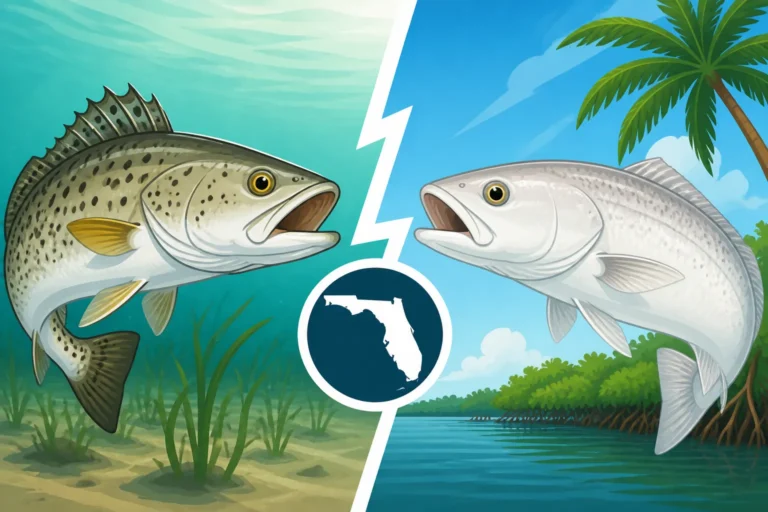
Spotted seatrout are a beloved target for many Florida anglers, and for good reason: they are widespread, willing to bite, put up a fun fight, and are excellent table fare. They are one of the most accessible saltwater game fish for beginners, particularly in the vast grass flats that line much of Florida's coast.
- Where to Find Them: Look for spotted seatrout over shallow grass flats in bays and estuaries, particularly during incoming or outgoing tides. They'll also congregate around oyster bars, channel edges, and sometimes even dock lights at night.
- Simple Techniques & Bait: A live shrimp fished under a popping cork is arguably the most effective and easiest way to catch trout. The cork makes a "pop" sound that mimics feeding fish, attracting trout to your bait. You can cast it out, let it drift, and give it an occasional pop. Soft plastic jerkbaits or paddle tails on a light jig head are also incredibly effective – simply cast and retrieve with a steady or twitching motion. For detailed rigging, see How to Rig a Live Shrimp for Trout.
- Basic Tackle: A medium-light to medium action spinning rod, 7 to 7.5 feet in length, spooled with 10-15 lb braided line and a 20-30 lb fluorocarbon leader, is ideal. This setup offers versatility and sensitivity. Dive deeper into this species with our Florida Spotted Seatrout Fishing Guide.
Mangrove Snapper: Feisty and Flavorful
Mangrove snapper are a fantastic target for beginners looking for a tasty and feisty saltwater fish. They are abundant, relatively easy to catch, and renowned for their delicious white meat. Plus, they love structure, meaning you can often find them without needing a boat.
- Where to Find Them: True to their name, mangrove snapper are often found near mangrove shorelines, but they also congregate around docks, bridges, rock piles, jetties, and other underwater structures. They will readily take bait during the day, making them a great target for casual trips.
- Simple Bait/Techniques: Live shrimp or small pieces of cut bait (like pilchard or mullet) are irresistible to mangrove snapper. Use a small to medium-sized hook (size 1 to 2/0) and a small lead weight (often a split shot or egg sinker) to get your bait down to the bottom near the structure. A simple bottom rig or a knocker rig (where the weight slides right on top of the hook eye) works perfectly. Drop your bait near the pilings or rocks, and be ready for a quick, sharp bite!
- Basic Tackle: A medium-action spinning rod with 10-20 lb braided line and a 20-30 lb fluorocarbon leader is a good all-around setup. It's stout enough to pull them away from structure but sensitive enough to feel their subtle bites. For more specifics on this species, check out Florida Mangrove Snapper Fishing Guide.
Essential Gear for Beginner Anglers (Don't Overcomplicate It!)
One of the biggest hurdles for new anglers is thinking they need a boatload of expensive gear to get started. Absolutely not! For these easy-to-catch fish, a few key items will get you on the water successfully. Focus on versatility and simplicity.
The Basic Rod and Reel Setup
You really don't need to break the bank here. A good quality, entry-level spinning combo is your best friend. Look for something labeled "medium-light" or "medium" action, usually around 6.5 to 7 feet long. This versatility allows you to fish both freshwater panfish and smaller saltwater species effectively.
- Spinning Combo: A pre-matched rod and reel combo takes the guesswork out of pairing components. You can find excellent options from reputable brands. These are easy to cast and manage, even for complete novices.
- Line: For freshwater, 6-10 lb monofilament line is a great choice. For saltwater, consider 10-15 lb braided line with a 20-30 lb fluorocarbon leader for better sensitivity and strength.
- Where to Buy: Many sporting goods stores carry affordable combos, or you can check online. Searching for "beginner spinning combo" on Amazon will yield many suitable options that are budget-friendly and perfectly adequate for these starter species. Our guide on Best Rod and Reel Setup for Florida Inshore Fishing also offers great beginner insights.
Terminal Tackle Must-Haves
"Terminal tackle" refers to everything at the end of your fishing line: hooks, weights, swivels, and leaders. This is where you'll spend most of your time selecting and rigging.
- Hooks: A variety pack of small J-hooks (sizes 8 to 1/0) will cover most of your needs for the fish mentioned above.
- Weights: A small assortment of split shot weights and egg sinkers (1/8 oz to 1/2 oz) will allow you to adjust to different depths and currents.
- Bobbers/Floats: Essential for freshwater panfish and saltwater trout. A pack of small, clip-on bobbers or a few popping corks will serve you well.
- Leaders: A spool of 20-30 lb fluorocarbon leader material is excellent for both freshwater bass and saltwater species, as it's nearly invisible underwater and resistant to abrasion.
- Storage: A small, organized tackle box or a simple plastic utility tray from Amazon will keep your hooks and weights from becoming a tangled mess.
Live Bait and Lure Selection
When starting out, live bait often offers the highest chance of success because it's natural and irresistible to fish.
- Live Bait:
- Earthworms: The universal bait. Always a winner for bluegill and catfish.
- Live Shrimp: The MVP of Florida saltwater fishing. Trout, snapper, grunts, pinfish, and many other species absolutely love live shrimp. You can buy them at bait shops.
- Cut Bait: Small pieces of mullet or pilchard work wonders for catfish and mangrove snapper.
- Artificial Lures (Keep it Simple!):
- Small Jigs: Soft plastic grub or paddle tail baits on a 1/8 to 1/4 oz jig head are versatile for trout, bass, and even panfish.
- Spinnerbaits: Great for bass.
- Popping Corks: For saltwater, specifically for trout.
- You can find starter lure kits on Amazon that include a variety of colors and sizes suitable for beginners. Need ideas for bait? Our Best Bait for Snook Fishing in Florida article, while focused on snook, highlights many baits that also appeal to these easier species.
Additional Essentials for a Smooth Trip
Don't forget these small items that make a big difference in comfort and convenience.
- Pliers: Essential for removing hooks safely and cutting line.
- Small Cooler: For keeping your bait fresh, your drinks cold, and if you plan to keep any fish, to store your catch on ice.
- Measuring Device: A small ruler or tape measure is crucial for ensuring any fish you keep meets legal size requirements.
- Sun Protection: Florida sun is no joke. A wide-brimmed hat, polarized sunglasses, and sunscreen are non-negotiable. You can easily find comfortable and protective hats and sunglasses on Amazon.
- First Aid Kit: Always a good idea to have a small kit for minor cuts or scrapes.
| Fish Species | Primary Habitat | Best Beginner Bait/Lure | Key Features for Beginners |
|---|---|---|---|
| Bluegill | Ponds, canals, slow rivers | Worms, crickets | Abundant, aggressive, found almost everywhere, constant bites |
| Catfish | Lake/river bottoms, canals | Cut bait, hot dogs | Strong fighters, not picky eaters, good night fishing |
| Spotted Seatrout | Grass flats, shallow bays | Live shrimp, soft plastics | Widespread saltwater target, fun fight, great eating |
| Pinfish/Grunts | Docks, piers, grass flats | Shrimp pieces, squid | Highly aggressive, constant action, perfect for practice |
| Mangrove Snapper | Docks, bridges, mangroves | Live shrimp, cut bait | Feisty, tasty, found near structures, good fighting fish |
| Largemouth Bass | Lakes, ponds, rivers | Live shiners, soft worms | Iconic sportfish, thrilling strikes, accessible in many areas |
This article is for general informational purposes only and does not constitute professional advice. Laws, prices and regulations vary by location and change over time. Consult a qualified professional for guidance on your specific situation.