How to Chum for Fish From a Boat
You run out to a reef you know holds snapper, drop baits for an hour, and get nothing but a few grunts. Meanwhile the boat 200 yards away has a cloud of yellowtail behind it and the rods keep bending. Nine times out of ten, the difference is chum. This guide explains how to chum from a boat in Florida: what to use, how to set it up, and how to keep fish feeding without wasting a day.
What Chumming Actually Does
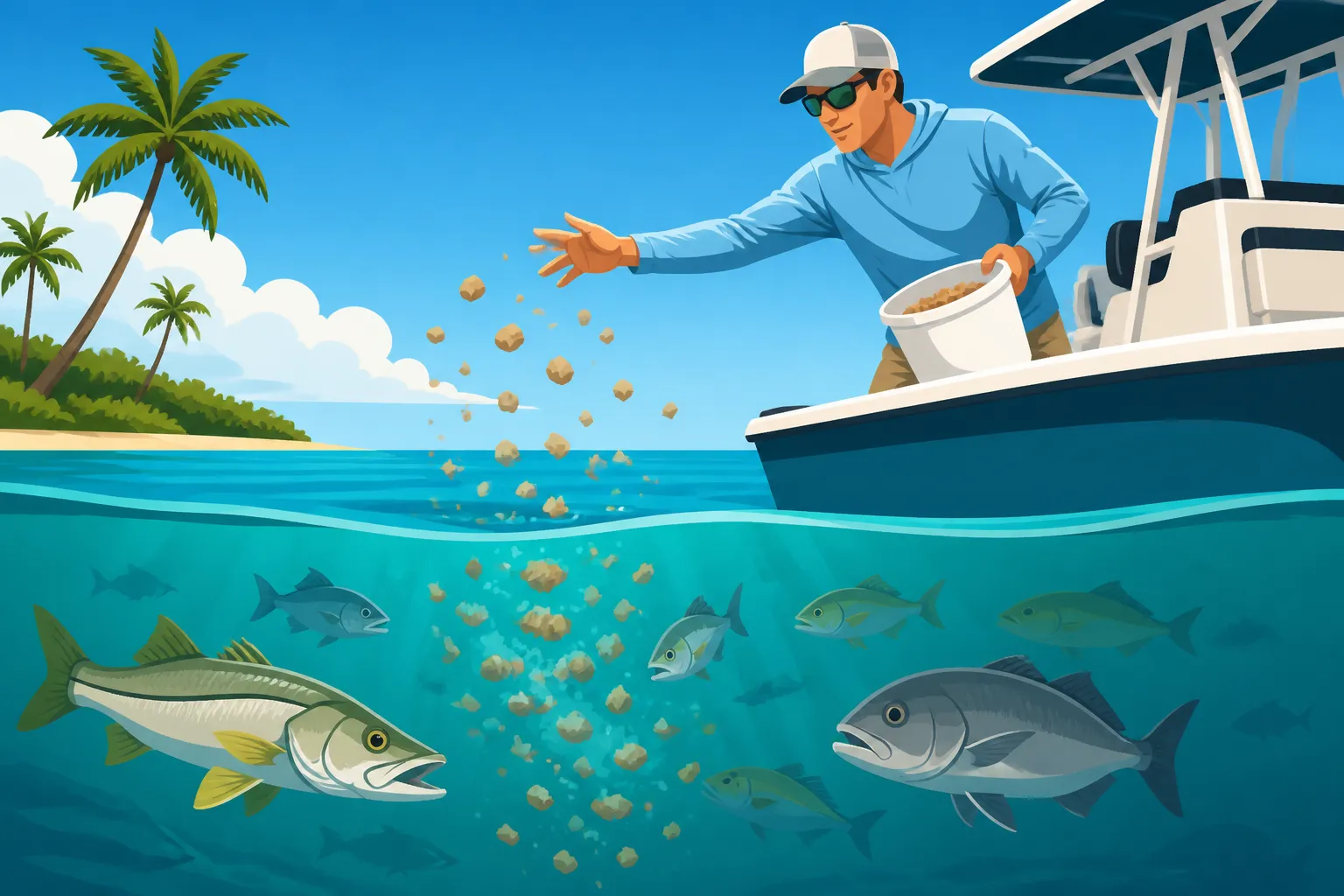
Chumming means putting food or scent in the water to draw fish toward your boat and get them feeding. It sounds simple, and at its core it is, but there is a real craft to doing it well. A good slick turns a quiet spot into a feeding zone. A bad one either does nothing or feeds every fish in the area until they have no interest in your hook.
Scent, Sight and Sound
Fish find a chum slick through three senses working together.
Scent. Oils and blood from ground fish spread down current in a long, thin trail. Sharks, snapper, grouper and many other species can follow that trail from a long way off. The oil sheen on the surface also helps you see where the slick is going.
Sight. Small pieces of bait and glittering scales drifting through the water column look like an easy meal. Fish like yellowtail snapper, ballyhoo and mackerel key in on the visual flash.
Sound and vibration. Tossing live baits or a handful of cut pieces makes small splashes and vibrations. Pelagic fish like king mackerel and blackfin tuna are drawn to that commotion, which is why live chumming with pilchards or threadfins works so well.
Understanding which sense you are appealing to helps you choose the right chum for the target species.
Think about it from the fish’s side. A mangrove snapper sitting tight in a ledge off Venice does not care much about splashing on the surface 60 feet above, but it will slide out of its hole when oily particles start drifting past its nose. A king mackerel cruising the edge of a bait pod off Jupiter, on the other hand, may ignore a frozen block entirely and come screaming in the moment a dozen live pilchards start flipping on the surface. Same tool, very different triggers.
When Chumming Makes the Biggest Difference
Chumming is not always necessary. On a red-hot bite you can catch fish without it. But it shines in a few situations:
- On pressured spots. Reefs and wrecks near busy inlets see a lot of boats. A chum slick can pull wary fish off the structure and get them competing.
- When current is moderate. Too little current and the chum just sits there. Too much and it is gone before fish find it. Moderate current carries the slick back over the structure.
- When targeting schooling fish. Yellowtail, mangrove snapper, Spanish mackerel and bonito respond strongly to a steady slick.
- When fishing for sharks. Sharks are scent hunters, and a good slick is often the only way to draw them in. Our Florida Shark Fishing Guide covers that side of the sport.
Picture a typical Saturday on a patch reef off Marathon. The water is clear, the current is pushing gently toward the Gulf side, and you can see yellowtail flickering near the bottom but they will not touch a bait. Ten minutes after a block goes over the stern, the first fish rise into the slick. Twenty minutes later, they are hanging 15 feet behind the boat in a loose cloud, eating anything that drifts naturally. That transformation is the reason so many Keys captains consider chum as important as the hooks themselves.
The Downsides to Watch For
Chumming has real costs. It can attract fish you do not want, especially sharks and barracuda that steal hooked fish. It also takes effort to keep the slick going, and a poorly run slick can scatter fish rather than hold them. And in some areas and situations, chumming is restricted, which the rules section below covers.
There is also the frustration of chumming in the wrong current. If you anchor in a spot where the tide is racing, your slick stretches out a quarter mile and spreads thin, pulling fish far away from your baits. If the water is dead still, the chum pools under the boat and you mostly feed the grunts. Learning to read current before committing to a spot will save you a lot of wasted chum and a lot of wasted mornings.
Types of Chum and How to Choose
There are several ways to chum, and each suits different species and conditions.
Frozen Chum Blocks
Frozen chum blocks are the most common choice for Florida boaters. They are made from ground fish, usually menhaden or a blend of oily species, frozen into a solid block. You put the block in a mesh bag or a chum cage and hang it over the side. As it thaws, it releases a steady slick of oil and small particles.
Most bait and tackle shops near Florida ramps sell them, and you can also order chum bags, cages and accessories through Amazon if you want to stock up before a trip.
Frozen blocks are easy and steady. Their weakness is that they release slowly in cold water and quickly in warm water, so you may need to adjust.
In August, when the surface water off the Keys feels like bathwater, a standard block can melt down in well under an hour. Many captains carry two or three blocks for a half day and keep the spares deep in a cooler of ice until needed. In January on the Panhandle, a block hung right at the surface may barely release anything for the first half hour, so anglers often break it into chunks or dunk it in a bucket of seawater to start the melt.
Fresh and Homemade Chum
Many anglers make their own chum by grinding up fish scraps, bait or bycatch. A manual meat grinder or a dedicated chum grinder does the job. Some mix ground fish with sand, oats or bread to create a heavier mix that sinks. Others add menhaden oil to boost the scent.
Homemade chum is cheaper and you can tailor it to your target. It is also messy, so plan to clean up thoroughly.
A popular approach is to save carcasses and trimmings from cleaning a day’s catch, freeze them in gallon zipper bags, and grind them the night before the next trip. Oily species such as bonito, Spanish mackerel and ladyfish make especially strong chum. Lean, white-fleshed scraps still work, but they produce less of the slick you can see on the surface, so many anglers blend them with a little menhaden oil.
Live Chum
Live chumming means tossing small live baits, usually pilchards, threadfin herring or glass minnows, into the water to draw predators. This is a favorite technique for king mackerel, Spanish mackerel, blackfin tuna and snook. You need a good supply of bait, usually caught with a cast net. If you need help with that step, see Cast Netting for Bait in Florida Waters.
Live chumming is extremely effective but uses a lot of bait. Plan to catch more than you think you need.
A common pattern on the Atlantic side is to fill the livewell with pilchards on the grass flats near an inlet at first light, then run to a nearshore reef in 50 to 70 feet of water. A few handfuls of live baits thrown behind the drifting boat every few minutes will pull kingfish, bonito and sailfish to the surface. If you want more on locating those bait schools in the first place, read How to Find Bait Fish Schools From a Boat.
Comparing Chum Types
| Chum Type | Best For | Strengths | Weaknesses |
|---|---|---|---|
| Frozen block | Snapper, grouper, sharks, general reef fishing | Easy, steady release, widely available | Release rate changes with water temperature |
| Ground fresh fish | Snapper, sharks | Strong scent, cheap if you have scraps | Messy, requires grinding |
| Live bait | Kings, Spanish mackerel, tuna, snook | Triggers aggressive feeding | Uses a lot of bait, takes time to catch |
| Cut bait pieces | Snapper, grouper, cobia | Precise control, easy to make | Requires constant attention |
| Sand ball or oat mix | Yellowtail, snapper | Sinks to the right depth | Takes preparation |
Choosing Based on Target Species
- Yellowtail snapper. A frozen block plus a sand and oat mix. Fish small, light baits in the slick.
- Mangrove snapper. Frozen block on the bottom with cut bait. See Florida Mangrove Snapper Fishing Guide.
- King mackerel. Live chumming with pilchards or threadfins.
- Sharks. Large chum blocks plus oily fish like bonito or mackerel.
- Cobia. A small slick near structure, often combined with live bait.
If you are not sure what is around, start with a general frozen block and watch what shows up first. The first fish into a slick tell you a lot. Ballyhoo and small jacks near the surface suggest you should add live bait and look for pelagics. Snapper and porgies coming up from the bottom suggest you should keep the chum flowing and downsize your hooks.
Setting Up a Chum Slick Step by Step
Here is how to set up a slick that works. These steps assume you are fishing a reef or wreck from an anchored boat, which is the most common setup.
Positioning the Boat
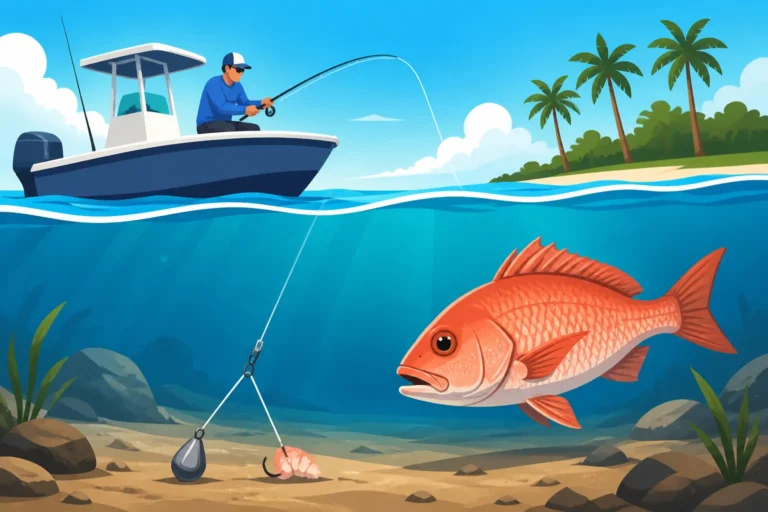
The key to chumming is getting your slick to drift over the structure you want to fish. That means anchoring up current of the reef or wreck so the chum flows back over it.
- Find your structure. Use your chart plotter and sonar to locate the reef, ledge or wreck.
- Check the current and wind. Note which way the boat is likely to swing.
- Drop anchor up current. Set the anchor so that once the line comes tight, the boat sits just up current of the structure.
- Check your position. Watch the sonar to confirm you are in the right spot. Adjust if needed.
Anchoring correctly is a skill in itself. If you are new to it, see How to Anchor a Boat on a Flat Without Spooking Fish for the principles.
A practical rule of thumb is to let out anchor line about three to five times the water depth, then measure where you settle. On a deep wreck off Pensacola, that may mean idling well up current before dropping, and it often takes two or three tries to settle in exactly the right place. Do not be embarrassed about pulling anchor and resetting. A slick that drifts 50 feet off to the side of the wreck will draw a few fish, but a slick that runs straight over the top of it will draw the whole population.
Deploying the Chum
- Hang the block. Put the frozen chum block in a mesh bag or cage and tie it off the stern. Hang it just below the surface or deeper, depending on where the fish are.
- Shake it periodically. Every few minutes, give the bag a shake to release more chum.
- Add supplemental chum. Toss in small handfuls of cut bait or sand balls to get chum deeper.
- Watch the slick. Look for the oil sheen and floating particles to confirm the slick direction.
- Wait for fish. It can take 15 to 30 minutes for fish to find the slick and move up.
Getting Chum to the Bottom
For snapper and grouper on deep reefs, a surface slick may not reach the fish. A few ways to get chum deeper:
- Chum pot or bomb. A weighted container you drop to the bottom that releases chum once it gets there.
- Sand balls. Mix chum with sand and pack it into balls. They sink fast and break apart near the bottom.
- Weighted bag. Add a sinker to the chum bag and drop it partway down.
Maintaining the Slick
The biggest mistake anglers make is letting the slick die. Once it stops, fish lose interest and wander off. Keep a steady supply of chum going the whole time you fish. If you are running low, cut back on the amount but do not stop entirely.
The flip side is overfeeding. If fish are eating the chum but ignoring your hooks, you are probably giving away too much. Cut the flow back so that the free food runs short and your baited offering becomes the most attractive thing in the water. Experienced yellowtail anglers adjust the slick constantly, like turning a faucet up and down, based on how the fish are behaving.
Fishing the Slick
Once the fish show up, you have to present a bait that looks like the chum.
Matching the Chum
The best bait is one that drifts naturally with the slick. For yellowtail, use a small piece of cut bait or a shrimp on a light hook with little or no weight. Let it drift back with the chum. For snapper and grouper on the bottom, use a weighted bait that sits in the slick zone.
Drifting Baits Back
- Use light weight. Just enough to get the bait down to the target depth.
- Feed line. Let the bait drift back naturally with the chum. Avoid letting it drag or swing unnaturally.
- Watch the line. Strikes are often subtle. If the line jumps or speeds up, set the hook.
- Repeat. If no bite, reel in and drift again.
This technique is often called flatlining. It takes practice but is extremely effective once you get the hang of it.
For bottom species, the approach is slightly different. Drop a weighted bait straight down to the structure, then lift it a few feet so it sits in the zone where the chum pot or sand balls are breaking apart. Grouper will often follow chum up off the bottom, so stay ready to crank hard the moment you feel weight, or they will dive back into the rocks. For more on that style, Bottom Fishing Technique for Snapper explains rigs and weights in more detail.
Dealing With Unwanted Visitors
Chumming attracts everything, including sharks, barracuda and other species you may not want. A few tips:
- Move if sharks start taking hooked fish.
- Use heavier leaders if barracuda are cutting your line.
- Be prepared to release unwanted species quickly and safely.
Sharks deserve special mention. In many parts of Florida, a busy chum slick will eventually draw in bull, lemon or sandbar sharks, and once they start picking off hooked snapper, the bite for your target species usually collapses. The best answer is often to pull anchor and move a few hundred yards rather than fight them. Feeding sharks hooked fish only trains them to stay with your boat.
Keeping Your Catch Fresh
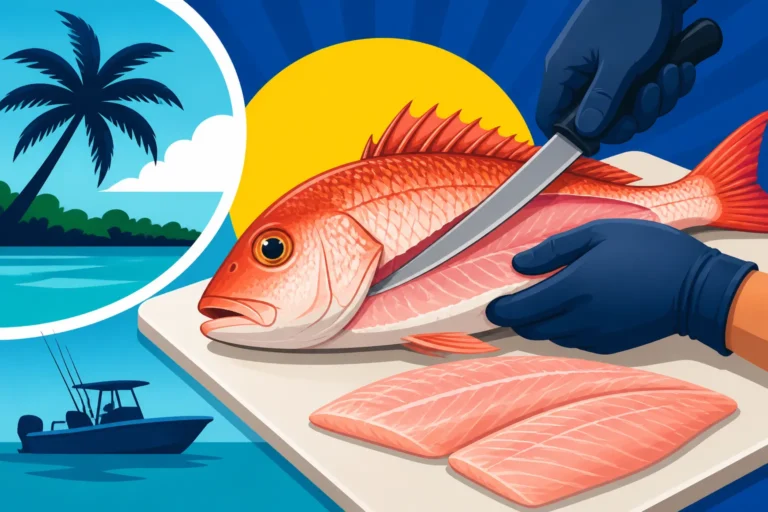
Fish caught in a chum slick are often small and numerous. Get them on ice quickly. For more, see Best Way to Keep Fish Fresh on a Boat.
A slurry of ice and seawater chills snapper and mackerel much faster than dry ice cubes, and it keeps the fillets firm through a long day. Keep the fish cooler well away from the chum cooler, and rinse your hands before handling the catch so chum oil does not end up on dinner.
Gear and Supplies for Chumming
Having the right gear makes chumming easier and more effective.
Essential Gear
| Item | Purpose |
|---|---|
| Chum bag or cage | Holds frozen chum block |
| Chum pot or bomb | Delivers chum to the bottom |
| Grinder | Makes fresh chum from scraps |
| Cutting board and knife | Cuts bait for supplemental chum |
| Bucket | Mixing sand balls and holding chum |
| Gloves | Keeps your hands clean |
| Cooler | Keeps frozen chum frozen until needed |
Most of these items are available at local tackle shops, and Amazon carries a range of chum bags, chum pots and grinders. Prices change often, so check current listings before you buy.
Rods and Tackle for Chumming
- Light spinning gear for yellowtail and mangrove snapper.
- Medium spinning or conventional for grouper and larger snapper.
- Heavy conventional for sharks.
Use fluorocarbon leaders for snapper and other line-shy fish. For heavier tackle choices, see Florida Offshore Fishing Techniques.
Hook size matters more in a chum slick than almost anywhere else. Yellowtail in clear Keys water can be remarkably hook-shy, and many anglers drop to a small circle or J hook with a 15 to 20-pound leader once the fish start inspecting baits. For mangrove snapper on wrecks, a slightly larger hook and 30-pound leader is common. Circle hooks are a good habit with natural baits, since they usually hook fish in the corner of the mouth and make releases easier.
Cleanup and Odor Control
Chum is smelly. Plan for cleanup:
- Rinse the deck frequently while fishing.
- Use a mild boat soap and scrub brush after the trip.
- Store chum bags in sealed containers.
- Keep a separate cooler for chum so it does not contaminate food.
- Keep a bottle of odor-neutralizing boat wash on board. Marine stores stock it, and Amazon carries several brands if your local shop runs out.
Rules, Ethics and Safety
Chumming is legal in most Florida waters, but there are restrictions you need to know.
Regulations to Know
- Shore-based shark fishing. Florida prohibits chumming from the beach when shark fishing, and shore-based shark anglers need a free FWC permit. If you target sharks from a pier, read how the rules apply in How to Chum for Sharks From a Pier.
- Protected areas. Some marine sanctuaries and parks restrict fishing or chumming. Check before you fish.
- Bag limits and sizes. Chumming does not change bag limits. Keep track of what you keep. See Florida Fishing Regulations and Bag Limits.
- Prohibited species. Do not use protected species as chum or bait.
Rules change, so always check the current FWC regulations before you go.
Ethical Chumming
- Do not overchum. Use just enough to attract fish.
- Do not chum near swimmers, divers or snorkelers.
- Clean up any chum spills on the boat ramp or dock.
- Release fish you do not plan to keep quickly.
Good chumming etiquette also means paying attention to other boats. Anchoring right up current of someone who is already chumming a reef will pull their fish to your slick, and that is a quick way to start an argument on the water. Give other anglers room, and if you arrive at a spot where someone is set up, find another piece of structure.
Safety Tips
- Be careful handling knives and grinders on a moving boat.
- Watch for sharks around the boat when releasing fish or swimming.
- Keep the deck clear of chum to avoid slipping.
Chumming is one of the most effective tools in Florida fishing. Learn to do it well, and you will catch more fish on more trips.
Disclaimer
This article is for general informational purposes only and does not constitute professional advice. Laws, prices and regulations vary by location and change over time. Consult a qualified professional for guidance on your specific situation.