Why Trout Move to Deeper Water in Summer
It’s a scenario every Florida angler has faced: you head out to your favorite shallow grass flats in summer, full of hope for some hungry trout, only to find the water empty. The fish you were catching so easily just a few months ago seem to have vanished into thin air. It’s frustrating, confusing, and can make you feel like you’ve lost your touch. But don't worry, you haven't! The truth is, trout don't disappear; they simply adapt to the scorching summer conditions by moving to deeper, more hospitable waters. This comprehensive guide will break down exactly why spotted seatrout make this seasonal shift and, more importantly, how you can adjust your techniques to keep catching them all summer long.
The Summer Heat: Florida's Unrelenting Sun and Its Impact on Trout
Florida's summers are legendary for their heat and humidity, and while we humans might crank up the AC or jump in the pool, fish don't have those luxuries. For spotted seatrout, the rising water temperatures are a matter of survival, not just comfort. They are finely tuned to their environment, and extreme heat triggers a fundamental change in their behavior.
Water Temperature: The Primary Driver
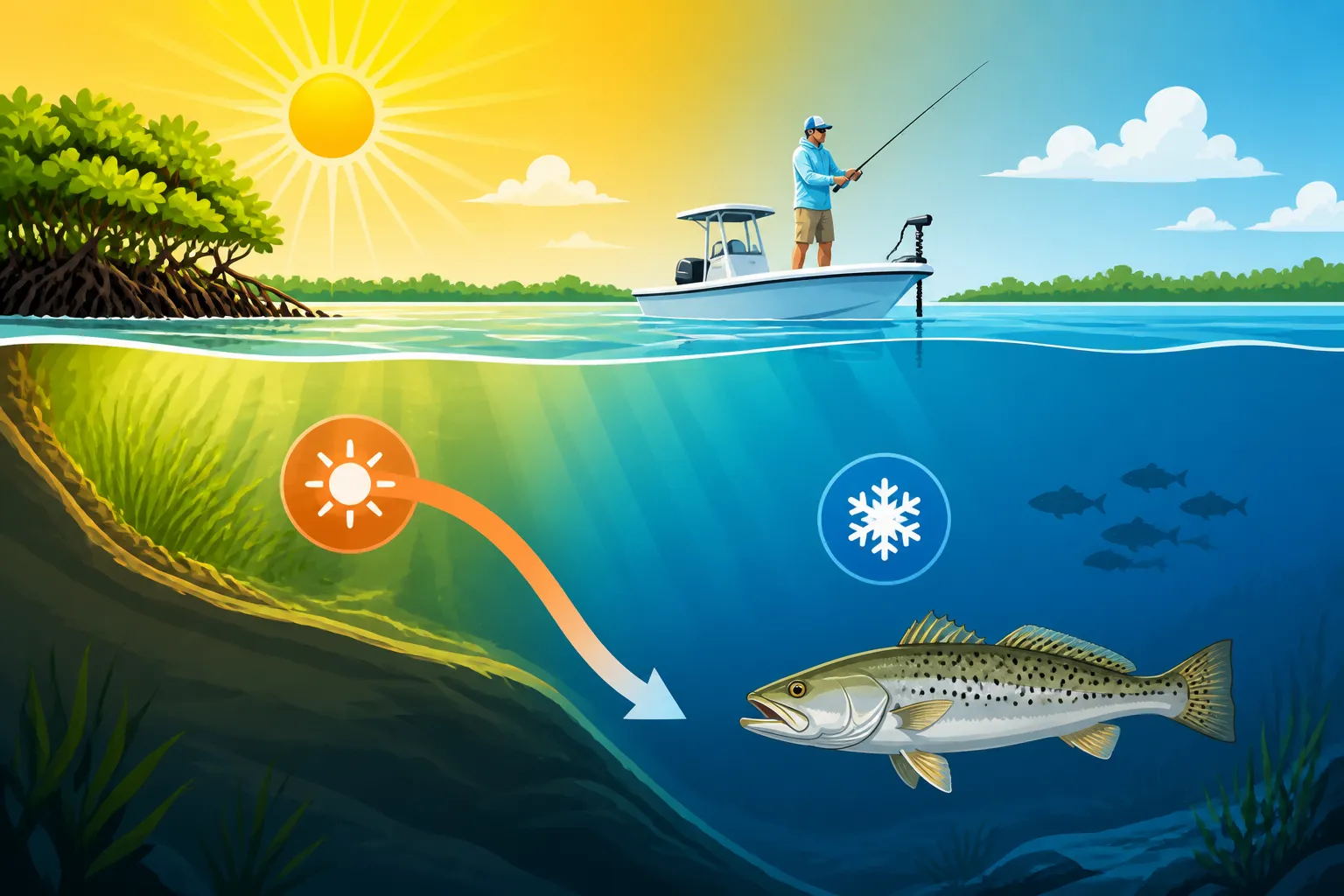
Trout, like all fish, are cold-blooded creatures. This means their body temperature is directly influenced by the surrounding water. As the sun beats down on Florida's expansive, shallow estuaries and coastal waters, those shallows heat up incredibly quickly. Think about wading out onto a flat in July – that water can feel like bathwater, or even warmer, after just a few hours of direct sunlight.
For a trout, this isn't just uncomfortable; it's physiologically stressful. Their metabolism speeds up, requiring more oxygen and energy, but their bodies simply aren't built to sustain optimal function in excessively warm water. Prolonged exposure to high temperatures can weaken them, make them more susceptible to disease, and even be lethal in extreme cases. Instinctively, they seek relief, and the most immediate relief comes from moving into areas where the water is cooler and more stable.
Oxygen Levels and Trout Comfort
It's not just the heat itself that drives trout deeper; it's also a critical consequence of warmer water: reduced dissolved oxygen. Water's ability to hold oxygen decreases as its temperature increases. Imagine trying to breathe in a stuffy, hot room – it's just harder to get enough air. For a fish, the analogy holds true.
In shallow, warm water, the dissolved oxygen levels can drop significantly. This creates an environment that's not only hot but also suffocating for fish that rely on oxygen-rich water to thrive. Deeper channels, holes, and depressions, especially those with good tidal flow, tend to maintain more stable and higher levels of dissolved oxygen. This makes these deeper spots an absolute magnet for stressed trout, providing them with the vital oxygen they need to breathe and remain active. Understanding this interplay between temperature and oxygen is key to understanding Why Trout Move to Deeper Water in Summer.
Finding Sanctuary: Where Trout Go When the Heat Is On
So, if the shallow flats become a sauna, where exactly do our beloved spotted seatrout seek refuge? They don't just randomly swim around; they gravitate towards specific underwater features that offer the cool, oxygenated conditions they crave. It's all about finding that perfect balance of comfort and safety, with an eye towards an easy meal.
Depths and Thermoclines: The Trout's Refuge
When summer hits, trout often head for the literal deep end. This could mean deep channels, dredged canals, cuts, potholes within a flat, or the edges of major navigation channels. These areas naturally offer cooler water, simply because the sun's rays can't penetrate and heat the entire water column as effectively. The deeper water acts like a natural insulator, maintaining a more consistent temperature.
Sometimes, especially in larger bodies of water, you might encounter a "thermocline." This is a distinct layer within the water column where the temperature changes rapidly with depth. While more common in freshwater lakes, you can find similar thermal stratification in some deeper saltwater areas. When a thermocline is present, trout will often suspend themselves just above or within this cooler layer, finding their optimal comfort zone. Anglers need to be aware that fish won't necessarily be on the very bottom; sometimes they're suspended. Look for these transition areas where the depth changes abruptly. Think about a deep bend in a river like the St. Johns, or a sudden drop-off near an inlet along the coast. These are prime locations for trout to stack up.
Structure and Shade: Beyond Just Depth
While depth is paramount, trout aren't just looking for open deep water. They still seek cover and ambush points, much like they do in the shallows. The difference is, in summer, that structure needs to be paired with depth and, ideally, shade.
Think about oyster bars that drop off into deeper channels, submerged rock piles, ledges, or even artificial reefs. These structures provide complex habitats that offer both protection from predators and prime ambush points for passing baitfish. Bridge pilings, docks, and even large boats moored for the summer can create shadows that extend into deeper water, offering crucial shade. If you can find a deep channel with good current that also has some form of structure, you've likely hit a jackpot for summer trout.
Moreover, if there's healthy, submerged grass in slightly deeper water (say, 5-8 feet), trout will often use the edges of these grass beds. This grass not only provides cover but also contributes to oxygen production and hosts a variety of small prey items. When considering Best Fishing Spots in Florida for trout in summer, always think about the combination of depth, structure, and current.
Adapting Your Approach: Strategies for Summer Trout Fishing
Knowing why trout move deeper is only half the battle; the other half is adjusting your fishing strategy to effectively target them. You can't just keep throwing a topwater plug on the baking flats and expect success. Summer demands a change in tactics, gear, and even your fishing schedule.
Timing Your Attack: Early Mornings and Late Evenings
One of the easiest ways to increase your chances with summer trout is to adjust your fishing times. Just like us, trout are more active and willing to venture out of their deep hideouts when the sun isn't at its peak.
The hour or two around sunrise and sunset are often referred to as "golden hours" for a reason. During these periods, the sun is lower, the air temperature starts to drop (or hasn't fully risen yet), and consequently, the surface water temperatures are at their coolest. Trout might move up onto the edges of shallower grass flats adjacent to their deeper sanctuaries to feed aggressively. This is when a topwater or a lightly weighted soft plastic might still produce. Many anglers have found great success targeting trout during these cooler windows. If you’re wondering What Time of Day Do Trout Bite Best in Florida?, these transition times are definitely your best bet during the dog days of summer.
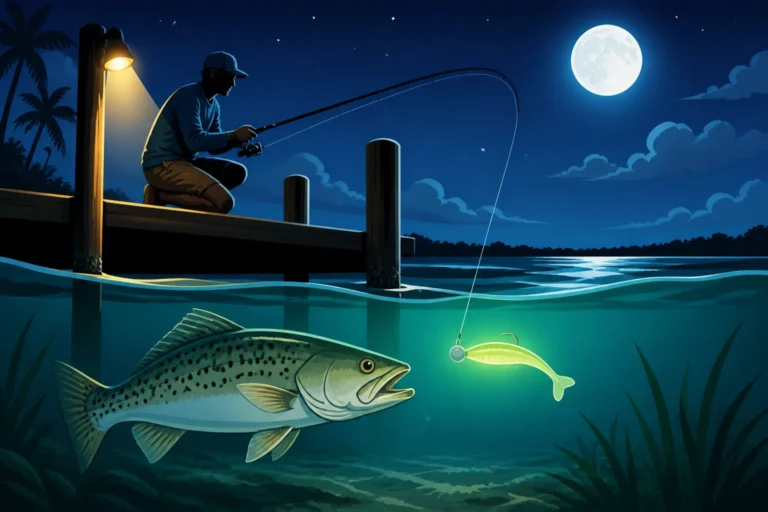
And don't forget about night fishing! When the sun completely dips below the horizon, the water cools down further, and many predatory fish, including trout, become much more active. Targeting dock lights or bridge lights that attract baitfish can be incredibly productive. Learning the Night Fishing Technique for Trout Under Dock Lights can be a game-changer for summer trout action.
Gear and Techniques for Deeper Water
Successfully targeting deeper trout means modifying your tackle and presentation. The finesse approach often used in shallow water might not cut it when you need to get your bait down quickly and keep it there.
First, consider your weights. Instead of a light 1/16 oz. jig head, you might need a 1/4 oz. or even 3/8 oz. to quickly sink your lure to the bottom in deeper water or against a stronger current. This also helps you maintain contact with your lure, which is crucial for detecting subtle bites. Pair these heavier jig heads with soft plastic baits that imitate shrimp or baitfish. Grubs, paddle tails, and jerk shads in natural colors like clear with glitter, white, or chartreuse are always solid choices. Many excellent options can be found on platforms like Amazon if your local tackle shop is out of stock.
Live bait is often king for deeper water trout. A live shrimp or a small pilchard free-lined or lightly weighted with a small split shot can be irresistible. Consider using a knocker rig or a Carolina rig to present your bait right on the bottom where trout are holding. For those interested in this, exploring How to Rig a Live Shrimp for Trout can offer some excellent insights.
When it comes to tackle, a medium-light to medium action spinning rod with a sensitive tip is ideal. This allows you to cast those heavier jig heads effectively and feel the often-subtle tap of a trout bite in deeper water. A good quality braid main line with a fluorocarbon leader will give you the sensitivity and abrasion resistance you need. Check out guides on Best Rod and Reel Setup for Florida Inshore Fishing for specific recommendations that can be adapted for deeper water.
Lastly, don't underestimate the power of electronics. A good fish finder can be invaluable for identifying those deeper holes, channels, and submerged structures where trout are likely to congregate. You can mark fish holding on the bottom or suspended in the water column, taking the guesswork out of finding them. Learning How to Use a Fish Finder for Inshore Fishing will drastically improve your success rates.
| Characteristic | Shallow Flats (Spring/Fall) | Deeper Channels/Holes (Summer) |
|---|---|---|
| Water Temperature | Moderate, comfortable | Cooler, more stable |
| Dissolved Oxygen | High, consistent | Higher, more stable (less fluctuation) |
| Light Penetration | High, direct sunlight | Lower, shaded |
| Trout Metabolism | Active, aggressive | Moderate, conserving energy |
| Preferred Bait | Topwater, suspend plastics, live bait | Heavier jigheads, live bait (bottom rigs) |
| Fishing Time | Throughout the day | Early morning, late evening, night |
| Key Attraction | Grass beds, potholes | Deep channels, structure, shade |
Understanding Trout Behavior: What Else Affects Their Summer Habits?
Beyond the immediate need for cooler water and more oxygen, other factors influence where and when trout will be found in deeper areas during the summer months. Understanding these broader behavioral patterns can give you an even greater edge.
Prey Movement and Availability
Fish don't just move to deeper water for comfort alone; they go where the food is. Just like trout, many of their primary prey species – shrimp, crabs, and smaller baitfish like pilchards, mojarras, and sardines – are also sensitive to warm water and low oxygen. When the shallow flats become too hot, these baitfish schools will often seek refuge in deeper, more comfortable waters themselves.
This creates a self-fulfilling prophecy: baitfish move deep, and trout, being opportunistic predators, follow their food source. If you can locate schools of baitfish in deeper channels or around structure using your fish finder or by observing surface activity, you can bet that trout and other predators won't be far behind. This is why knowing How to Read Water Color for Fish Location can also be beneficial, as different water colors might indicate bait presence or cooler, deeper flows.
Current and Water Flow
Current plays a significant role in where trout decide to hold in deeper water, particularly in tidal estuaries and coastal areas. Moving water not only brings in fresh, oxygenated water but also delivers a constant supply of food.
Deep channels with a consistent tidal flow are often hotspots. Trout will position themselves strategically along the edges of these currents, waiting for baitfish to be swept past them. This allows them to expend less energy while feeding. A strong incoming or outgoing tide can concentrate bait and, by extension, the trout, in predictable ambush points. Look for areas where the current creates eddies or breaks around structure in deeper water. These are prime feeding zones.
It's a nuanced dance between the heat, oxygen, food availability, and current that dictates where trout will be. By understanding these interconnected factors, you're not just guessing; you're developing a more informed strategy, increasing your chances of finding and catching those elusive summer trout. Florida offers incredible fishing, even in the heat, if you know how to adapt to the fish's natural behaviors and seasonal shifts.
Disclaimer
This article is for general informational purposes only and does not constitute professional advice. Laws, prices and regulations vary by location and change over time. Consult a qualified professional for guidance on your specific situation.