Where to Catch Peacock Bass in South Florida
Finding a unique, hard-fighting freshwater fish in Florida often feels like a quest, especially if you're looking for something beyond the usual largemouth bass. Many anglers are surprised to learn that South Florida's intricate canal systems are home to one of the most vibrant and aggressive freshwater sportfish: the peacock bass. This guide is your comprehensive roadmap to understanding where these magnificent fish thrive and how you can best target them in the Sunshine State.
Why South Florida is the Epicenter for Peacock Bass Fishing
South Florida offers an unparalleled freshwater fishing experience, thanks to its extensive network of canals, lakes, and urban waterways. It's truly a tropical angler's paradise, made even more exciting by the presence of the brilliantly colored peacock bass.
A Tropical Angler's Dream Come True
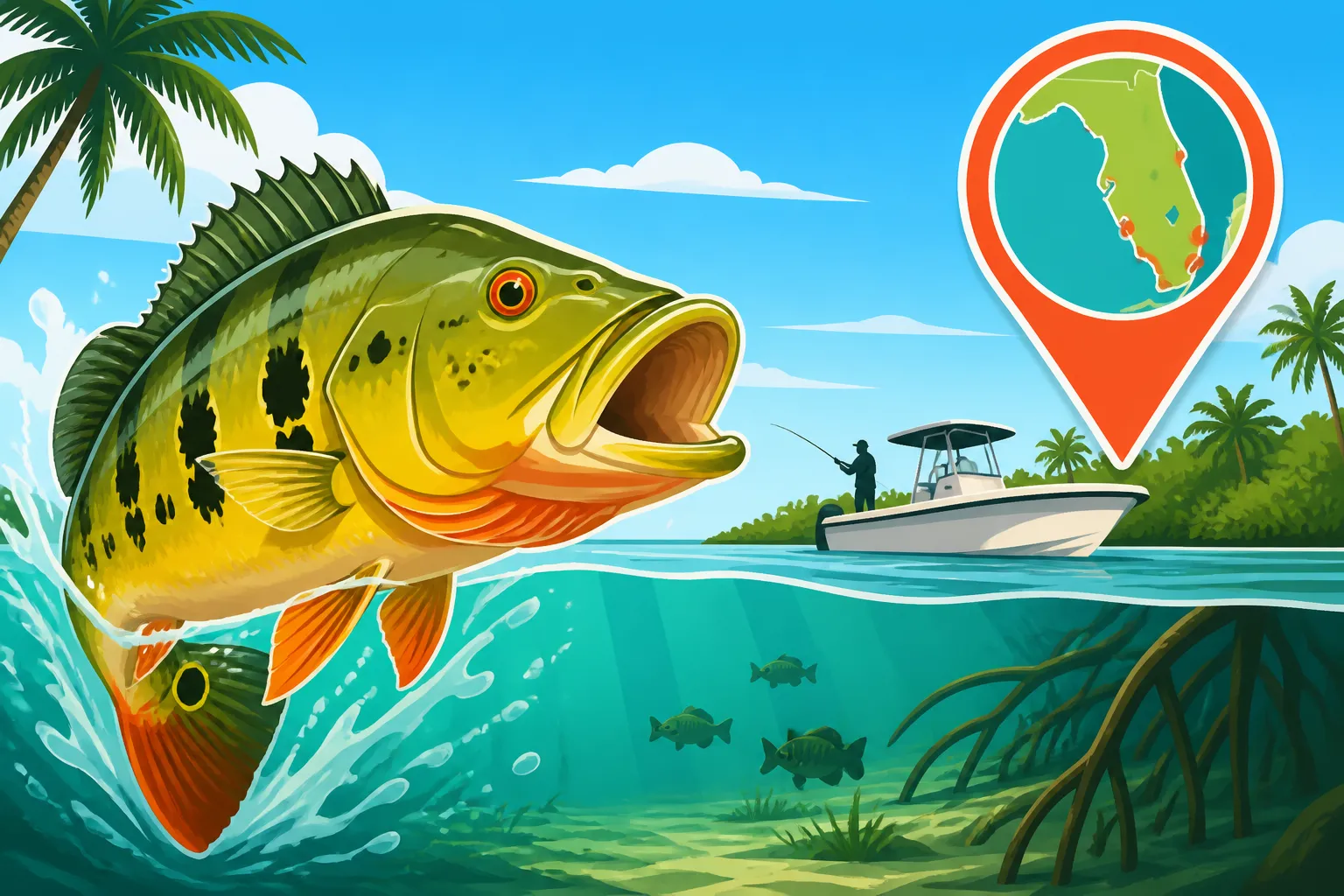
Imagine a freshwater fish that fights with the ferocity of a saltwater species, flashes dazzling iridescent colors, and eagerly strikes a wide range of lures. That's the peacock bass, and it’s why so many anglers flock to South Florida. These stunning fish, originally from the Amazon Basin, were introduced by the Florida Fish and Wildlife Conservation Commission (FWC) in the mid-1980s to help control invasive exotic fish populations in the canals. They quickly became a highly sought-after game fish due to their aggressive nature and beautiful markings. For those tired of the same old largemouth patterns, the peacock bass provides a refreshing, exotic challenge right in our backyard.
The allure isn't just their fight or appearance; it's also the unique environment they inhabit. Unlike many native species, peacock bass thrive in the maze-like urban and suburban canals that crisscross South Florida. This means incredible accessibility for anglers, from bank fishing to kayaking and small boat adventures. It’s a truly distinctive experience to be casting for these tropical beauties amidst palm trees and cityscapes, making it a bucket-list item for many freshwater enthusiasts.
The frustration for many anglers is finding consistent action and diverse species in a state known more for its saltwater prowess. Peacock bass alleviate that concern, offering a year-round fishery that provides thrilling strikes and memorable catches. Their consistent aggression means there's rarely a dull moment when you're on the right track, making them perfect for anglers of all skill levels looking for an exciting freshwater encounter.
Understanding Peacock Bass Preferences and Behavior
To successfully target peacock bass, it's crucial to understand what makes them tick and where they prefer to hang out. These fish are creatures of habit, and knowing their preferences will dramatically increase your chances of a successful outing.
One of the most critical factors for peacock bass survival and thriving is water temperature. Being a tropical species, they absolutely require warm water. This is precisely why their populations are primarily concentrated in the southernmost counties of Florida, namely Miami-Dade, Broward, and Palm Beach. When water temperatures dip below 60 degrees Fahrenheit, peacock bass become sluggish and can even die, which is why they haven't spread much further north in the state. So, if you're planning a winter trip, focus on the warmest parts of the day or seek out deeper canals that retain heat better.
Peacock bass are also highly structure-oriented fish. They love to ambush prey from cover, so you'll find them holding tight to anything that offers shelter and a hiding spot. Think culverts, bridge pilings, seawalls, docks, fallen trees, rock piles, and even heavy aquatic vegetation. These structures provide both protection from predators and prime ambush points for baitfish. Focusing your efforts on areas with abundant structure will be key to consistent catches, as they rarely stray far from these safe havens.
These fish are aggressive, visual feeders. They typically hunt during daylight hours and are known for their territorial nature, often striking out of aggression rather than pure hunger. This means even if they're not actively feeding, a properly presented lure or bait can still elicit a powerful strike. Pay close attention to water clarity; while they can tolerate some murkiness, they prefer clearer water where they can sight-feed. Their aggressive strikes and powerful runs make them a fantastic sportfish, providing heart-pounding action once hooked.
Prime Regions and Their Extensive Canal Systems
When it comes to pinpointing where to catch peacock bass in South Florida, three counties stand out: Miami-Dade, Broward, and Palm Beach. Each offers a unique but equally productive landscape of interconnected waterways.
Miami-Dade County: The Urban Angler's Paradise
Miami-Dade County is arguably the undisputed capital of peacock bass fishing in the United States. Its massive, intricate canal system, originally designed for flood control, has become an accidental haven for these vibrant predators. What makes Miami-Dade so special is not just the sheer abundance of peacocks, but also the incredible accessibility. You can often find prime fishing spots just minutes from bustling urban centers, making it a perfect destination for anglers looking for a quick escape or a full-day adventure.
The county boasts an expansive network of canals, many of which are interconnected, allowing fish to move freely and establish large populations. Key systems include the Tamiami Canal (C-4), Snapper Creek (C-2), Black Creek (C-1), and the extensive waterways around the Miami International Airport, often referred to as the "Airport Lakes" or "Blue Lagoon." These canals run through residential neighborhoods, commercial districts, and even alongside major highways, offering countless access points. Anglers can fish from public parks, bridges, seawalls, or launch kayaks and small jon boats to explore deeper into the networks.
Some of the most productive areas within Miami-Dade include the canals running through Doral, Kendall, and Coral Gables. These areas feature residential canals lined with docks and seawalls, providing ample structure for peacock bass to hold. The consistent warm water temperatures, abundant forage fish like tilapia and guppies, and the protective structures make these urban waterways ideal for sustaining healthy peacock bass populations. For a more detailed look, check out this guide on Best Canals for Fishing in South Florida that highlights some of these productive waterways.
Broward County: Expanding Your Peacock Bass Horizons
Just north of Miami-Dade, Broward County continues the impressive trend of interconnected canals teeming with peacock bass. While perhaps not as densely populated as Miami-Dade in certain stretches, Broward offers fantastic opportunities, often with slightly less pressure, especially in its more residential and suburban areas. Anglers looking to explore beyond Miami's borders will find equally exciting fishing here.
The canal systems around cities like Fort Lauderdale, Pembroke Pines, and Pompano Beach are particularly productive. These waterways often connect directly to larger drainage systems and even lead towards the vast Everglades, though the highest concentrations of peacocks remain in the urbanized freshwater sections. Look for canals with good water flow, plenty of submerged structure, and clear water, which are all indicators of healthy peacock bass habitat. Many of these canals are easily accessible from public parks or neighborhood streets.
Navigating Broward's waterways requires a similar approach to Miami-Dade: utilize satellite maps to identify potential access points, launch sites for kayaks or small boats, and areas with promising structure like culverts, bridge pilings, and overhanging vegetation. Anglers can find consistent action in the residential canals, particularly where they intersect or narrow, creating current breaks and ambush points for these aggressive fish.
Palm Beach County: The Northernmost Frontier
Venturing further north into Palm Beach County, the peacock bass populations become a bit more localized but are still very strong in certain areas. This county represents the northernmost extent of their established range in Florida due to the occasional colder winters. However, within their stronghold areas, the fishing can be just as phenomenal as in the counties to the south.
The crown jewel for peacock bass fishing in Palm Beach County is undoubtedly the Lake Ida Chain of Lakes in Delray Beach, along with its connecting canals. This system offers a unique blend of open-water lakes and winding canals, providing diverse fishing scenarios. Lake Ida, Lake Eden, Lake Clarke, and others are interconnected, allowing the peacock bass to roam and populate this extensive freshwater system. Anglers can launch larger boats here, or still opt for kayaks and canoes to explore the narrower canal sections.
Beyond the Lake Ida chain, you can also find scattered populations of peacock bass in other urban canals around West Palm Beach and Boynton Beach. Keep an eye out for canals that are deep, have good structure, and are protected from harsh cold fronts. While not as universally distributed as in Miami-Dade, the dedicated angler in Palm Beach County can still find incredible action, often catching larger specimens that have had more time to grow in these slightly less pressured waters.
Navigating Specific Hotspots and Access Points
While entire counties are productive, certain specific waterways have earned legendary status among peacock bass enthusiasts. Knowing these prime hotspots can save you valuable time and put you directly onto the fish.
The Legendary Tamiami Trail Canal (C-4)
The Tamiami Trail Canal, officially known as the C-4 Canal, is arguably the most famous peacock bass fishery in the world outside of South America. Running parallel to US-41 (Tamiami Trail) for miles through Miami-Dade County, this extensive system offers countless opportunities for anglers. Its vastness means there are always new sections to explore, and its consistent productivity makes it a reliable choice for targeting trophy peacocks.
What makes the C-4 so special is its combination of depth, varying current, and abundant structure. The canal is fed by various tributaries and drainage systems, maintaining good water quality and flow. You'll find numerous bridge pilings, culverts, spillways, and fallen trees along its banks, all prime holding spots for peacock bass. These fish often position themselves on the down-current side of structure, waiting to ambush baitfish being swept past. Pay particular attention to canal intersections and areas where changes in depth or current are evident.
Accessibility along the C-4 is excellent. Anglers can easily bank fish from numerous spots along US-41, pulling over where there are safe shoulders or designated parking areas. For those with kayaks or small boats, there are several public boat ramps and unimproved access points, allowing you to cover more water. Exploring the numerous side canals and residential cuts that branch off the main C-4 can also lead to phenomenal fishing, often with less pressure than the main artery.
Miami Airport Lakes (Blue Lagoon / C-6 Canal)
For anglers seeking consistent action with relatively easy access, the Miami Airport Lakes, also known as the Blue Lagoon or part of the C-6 Canal system, are a fantastic choice. Located right next to Miami International Airport, these urban lakes and connecting canals are easily reached and provide some of the most reliable peacock bass fishing in the region. Their convenience makes them a popular spot for locals and visiting anglers alike.
These lakes are consistently productive due to a few key factors. First, their somewhat deeper basins and surrounding urban heat island effect often mean slightly warmer water temperatures, making them productive even during cooler months when other canals might slow down. Second, they are teeming with baitfish, providing an endless food source for peacock bass. Finally, the lakes feature plenty of submerged structure, including ledges, drop-offs, and rock piles, along with docks and seawalls around the perimeter.
Fishing here can be done from the bank in many areas, particularly in public parks adjacent to the lakes. Kayaks and small boats are also popular for exploring the larger stretches and reaching less pressured spots. Be mindful of airport security zones and posted regulations, as some areas may have restrictions. The Miami Airport Lakes are renowned for offering a legitimate chance at catching a "grand slam" of Florida exotic freshwater species, including peacock bass, jaguar guapote, and oscar, making them a truly unique destination. If you're looking for an overview of great fishing spots, our guide to the Best Fishing Spots in Florida often includes these accessible urban gems.
Snapper Creek Canal (C-2) and Black Creek Canal (C-1)
Beyond the Tamiami Trail, Miami-Dade County offers other significant canal systems that are equally productive for peacock bass, including the Snapper Creek Canal (C-2) and the Black Creek Canal (C-1). These waterways provide excellent alternatives or additions to your fishing itinerary, often yielding quality fish.
The Snapper Creek Canal (C-2) meanders through some beautiful residential areas of South Miami, Palmetto Bay, and Pinecrest. It's known for its clear water in many sections and the sheer variety of structure available. Here, you'll encounter numerous residential docks, seawalls, and overhanging trees, all serving as prime ambush points for peacock bass. The canal maintains a relatively consistent depth, but any variations or deeper holes can hold larger, more mature fish.
Further south, the Black Creek Canal (C-1) offers another extensive system to explore. This canal system is robust and often less pressured in certain stretches compared to its northern counterparts. It features a mix of urban and more naturalized sections, with plenty of bank access points and opportunities for kayak and small boat anglers. Both the C-1 and C-2 canals are known for holding not just good numbers of peacock bass, but also some truly impressive specimens, making them ideal for anglers targeting a trophy. These canals often connect to larger systems, allowing for wide dispersion of fish and the potential for new discoveries around every bend.
Essential Strategies for Catching South Florida Peacock Bass
Now that you know where to go, let's talk about how to catch these aggressive beauties. Peacock bass respond well to a variety of techniques, but having the right approach makes all the difference.
Lures, Baits, and Presentation
Peacock bass are notoriously aggressive and will hit a wide array of lures, making them incredibly fun to target. However, having a few go-to options can be crucial for consistent success. The classic, most effective live bait for peacock bass is hands down the wild shiner. These baitfish are native to South Florida and are what peacocks naturally feed on. You can purchase them from local bait shops, often found in areas specializing in peacock bass fishing. Rigged weightless on a circle hook or with a small split shot, a lively shiner cast near structure is often irresistible to a hungry peacock.
When it comes to artificial lures, suspending jerkbaits are incredibly effective. Brands like Rapala X-Rap, Yo-Zuri, or Lucky Craft are popular choices. The ability to pause these lures and let them suspend tantalizingly in the strike zone, especially near structure, often triggers aggressive strikes. Topwater lures, such as small poppers or walk-the-dog style baits (like a Heddon Super Spook Jr.), are exhilarating to use, particularly in low-light conditions or over shallow flats, as peacocks will explode on them. Soft plastic jerkbaits, fished weightless or with a light jig head, can also be deadly, mimicking a wounded baitfish. If you're curious about lure selection, our article on Best Lure Color for Murky Water in Florida can offer insights on adapting to different canal conditions.
Fly fishing for peacock bass is also gaining popularity, offering a challenging yet incredibly rewarding experience. Streamers in baitfish patterns (chartreuse, white, black, and red) and small poppers are highly effective. The key with any lure or bait is presentation – cast as close to structure as possible, retrieve with erratic twitches and pauses, and be ready for an immediate, powerful strike.
Timing Your Attack: Best Seasons and Conditions
While peacock bass can be caught year-round in South Florida, there are definitely optimal times and conditions that can lead to more consistent and exciting action. Understanding these can significantly improve your catch rates.
The peak seasons for peacock bass fishing are generally during the warmer months, from spring through early fall (roughly March to November). During these times, water temperatures are consistently warm, and the fish are most active, feeding aggressively and often spawning. Post-spawn periods can be particularly productive as fish recuperate and become very hungry. Even on the hottest summer days, peacock bass will remain active, often seeking slightly deeper or shaded areas during the midday sun. Our comprehensive guide on the Best Time of Year to Fish in Florida provides more general information, but for peacocks, warm is always better.
Cold fronts, however, are the biggest challenge for peacock bass anglers. As tropical fish, they are very sensitive to drops in water temperature. After a significant cold front, especially one that brings water temperatures below 60 degrees Fahrenheit, peacock bass can become lethargic and extremely difficult to catch. During these times, focus on the warmest parts of the day (late morning to mid-afternoon), target deeper canals or areas with dark bottoms that absorb more heat, and slow down your presentation considerably.
As for the time of day, early morning and late afternoon are generally prime. The lower light conditions and slightly cooler temperatures during these periods often trigger increased feeding activity. However, due to their aggressive nature, peacock bass can bite throughout the day, especially if you find them holding tight to structure or actively schooling. Don't be afraid to fish at midday, but be prepared to work harder to coax a strike.
Gear Up for the Fight
Having the right gear is crucial when targeting peacock bass, as their aggressive strikes and powerful runs can quickly overwhelm inadequate tackle. A proper setup will help you land more fish and minimize break-offs.
For rod and reel setups, a medium-heavy to heavy power spinning or baitcasting rod, typically 6'6" to 7'6" in length, is ideal. Pair this with a reliable reel spooled with 20-30 lb braided line. The braid offers excellent sensitivity, strength, and casting distance. It's essential to use a fluorocarbon leader, usually 20-40 lb test, tied to your main line with a strong knot like an FG knot or Alberto knot. The fluorocarbon leader provides abrasion resistance against structure and is less visible to the fish in clear water. This setup gives you the power to pull fish away from heavy cover and handle their initial explosive bursts. If you're familiar with general bass tactics, many of the principles apply, as detailed in our Florida Bass Fishing Techniques guide.
Beyond your rod and reel, a few essential accessories will make your trip more enjoyable and successful. High-quality polarized sunglasses are non-negotiable for sight fishing, allowing you to spot fish or subtle changes in structure beneath the surface. Long-nosed pliers are critical for safely removing hooks from these toothy predators, and a net with rubber mesh (to protect the fish's slime coat) will assist in landing and releasing your catch. Remember, responsible catch-and-release practices are vital for sustaining these incredible fisheries, so be prepared to handle them gently and release them quickly.
Making the Most of Your South Florida Peacock Bass Adventure
A successful peacock bass fishing trip in South Florida involves not just knowing where and how to fish, but also understanding local regulations and considering the benefits of local expertise.
Navigating Access and Regulations
South Florida offers extensive public access to its canal systems, making peacock bass fishing highly accessible. Many public parks, greenways, and undeveloped areas along canal banks provide excellent spots for bank fishing. For those with kayaks, canoes, or small boats, numerous public boat ramps and unimproved launch sites are available throughout Miami-Dade, Broward, and Palm Beach counties. A quick search on Google Maps for "public boat ramps" or "parks with canal access" in your target area will reveal many options.
However, always be mindful of local signage and private property. Do not trespass, and respect residential areas. Familiarize yourself with the Florida Fish and Wildlife Conservation Commission (FWC) regulations before you head out. A Florida freshwater fishing license is required for residents and non-residents 16 years or older, with specific exemptions for certain age groups or circumstances. It's easy to get one online or in person. For all the details on licensing, check out our comprehensive Florida Fishing License Guide and specifically the Florida Freshwater Fishing License Rules to ensure you're compliant.
Peacock bass are non-native, introduced species, and the FWC encourages anglers to harvest them, as there are no closed seasons or minimum size limits. However, many avid peacock bass anglers choose to practice catch and release to preserve the quality of the fishery, particularly for larger specimens. If you do decide to keep a few for the table, they are excellent eating!
The Advantage of a Local Guide
For those new to peacock bass fishing or visitors looking to maximize their time, hiring a local fishing guide can be an absolute game-changer. South Florida's canal systems are incredibly vast and complex, and a guide's intimate knowledge of the waterways, current fish patterns, and best techniques can drastically improve your chances of success. They know where the fish are hiding, what they're biting on, and how to navigate the subtle nuances of these unique urban fisheries.
A good guide comes equipped with all the necessary tackle, bait (often including live shiners), and usually a specialized boat designed for navigating the canals. They can teach you the ropes, refine your casting, and help you understand the subtle indicators of peacock bass presence. This is particularly valuable for first-timers who might feel overwhelmed by the sheer size of the canal networks. To find a reputable guide, look for captains specializing in peacock bass fishing in the specific county you plan to visit. Websites like FishingBooker are excellent resources, allowing you to browse local captains, read reviews from other anglers, and book trips directly, ensuring you find a knowledgeable and experienced professional.
When booking a guided trip, discuss your expectations upfront. Most peacock bass guides practice catch-and-release to maintain the health of the fishery, but some might accommodate keeping a few fish within FWC guidelines. For more specific information, you can explore resources like Best Fishing Guides for Peacock Bass in Miami and understand the typical Cost of a Peacock Bass Guide in Miami to plan your trip effectively. A day on the water with a local expert can turn a good fishing trip into an unforgettable one.
| Hotspot Name | County | Key Features | Typical Access |
|---|---|---|---|
| Tamiami Trail Canal (C-4) | Miami-Dade | Extensive, structure-rich, high fish density, connects to Everglades. | Bank, Kayak, Small Boat |
| Miami Airport Lakes (Blue Lagoon) | Miami-Dade | Urban, convenient, consistent action, year-round potential, diverse exotics. | Bank, Kayak, Small Boat |
| Snapper Creek Canal (C-2) | Miami-Dade | Residential, clear water, good structure (docks, seawalls), quality fish. | Bank, Kayak, Small Boat |
| Black Creek Canal (C-1) | Miami-Dade | Robust system, less pressured sections, good for larger peacocks. | Bank, Kayak, Small Boat |
| Lake Ida Chain of Lakes | Palm Beach | Interconnected lakes/canals, diverse fishing, northernmost stronghold. | Bank, Kayak, All Boat Sizes |
| Fort Lauderdale Canals | Broward | Urban/residential, varied structure, less pressure than Miami in spots. | Bank, Kayak, Small Boat |
Disclaimer
The information provided in this guide is for general informational purposes only and does not constitute legal or professional advice. Fishing regulations, license requirements, and local access rules can change frequently. Always consult the latest regulations from the Florida Fish and Wildlife Conservation Commission (FWC) and local authorities before fishing. Engage fishing guides and charter services at your own discretion and ensure they are properly licensed and insured.