Live Bait vs Lures for Bass Fishing
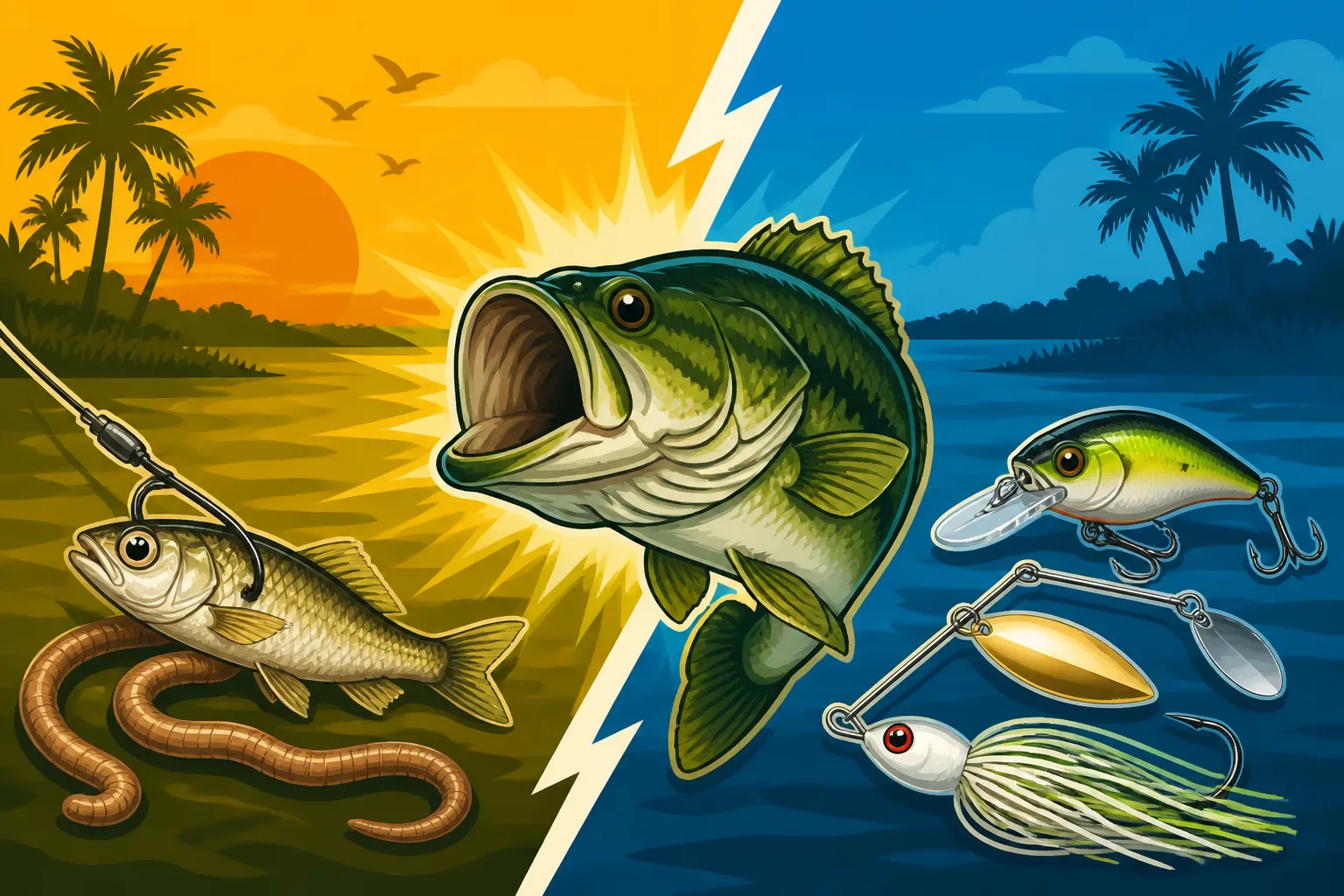
Ah, the age-old dilemma that keeps Florida bass anglers up at night! You've got your gear ready, the boat's gassed up, and a prime fishing spot in mind, but then it hits you: should you load up on live bait, or is it a day for slinging artificial lures? This isn't just a simple choice; it's a strategic decision that can make or break your day on the water, especially when those Florida largemouth bass decide to be picky. This guide is here to walk you through the pros and cons, the nuances, and the best times to employ each method, so you can confidently choose your weapon and maximize your chances of a successful bass fishing trip.
The Allure of Live Bait for Florida Bass
Let's be real, there's a primal satisfaction that comes with fishing live bait. It feels natural, it is natural, and often, it just works. When you're dealing with a tough bite, a cold front, or highly pressured fish, sometimes nothing beats a struggling shiner or a juicy worm.
Why Live Bait Often Outperforms Lures (Sometimes!)
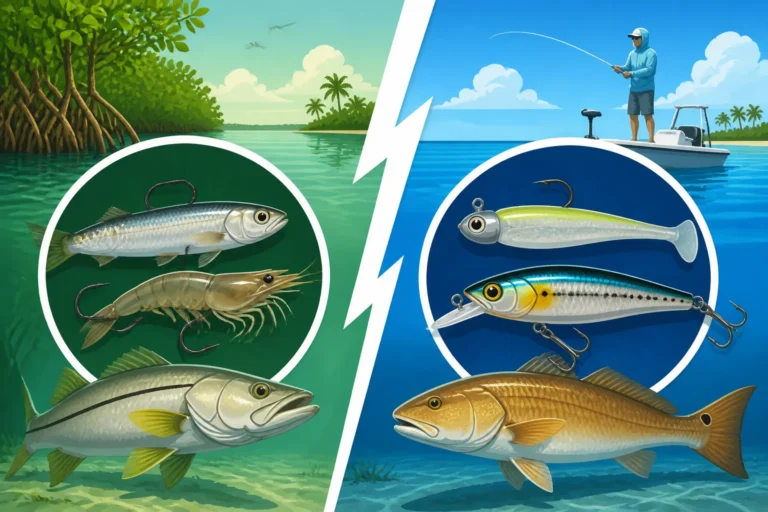
The magic of live bait lies in its undeniable realism. No matter how advanced artificial lures become, they can't perfectly replicate the erratic, panicked swim of a real baitfish or the subtle wiggle of a worm. Live bait possesses natural scent, movement, and a lifelike appearance that fish simply can't ignore. Think about it: a golden shiner, for instance, isn't just swimming in a straight line; it's darting, pausing, twitching, and radiating natural distress signals that trigger a bass's predatory instincts. This can be particularly crucial when fishing clear water where bass have ample time to inspect your offering.
There are certain scenarios where live bait truly shines. When bass are lethargic due to a sudden cold front, or if they've been pounded by artificial lures day in and day out, a live shiner struggling near a submerged tree might be the only thing that coaxes a strike. It requires minimal effort from the bass – they just have to open their mouth – which is a huge advantage when fish are in a negative mood. Furthermore, live bait often presents a larger, more substantial meal, which can be exactly what a trophy bass is looking for. If you're targeting that once-in-a-lifetime monster largemouth, a big, healthy shiner is often your best bet, especially around prime feeding times or specific structures.
Popular Live Bait Options and How to Use Them
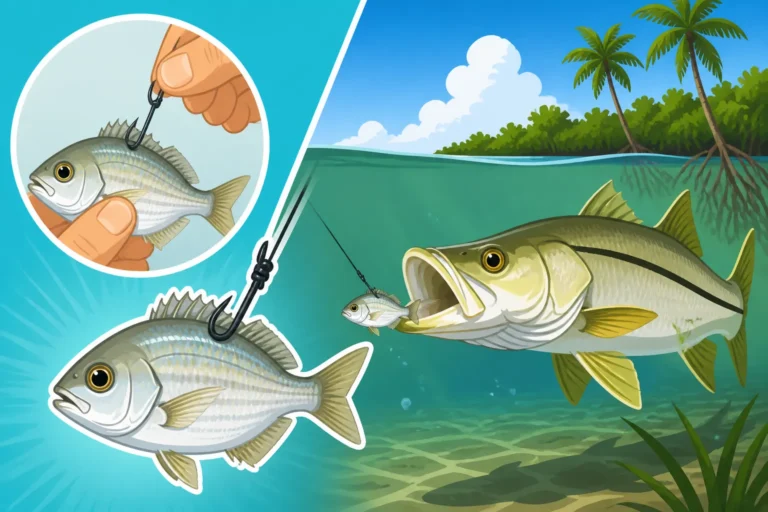
In Florida, when we talk about live bait for bass, one name reigns supreme for trophy hunting: the golden shiner. These shiny, plump baitfish are like candy for big bass. You can rig them in several ways, often with a large circle hook through the lips or dorsal fin, allowing them to swim naturally. You typically fish them under a balloon or float, or free-lined near cover like lily pads, hydrilla mats, or submerged timber. The key is to let the shiner do the work, swimming around and attracting attention. The sight of a struggling shiner can draw a bass from considerable distance, and the ensuing strike is often explosive.
Beyond shiners, other options can be incredibly effective. Small panfish, like bluegill or shellcracker, caught from the same waters you're fishing, can be incredibly potent. Bass are opportunistic predators, and they regularly snack on smaller fish from their own ecosystem. Rigging these smaller panfish similarly to shiners can yield fantastic results. Another classic is the humble worm – specifically, red worms or nightcrawlers. While not typically used for targeting trophy bass in Florida, they are fantastic for catching numbers of smaller to medium-sized bass, especially when fished on a simple hook-and-sinker rig or even a wacky rig. They're incredibly versatile, easy to transport, and almost always get a bite, making them a great choice for beginners or for those times when you just want to feel a tug on the line.
When using live bait, remember that presentation is key. You want your bait to appear as natural and unhindered as possible. Avoid using overly heavy weights that restrict movement, and choose hooks that are strong enough to handle a big bass but small enough to not impede the baitfish's swim. Keeping your bait lively and fresh is also paramount, which leads us to the next point.
The Downsides and Challenges of Live Bait
While live bait certainly has its advantages, it's not without its drawbacks. One of the biggest hurdles for many anglers is the cost and effort involved. Golden shiners, especially the larger ones, can be quite expensive, and keeping them alive requires a good aerated livewell or bait bucket. You're constantly managing water temperature, oxygen levels, and making sure they don't get stressed. It's a commitment! If you're spending all day trying to keep your bait alive, it can detract from the actual fishing experience.
Then there's the durability factor. Live bait, by its very nature, isn't designed to last through multiple casts or aggressive strikes. A single missed bite can mean a lost shiner, and if you run out of bait, your day of live bait fishing is over unless you can catch more. This can get frustrating, especially when fish are biting short or you're getting a lot of "false" alarms. There's also the potential for accidental catches of non-target species. A big shiner might attract not just a largemouth, but also an alligator gar, a catfish, or even a snakehead, which can be fun but might not be what you're after. These incidents can also result in lost tackle, which adds to the expense. Florida Freshwater Fishing License Rules are also important to be aware of when using live bait, as certain species might have restrictions.
The Versatility and Thrill of Lures for Florida Bass
On the other side of the coin, we have the vast and exciting world of artificial lures. For many, this is where the true art and challenge of bass fishing lie – convincing a fish to strike something that isn't alive.
The Strategic Advantages of Artificial Lures
The primary advantage of artificial lures is their incredible versatility and durability. You can carry an entire tackle box filled with different shapes, sizes, colors, and actions, allowing you to adapt to almost any fishing condition. Need to fish shallow grass? Grab a frog. Deep ledge? A crankbait or a jig. Suspended fish? A jerkbait. This adaptability means you can cover a lot of water quickly, searching for active fish, rather than waiting for a live bait to entice a strike in a small area. Lures are reusable, too, so once you buy them, they're yours until they get lost or broken, offering a potentially more cost-effective approach over time compared to constantly buying live bait. You can easily find a huge selection of lures on platforms like Amazon, from basic soft plastics to high-end hard baits.
Beyond practicality, there's an immense satisfaction that comes from fooling a wary bass with a precisely presented lure. The act of choosing the right lure, making the perfect cast, working it with just the right cadence, and then feeling that sudden thump is a rewarding experience. It's a more active, engaging form of fishing that demands greater skill and strategic thinking. You're not just waiting; you're actively hunting, imitating bait, and triggering reactions. Lures also allow for more aggressive presentations, such as burning a spinnerbait through grass or ripping a lipless crankbait, which can provoke reaction strikes from even non-feeding bass.
Essential Lure Categories for Florida Bass
When it comes to lures for Florida bass, the options are seemingly endless, but a few categories are absolute must-haves for any angler. Soft plastics are perhaps the most versatile. This category includes worms, creature baits, senkos, and flukes, and they can be rigged in countless ways: Texas-rigged for weedless fishing in heavy cover, Carolina-rigged for bottom bumping, wacky-rigged for a subtle shimmy, or on a drop shot for finesse. How to Fish a Soft Plastic Jerkbait for Bass is a perfect example of a nuanced technique that can be deadly. These soft plastics mimic worms, crawfish, and baitfish, making them irresistible in many situations, especially in and around the abundant vegetation found in Florida's lakes like Lake Okeechobee Fishing Guide.
Crankbaits are another staple, designed to dive to specific depths and deflect off structure, triggering violent strikes. You have shallow divers, medium divers, and deep divers, allowing you to effectively target bass at various depths in open water or along contours. Spinnerbaits and chatterbaits (bladed jigs) are excellent for covering water and appealing to aggressive bass with their flash and vibration. How to Fish a Spinnerbait for Bass effectively involves understanding how to "clack" it against cover or reel it at different speeds to maximize its appeal. Topwater lures, such as frogs, poppers, and walking baits, offer some of the most exciting strikes in bass fishing, particularly during low-light conditions or when bass are feeding on the surface in heavy cover. The explosive blow-up on a topwater frog is something every bass angler lives for. And let's not forget jigs – from flipping jigs used in thick vegetation to football jigs dragged along rocky bottoms, they are a fantastic choice for a more subtle, bottom-oriented presentation, often attracting some of the biggest bass. For a deep dive into selections, check out Best Lures for Florida Bass Fishing.
When Lures Might Fall Short
Despite their versatility, lures can sometimes leave you scratching your head. One common challenge is the learning curve. Effectively presenting different types of lures, understanding their action, and knowing when to use which one takes time and practice. There's an art to "matching the hatch" – selecting a lure that closely resembles the prevalent baitfish or forage in the area – and getting it wrong can lead to a slow day. Finicky fish, especially those in highly pressured waters, can become "lure shy," meaning they've seen every artificial bait under the sun and are much harder to convince.
Conditions also play a significant role. During severe cold fronts, when bass become extremely sluggish and suspend in deeper water, it can be incredibly challenging to get a reaction strike with a lure. They might not be actively chasing food, making the natural, slow-moving appeal of live bait a better option. Similarly, in very clear water, bass have more time to inspect a lure, and if something looks even slightly unnatural or repetitive, they might turn their nose up at it. In these situations, the subtle nuances of live bait can truly make a difference, especially for a trophy fish.
Making the Choice: Situational Fishing Strategies
So, how do you decide between live bait and lures on any given day? It's rarely a black-and-white answer. The most successful Florida bass anglers often carry both options and let the conditions and the fish dictate their approach.
Factors Influencing Your Decision
Several key factors should influence your decision to reach for live bait or an artificial lure. First, consider the water clarity and temperature. In clear, cold water, bass can be less aggressive and more discerning; here, a subtle live bait might entice a bite where a lure might fail. Conversely, in murky, warm water, bass might rely more on vibration and scent, making noisy crankbaits or scented soft plastics effective. The ambient temperature also plays a role in Best Water Temperature for Bass Fishing for specific species.
Next, think about the habitat you're fishing. Are you in wide-open expanses like some parts of Lake Okeechobee Fishing Guide, where covering water with lures is efficient? Or are you picking apart dense lily pads and submerged hydrilla, where a Texas-rigged soft plastic or a weedless frog might be ideal, but a live shiner free-lined through a small opening could also be deadly? The type of structure, whether it's timber, rocks, grass, or docks, will often suggest certain presentations that are easier with one method over the other.
Your target size of bass is another crucial element. If you're simply aiming to catch a high number of bass, regardless of size, smaller soft plastics, worms, or even smaller shiners can be very effective. However, if you're on a quest for a truly massive largemouth – the kind Florida is famous for – a large golden shiner is often the undisputed king. Trophy bass often prefer a larger, easier meal, and a big shiner fits that bill perfectly. Finally, consider your angler skill level and patience. Live bait fishing can sometimes require a lot of patience, waiting for that subtle take. Lure fishing often requires more active casting, retrieving, and understanding complex presentations. Beginners might find initial success easier with live bait, but dedicated practice with lures can lead to greater long-term rewards and skill development. For comprehensive insights, refer to Florida Largemouth Bass Fishing Guide.
Combining Approaches for Maximum Success
The smartest anglers don't strictly adhere to one method. They understand that the best approach is often a combination of both. Imagine this scenario: you start your morning by covering a large flat with a spinnerbait or a crankbait to locate active schools of fish. Once you get a few bites or identify a promising area, you might then slow down and pick it apart more thoroughly. This is where you might switch to a Texas-rigged worm to probe specific pieces of cover, or even deploy a live shiner in a high-percentage spot where you suspect a larger bass might be lurking.
Another excellent strategy is to use scent attractants on your artificial lures. Many lure manufacturers offer sprays, gels, or pre-scented soft plastics that mimic the natural odors of baitfish or crawfish. This can give your lures a subtle edge, adding that "natural" element that bass often crave, effectively bridging the gap between artificial and live bait. You can find many popular brands of these attractants on Amazon. Some anglers even employ a technique where they "chum" with small pieces of cut bait (where legal and appropriate for freshwater bass) to draw fish into an area, then cast their artificial lures into the commotion. This can create a feeding frenzy, making bass less wary of your artificial offerings. Don't forget that understanding What Do Largemouth Bass Eat? can inform both your live bait and lure selections.
Gear Considerations for Both Approaches
Your choice of tackle is just as important as your choice of bait or lure. The right rod, reel, and line will significantly enhance your experience and effectiveness, whether you're tossing a shiner or a crankbait.
Rods, Reels, and Line for Live Bait
When using live bait, especially for larger shiners targeting big bass, you'll generally want a slightly heavier, more forgiving setup. A medium-heavy to heavy action rod, usually 7 to 7.5 feet long, is ideal. This provides the backbone needed to cast larger baits and, more importantly, to control a powerful bass once it's hooked. Fast action rods are common, as they offer sensitivity at the tip to detect subtle movements of the shiner or cautious bites, while still providing plenty of power.
For reels, a baitcasting reel in a 200 or 300 size or a large spinning reel (4000-5000 series) offers the necessary line capacity and cranking power. You'll typically spool these with a monofilament line in the 15 to 25-pound test range. Monofilament has some stretch, which can be beneficial when a bass engulfs a live bait, absorbing some of the initial shock and preventing a pulled hook. It's also less visible in clear water, which is a plus when using natural bait. Alternatively, you can use braided line with a fluorocarbon leader, which offers the strength of braid and the invisibility of fluorocarbon. This combination can be particularly useful in areas with heavy cover, providing superior abrasion resistance.
Rods, Reels, and Line for Lure Fishing
Lure fishing demands a more diverse range of gear, as different lure types perform best with specific rod and reel combinations. Generally, a good all-around setup for many Florida bass techniques would be a medium-heavy fast-action baitcasting rod (6'8" to 7'4") paired with a quality baitcasting reel. This setup is versatile enough for Texas-rigged plastics, spinnerbaits, smaller jigs, and even some crankbaits. The baitcaster offers excellent casting accuracy and control, which is crucial for precise lure placement, especially around tight cover. For a deep dive into the debate, check out Spinning Reel vs Baitcaster for Bass Fishing.
For lighter lures, finesse techniques, or when fishing open water with lighter line, a spinning rod and reel combo is indispensable. A medium-light to medium power spinning rod (6'6" to 7'0") with a fast action tip, coupled with a 2500-3000 series spinning reel, is perfect for drop shots, wacky rigs, small crankbaits, and topwater poppers. This setup excels at casting lighter baits and allows for a more subtle presentation. Line choices for lures are diverse: fluorocarbon is popular for its low visibility and sensitivity, often used for bottom contact baits. Braided line is fantastic for its strength, no-stretch sensitivity, and casting distance, especially with topwater lures or when fishing heavy cover. Many anglers will pair braided main line with a fluorocarbon leader for a balance of strength and stealth. You can find a huge variety of specialized rods, reels, and lines on Amazon to suit any bass fishing technique. Florida Bass Fishing Techniques covers many of these in detail.
Regardless of whether you choose live bait or lures, understanding the fish, the environment, and how your gear interacts with both is paramount. Florida offers incredible opportunities for bass fishing, and mastering both live bait and artificial presentations will undoubtedly elevate your angling success.
Disclaimer
This article is for general informational purposes only and does not constitute professional advice. Laws, prices and regulations vary by location and change over time. Consult a qualified professional for guidance on your specific situation.